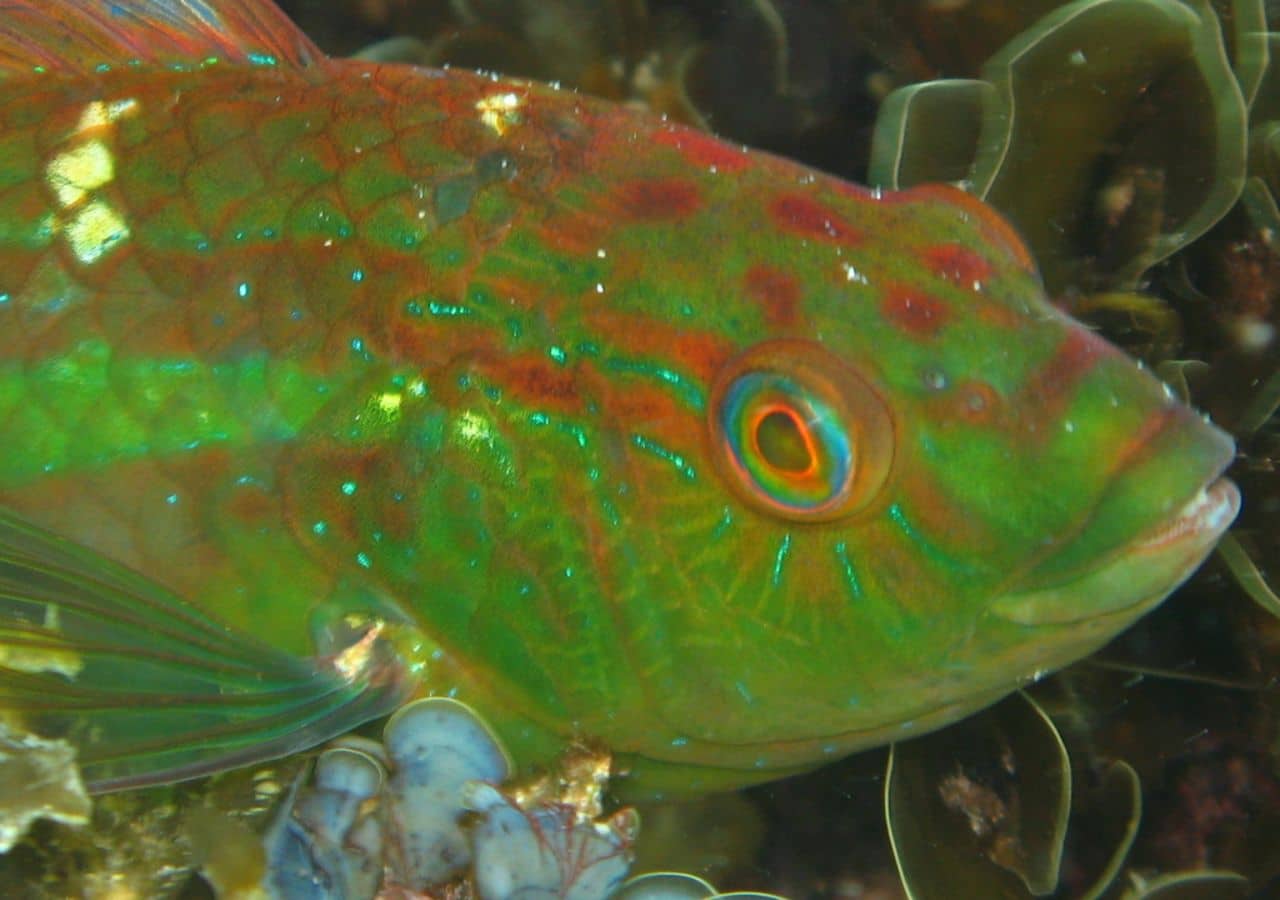
A rare fish feared lost to warming seas has been rediscovered in Australia after a marine researcher spotted the elusive species during a scientific dive near Albany. The finding marks the first confirmed record of the species since 2009 and brings new attention to Australia’s southern kelp forests.
The brightly colored Braun’s wrasse (Pictilabrus brauni) is found nowhere else on Earth and occupies one of the smallest known ranges of any temperate fish species in Australia. Scientists have officially recorded it only once since it was first described near Albany in 1996, making the latest sighting a significant scientific event.
Researchers have documented the species at only a handful of locations along Western Australia’s south-west coast. A scientific survey last confirmed its presence in 2009. Since then, repeated and targeted searches had failed to locate it.
Rare fish rediscovered in Australia’s southern waters
Océane Attlan, a PhD candidate at the University of Western Australia’s Oceans Institute, said the fish had remained unseen for years despite sustained survey efforts. The species grows to less than 7.5 centimeters (3 inches) and is highly shy, traits that make detection difficult.
She said recent marine heatwaves across south-west Australia had raised fears the species may have gone extinct. The confirmed sighting has therefore taken on added importance for marine scientists monitoring climate impacts.
Scientists confirm a rare fish rediscovered in Australia’s southern waters, easing fears of extinction and highlighting the value of underwater research. pic.twitter.com/Ax4iAssJZM
— Tom Marvolo Riddle (@tom_riddle2025) February 19, 2026
The discovery occurred during the final dive of a four-day expedition focused on assessing changes in kelp forests following successive marine heatwaves. Attlan was conducting a routine fish survey and was not searching specifically for Braun’s wrasse when she encountered it.
She said the rarity of the species caused a brief delay in recognition before the importance became clear. The moment was complicated by the fact that she was not carrying a camera on that dive. A fellow researcher, Dr. Albert Pessarrodona, managed to capture two photographs before the fish disappeared into the kelp.
Scientific confirmation and gaps in coastal research
Experts later reviewed the images through an online identification platform. Curators from the Western Australian Museum and a Tasmania-based researcher who last recorded the species in 2009 confirmed the fish as Braun’s wrasse.
Attlan said the species’ strong camouflage and the limited number of ecological surveys along large stretches of Western Australia’s coastline may explain the lack of sightings. She noted that few marine ecologists are able to cover vast and remote reef systems.
The kelp forests where the fish was found are part of the Great Southern Reef, an 8,000-kilometer (5,000-mile) system stretching from Western Australia to New South Wales. Researchers say the reef supports exceptionally high levels of endemic marine life but remains far less studied than Australia’s tropical reefs.
During the same expedition, the team also recorded a sea snail well beyond its known range and observed another rarely seen fish species.
Attlan said continued field research is critical as climate change places increasing pressure on temperate marine ecosystems, and documenting rare species is essential for protecting Australia’s unique underwater environments, where rare fish continue to be rediscovered.