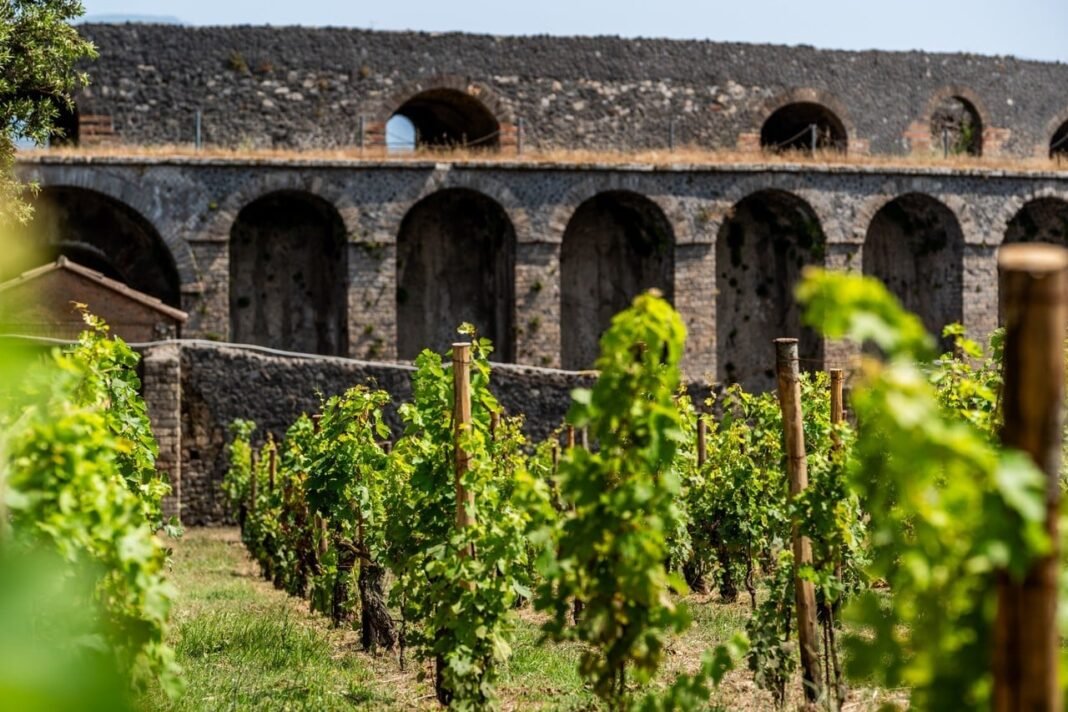
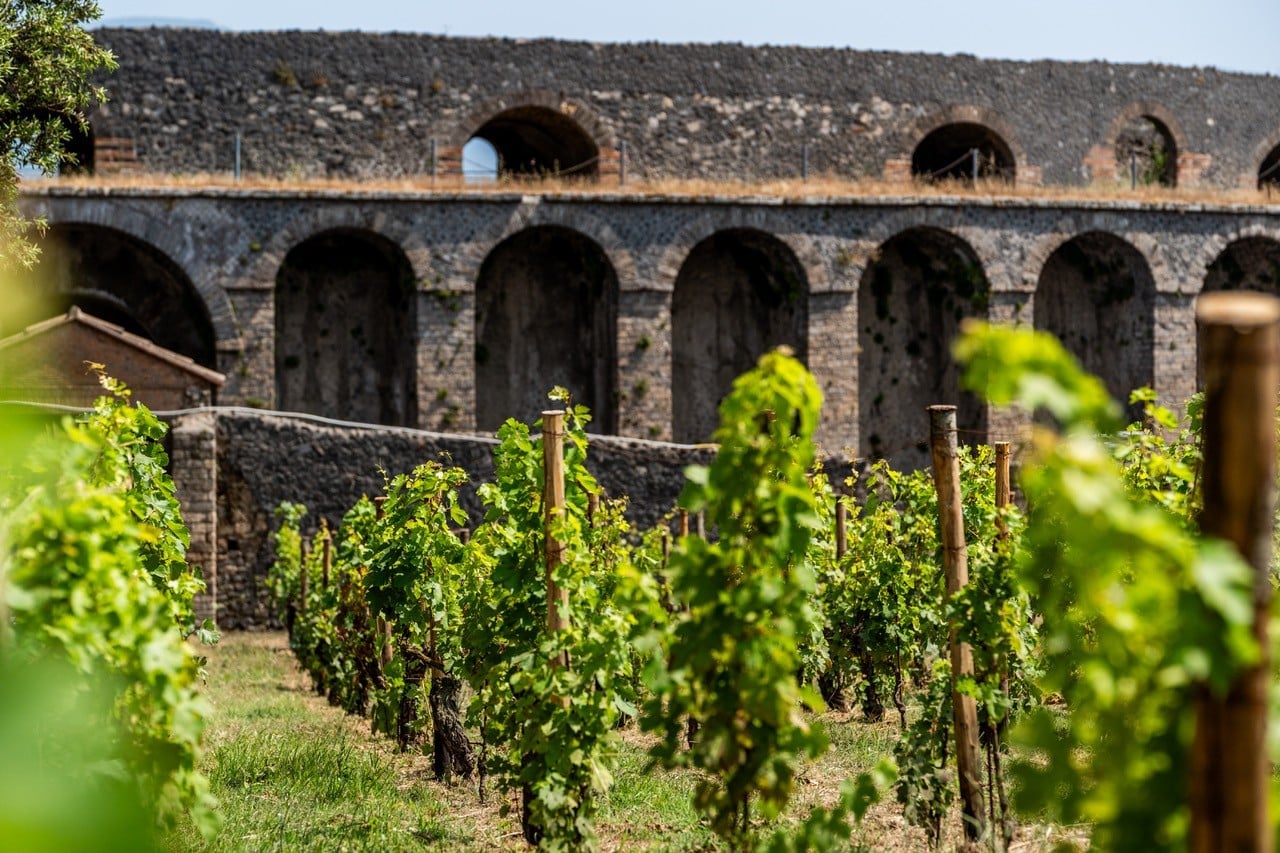
Ancient agriculture is returning to one of the world’s most famous archaeological sites as Pompeii brings vines back to land buried by Mount Vesuvius nearly 2,000 years ago. The project reconnects the ruined Roman city to a farming tradition that once shaped its economy, landscape and daily life.
The initiative, known as Wine Archaeology, is a partnership between the Pompeii Archaeological Park and the Tenute Capaldo Group, with several Italian wineries.
The goal is to restore vineyards inside and around the ancient city using scientific research, historical evidence and organic farming methods.
Park director Gabriel Zuchtriegel said the effort is not limited to producing wine. He explained that the project also supports research, reduces long-term site maintenance costs and creates sustainable income, while helping visitors understand how agriculture shaped the ancient city.
Vine cultivation returns to Pompeii’s historic landscape
Researchers are planting a six-hectare (14.83 acres) vineyard with Greco and Aglianico, grape varieties long linked to southern Italy. The vines will be grown organically. Professor Attilio Scienza of the University of Milan is advising the project, bringing decades of expertise in viticulture.
The work builds on botanical studies started in the 1990s by the park’s research laboratory. Those early studies examined ancient vineyards, farming techniques and food habits. Over time, the research expanded into a broader archaeo-farming program that also includes olive trees and social farming activities.
Ancient vines return to Pompeii as researchers revive historic vineyards using archaeology, science and sustainable farming. pic.twitter.com/LjzwBt4v0Q
— Tom Marvolo Riddle (@tom_riddle2025) March 2, 2026
Historical sources and archaeological finds show that wine played a central role in Pompeii before the eruption of 79 A.D. Frescoes, household decorations and ancient writings depict grapes, wine production and scenes linked to Bacchus (Dionysus), the Roman god of wine.
Zuchtriegel said these images show that wine was part of shared meals and cultural rituals, not simply a product for trade.
Wine as culture in ancient Pompeii
Pompeian wine was once exported across the Mediterranean, reaching regions that include Spain, North Africa and parts of modern-day Turkey and France. Ancient opinions were mixed, however, and some inscriptions favored wine from neighboring towns.
After the eruption, climate shifts and abandonment caused viticulture to disappear from the area for centuries. Many grape varieties were lost or changed, and wines were later grouped under broad categories rather than place names.
Campania today remains one of Italy’s richest regions for native grape diversity. Modern DNA studies have helped researchers trace the origins and movement of these varieties and challenge older assumptions about their history.
Antonio Capaldo, president of Feudi di San Gregorio, described the vineyard as a long-term commitment. He said the Romans planted vines and olive trees to signal permanence, knowing they would take years to bear fruit.
By restoring vines at Pompeii, the project aims to revive that same patience and connection between land, culture and time.