

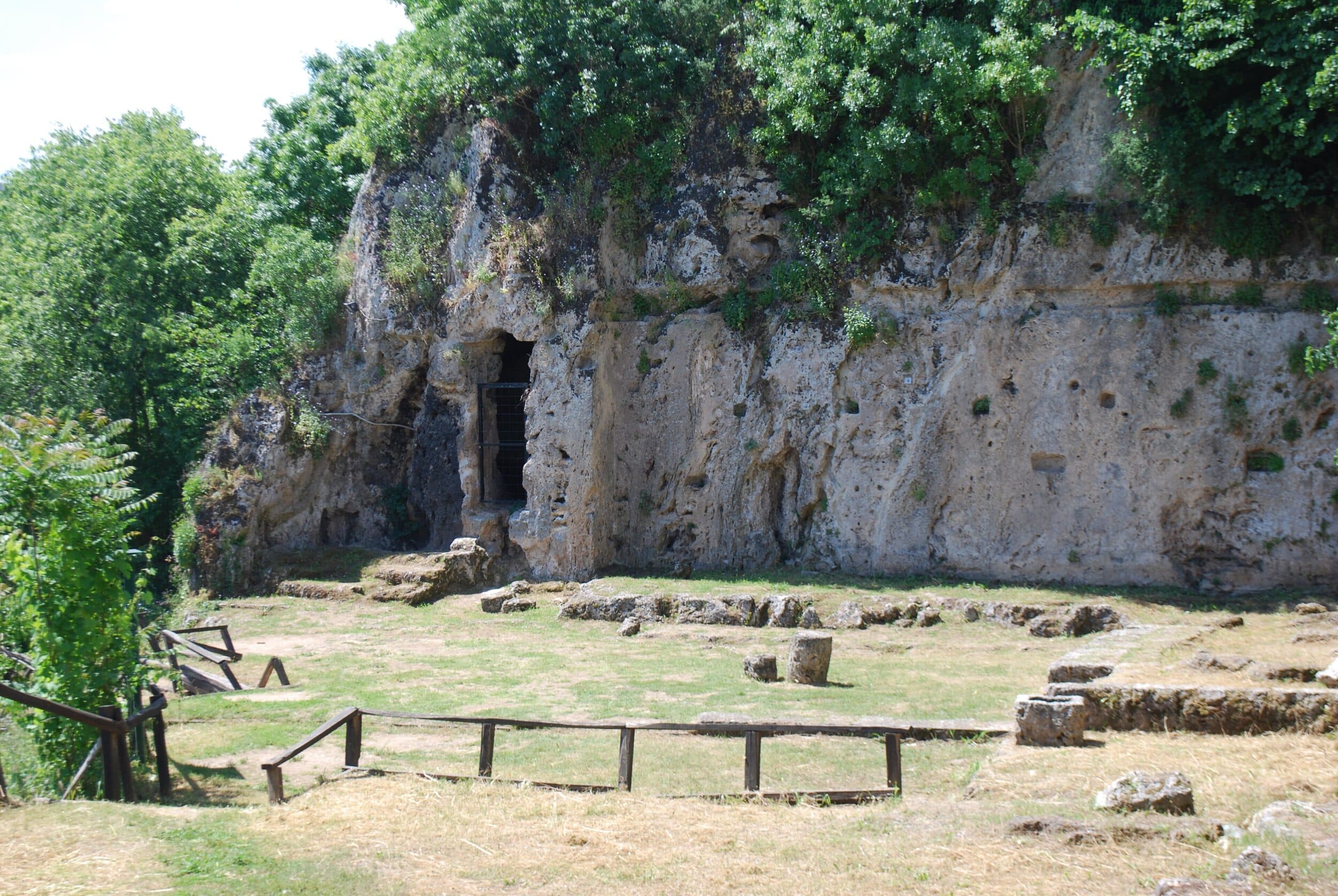
New archaeological finds at Mieza in northern Greece are strengthening the theory that Alexander the Great and other Macedonian royal youths studied there under Aristotle. The discoveries come from the ancient Royal Gymnasium of Mieza, a large educational and athletic complex associated with the reign of Philip II, the father of Alexander the Great.
Archaeologists presented the findings at a special event titled “From Mieza to the World,” which highlighted the site’s importance for Macedonian education and its wider role in the development of Greek learning.
New Finds Reveal the Scale of Greece’s Mieza Gymnasium
The latest results come from a two-year excavation campaign that began in 2024 and covers an area of about 30,000 square meters (7.41 acres). The work is gradually revealing the scale, architecture, and functions of an organized gymnasium complex from the time of Philip II.
After removing large quantities of soil and debris, archaeologists uncovered major parts of the site, including walls, stoas, a palaestra, a stadium, teaching spaces, and water channels.
Together, these discoveries help researchers understand how the complex functioned as a place where physical training, education, and daily activity came together.
The excavation also brought to light high-quality architectural elements, including Ionic capitals and columns. In addition, archaeologists found amphorae connected to the storage of oil, likely used for the needs of the palaestra.
A 200-meter stoa linked to ancient taining
One of the most important discoveries is the xystos, a covered stoa measuring about 200 meters (650 ft) in length. In the ancient Greek world, such spaces played an important role in athletic training and the education of young men.
The size of the structure, the quality of its construction, and the combination of athletic and teaching areas support the view that the Mieza complex was a major educational institution rather than a local facility.
Other finds from the site also shed light on everyday life at the gymnasium. Broken ceramic vessels, coins, writing styluses, and fragments of sculptures point to a setting where learning, exercise, and cultural activity were closely linked.
Royal gymnasium at Greece’s Mieza linked to Alexander the Great and Aristotle
Dr. Angeliki Kottaridi, honorary ephor of antiquities of Imathia and head of the excavation, presented the findings in a lecture titled “From Myth to Historical Reality: The Discovery of the Royal Gymnasium of Mieza. The Data, the Excavation, the New Finds and the Prospects of the Research.”
Kottaridi argued that the large building at Mieza can be identified as the Royal Gymnasium. She noted that its morphological features match those of early Macedonian gymnasia.
Researchers consider its dating to the years of Philip II, together with its scale and architectural organization, crucial evidence for understanding the identity and function of the site.
The new archaeological evidence strengthens the possibility that Alexander the Great and other royal youths received their education there under Aristotle before Alexander became king and began his campaign into Asia.
A site tied to Greece’s macedonian power and memory
The history of the monument adds another layer of significance. According to the excavation data presented, the Romans appear to have violently destroyed the complex after the final subjugation of Macedonia in the second century BC.
This destruction may have formed part of a wider attempt to weaken symbols of Macedonian power and collective memory after Rome established control over the region.
For researchers, this makes Mieza important not only as an educational and athletic center, but also as a monument connected to Macedonian identity and the legacy of the royal house.


