

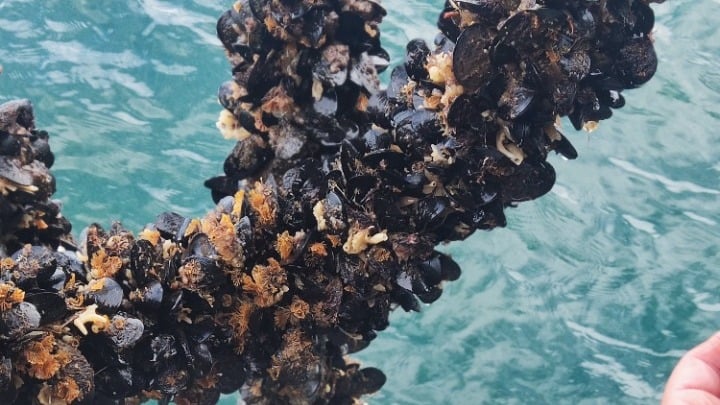
Scientists have documented a worrying increase in microplastic contamination across the seas surrounding Greece, according to recent findings by researchers conducting systematic environmental testing. A new study by the Hellenic Centre for Marine Research (HCMR) experts used mussels as natural “pollution detectors.” The team discovered widespread presence of microplastics — even in areas previously considered remote or pristine.
Between May and September 2025, researchers deployed mussels in submerged cages at various depths and locations, ranging from busy ports to isolated coastal zones. They also collected surface water samples by towing special nets to capture floating plastic fragments. Once retrieved and analysed in the laboratory, the results revealed microplastics in all tested marine zones — a sign that pollution is pervasive in Greek waters.
One of the HCMR study’s lead scientists spoke to Reuters about the unexpected speed and spread of plastic contamination: surface-water samples collected just a few kilometres apart showed similarly high microplastic counts. This, the researchers note, suggests that current circulation patterns and human activity enable rapid and wide dispersion of plastic waste — regardless of a site’s perceived isolation.
The microplastics identified include tiny fragments, thin films, microfibres, and pellets; many appeared in blue or transparent hues, consistent with materials associated with disposable consumer plastics such as packaging, bottles, and bags. According to the biologists involved, microplastic particles were present in every species that has been tested so far — raising concerns about the infiltration of microplastics into the marine food chain.
What Makes Greece Especially Vulnerable
Several geographic and social factors make the Greek seas particularly vulnerable to microplastic pollution. Greece’s extensive coastline, numerous islands, heavy maritime traffic, and a high concentration of tourism produce great strain on waste and water management systems. The Mediterranean’s semi-closed nature slows dispersion of pollutants compared to open oceans, leading to a tendency for plastics and debris to accumulate.
Mussels — filter-feeding organisms that absorb particles from water — have long been used worldwide as indicators of marine pollution. The fact that the mussel-based testing showed contamination even in parts of the sea far from urban areas signals a systemic problem, not confined to shipping lanes or tourist hotspots.
While the recorded concentrations of microplastics do not yet indicate immediate danger to human health, experts warn that continuous breakdown of larger plastic debris into smaller particles increases the likelihood of accumulation in marine life — and possibly, over time, in seafood consumed by humans.
Microplastics: Broader Implications for Environment, Society and Industry
The study’s conclusions highlight urgent needs for coordinated action on multiple levels: waste-management practices, stricter regulation on plastic production and disposal, and enforcement of marine protection laws. They also recommend regular environmental monitoring using bio-indicators like mussels, combined with public awareness campaigns and reduction of single-use plastics — particularly in tourism-dependent coastal and island communities.
The findings raise important concerns for Greece’s fishing and seafood industries, which are integral to both the diet and economy of the country. Should microplastics continue to accumulate, there could be long-term consequences for marine biodiversity, food safety, and the livelihoods of coastal populations.


