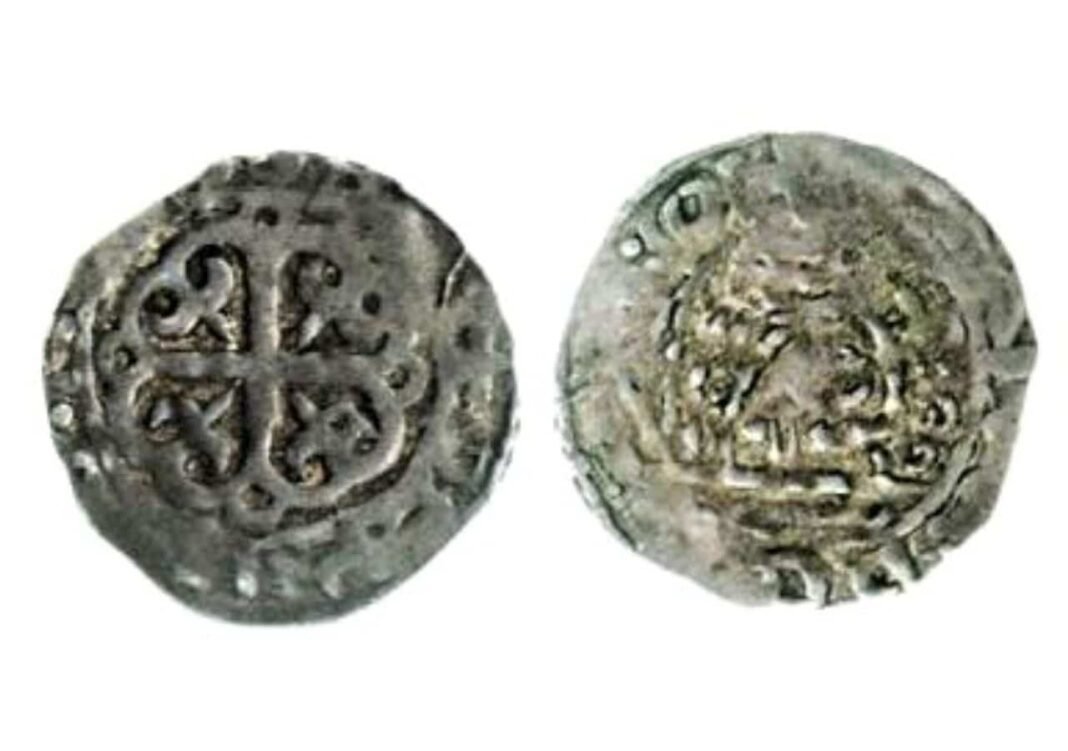

A silver coin believed to be Scotland’s earliest known coin has been officially acquired by the National Museums Scotland after a metal detectorist found it in a wooded area near Penicuik, Midlothian, in 2023.
Experts have dated the coin to the second half of the 1130s, during the reign of King David I, marking a significant breakthrough in the understanding of early Scottish currency.
The discovery is the first confirmed example of coinage minted in Edinburgh from that period. Until now, all known early coins from David I’s reign were believed to have been produced in Carlisle, a city the king controlled during the 1130s.
This find establishes Edinburgh as an early center of Scottish minting, expanding knowledge of where and how currency began to take shape in the kingdom.
Scotland’s earliest known coin confirms early minting in Edinburgh
The coin features a portrait of the monarch on one side and a cross-based design on the reverse. An inscription on the piece identifies Edinburgh as the minting location. This detail provides direct evidence of minting activity in the Scottish capital during the 12th century.
Following standard legal procedures, the finder reported the coin to Treasure Trove authorities.
A remarkable discovery in Midlothian: a metal detectorist has uncovered Scotland’s earliest known coin, dating to the 1130s during the reign of King David I. Now in the care of National Museums Scotland, it offers rare insight into the nation’s earliest currency history. 🪙🇸🇨 pic.twitter.com/QBz7XbcAka
— Tom Marvolo Riddle (@tom_riddle2025) December 30, 2025
It was then allocated to the National Museums Scotland by the Scottish Archaeological Finds Allocation Panel. The coin was valued at £15,000 ($20,200), an amount paid to the finder by the King’s and Lord Treasurer’s Remembrancer.
National Museums Scotland stated that the coin will support further research and may be placed on public display in the future.
Experts call discovery a breakthrough for early Scottish currency
Dr. Alice Blackwell, senior curator of medieval archaeology and history at NMS, described the coin as a major find. She explained that early Scottish coins are extremely rare, and this piece offers the first concrete evidence of minting in Edinburgh during David I’s reign. According to her, the coins themselves are the primary historical source for early Scottish coin production, as written records from that time are almost nonexistent.
Dr. Blackwell noted that coins discovered in Scotland before David I’s reign are generally Roman, Viking, or from other medieval periods, and not native Scottish issues. She added that the identification of a new minting location can greatly improve understanding of how Scotland’s earliest known coinage was created and used.
By the later years of David I’s rule, minting had expanded to towns such as Perth, Aberdeen, St Andrews, Berwick-upon-Tweed, and Roxburgh. His reign also saw the foundation of key royal burghs and reforms to civil institutions, shaping much of Scotland’s early infrastructure.