

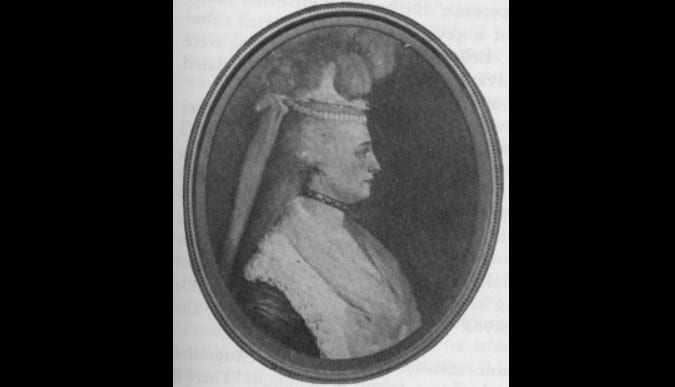
The history of the Greek diaspora in the United States is often traced to the massive waves of immigration in the late 19th and early 20th centuries.
However, the true roots of this story reach much further back, to the sun-drenched, tumultuous shores of 18th-century Florida. At the heart of this early, often overlooked chapter stands a woman of complex identity: Maria Gracia (née du Robin) Turnbull.
In 1768, Dr. Andrew Turnbull, a Scottish physician and entrepreneur, launched a massive colonization project known as New Smyrna, located on the east coast of Florida.
He recruited approximately 1,400 indentured servants from across the Mediterranean—a diverse group consisting of Greeks, Minorcans, Italians, and others. Among them was his wife, Maria Gracia, born into a prominent Levantine family in Smyrna, the cosmopolitan jewel of the Ottoman Empire.
Maria Gracia is widely recognized in historical accounts as the first woman of Greek—or, more accurately, Greek-Levantine—origin to settle permanently in what would become the United States.
Maria Gracia: A Greek pioneer in St. Augustine
Her journey was one of immense hardship. The New Smyrna colony was a tragedy of epidemic proportions. Within just a few years, hundreds of settlers perished due to disease, starvation, and the brutal conditions imposed by the colony’s overseers.
Throughout this decade of suffering, Maria Gracia served as a constant figure of leadership and resilience. She was not merely the wife of the founder; she was a woman of high social standing who found herself in a raw, untamed wilderness.
When the colony finally collapsed in 1777, the survivors sought refuge in St. Augustine. It was here that these pioneers, including Maria Gracia, established the first permanent Greek-related community in North America.
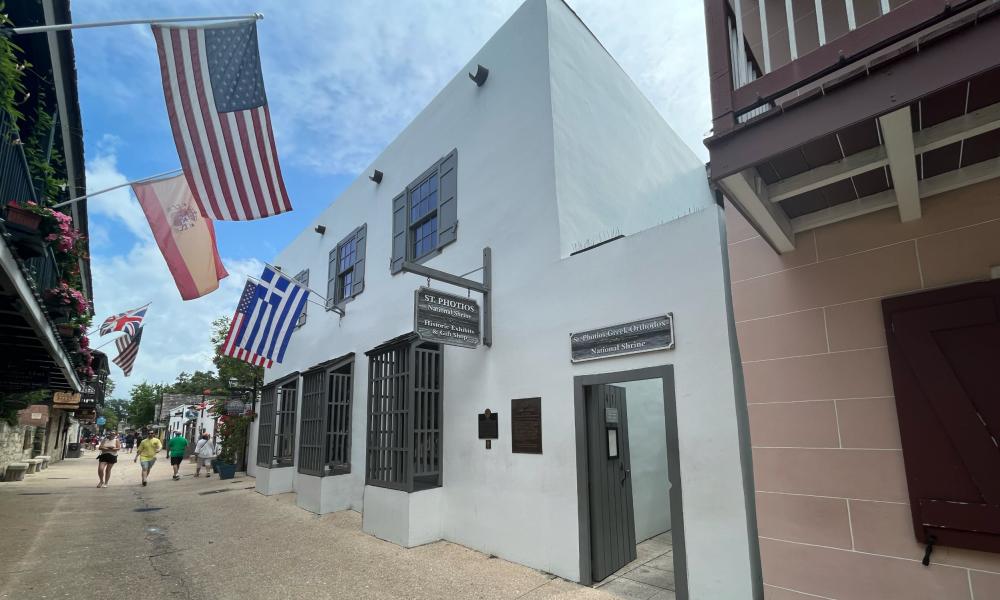
Today, the St. Photios Greek Orthodox National Shrine in St. Augustine stands on the site where these survivors once gathered to preserve their faith and culture, serving as a testament to their enduring spirit.
The later years of Maria Gracia’s life were defined by transition. Following the failure of the New Smyrna venture, she and her husband eventually moved to Charleston, South Carolina, a city that served as a hub for the colonial elite.
It was in Charleston that she spent the final chapter of her life, passing away in 1798. She and Dr. Turnbull are buried there, marking the final resting place of a woman who bridged two worlds.
‘Greek’ was a broader term at the time
While historians often debate the specific ethnic labels of the era—noting that “Greek” in the 18th century was a broader term for those from the Levant who held to the Eastern Orthodox tradition—Maria Gracia remains the symbolic matriarch of the Greek-American experience.
Her life embodies the resilience required of the earliest pioneers. She arrived on a wild frontier, navigated the collapse of a grand dream, and helped sustain a community that would eventually bloom into one of the most vibrant diaspora groups in American history.


