
Millions of people in China and around the world are getting ready to welcome the Lunar New Year, marking the start of the Year of the Horse. The holiday, also known as the Spring Festival, is one of the most important cultural events in China and focuses on family reunions, tradition, and renewal.
Lunar New Year follows the moon, not the calendar
In 2026, the Lunar New Year begins on Tuesday, Feb. 17. Celebrations start the evening before and last for 15 days, ending with the Lantern Festival. The holiday follows the lunar calendar, not the Gregorian calendar used in Europe and America, which means the date changes each year and falls between Jan. 21 and Feb. 20.
Horse symbolism shapes expectations for the year ahead
This year marks the transition from the Year of the Snake to the Year of the Horse in the Chinese zodiac. The zodiac is a repeating cycle of 12 animals, with one animal assigned to each year.
In Chinese culture, the horse symbolizes strength, perseverance, and forward movement. It is often associated with steady progress achieved through sustained effort. Many believe the Year of the Horse highlights themes of action, resiliency, and determination.
Welcoming the Year of the Horse 🐎✨
Chinese New Year 2026 falls on Feb 17, and Shenzhen is celebrating in spectacular style!
A fleet of 4,000 drones lit up the night sky above Shenzhen Talent Park, turning the skyline into a glowing Lunar New Year canvas.Credit: 航拍深圳… pic.twitter.com/W7O6uMBSqQ
— Shenzhen Channel (@sz_mediagroup) February 13, 2026
Fire Horse brings added energy to the zodiac cycle
The zodiac also includes a cycle of five elements: Wood, Fire, Earth, Metal, and Water. These elements rotate alongside the animal signs. The year 2026 is known as the Year of the Fire Horse, a pairing traditionally linked to heightened energy, bold choices, and emotional intensity.
An ancient legend explains the zodiac order
The order of the zodiac animals comes from a traditional legend known as the Great Race. According to the story, the Jade Emperor invited animals to compete in a race across a river. The rat reached the finish first through clever tactics, while the remaining animals followed in order and were each assigned a year.
Mass travel marks the Spring Festival period
Lunar New Year is China’s busiest travel season. Millions of people return to their hometowns to celebrate with family, creating what is often described as the world’s largest annual human migration.
Cleaning rituals and red decorations signal renewal
Preparations begin days before the holiday. Families clean their homes to remove bad luck and make room for good fortune. Red banners, lanterns, and paper cuttings appear on doors and windows as symbols of prosperity and protection.
Food traditions carry symbolic meaning
Food plays a central role in the celebrations. Families prepare dishes believed to bring luck and success. Dumplings symbolize wealth, noodles represent long life, and fish stand for abundance. Nian gao, or New Year rice cake, and radish cake are also commonly served. Tangerines are exchanged as symbols of good fortune.
Red envelopes and public performances fill the streets
Another long-standing tradition is the exchange of red envelopes, known as hóngbāo, which usually contain money and are given to children and younger relatives.
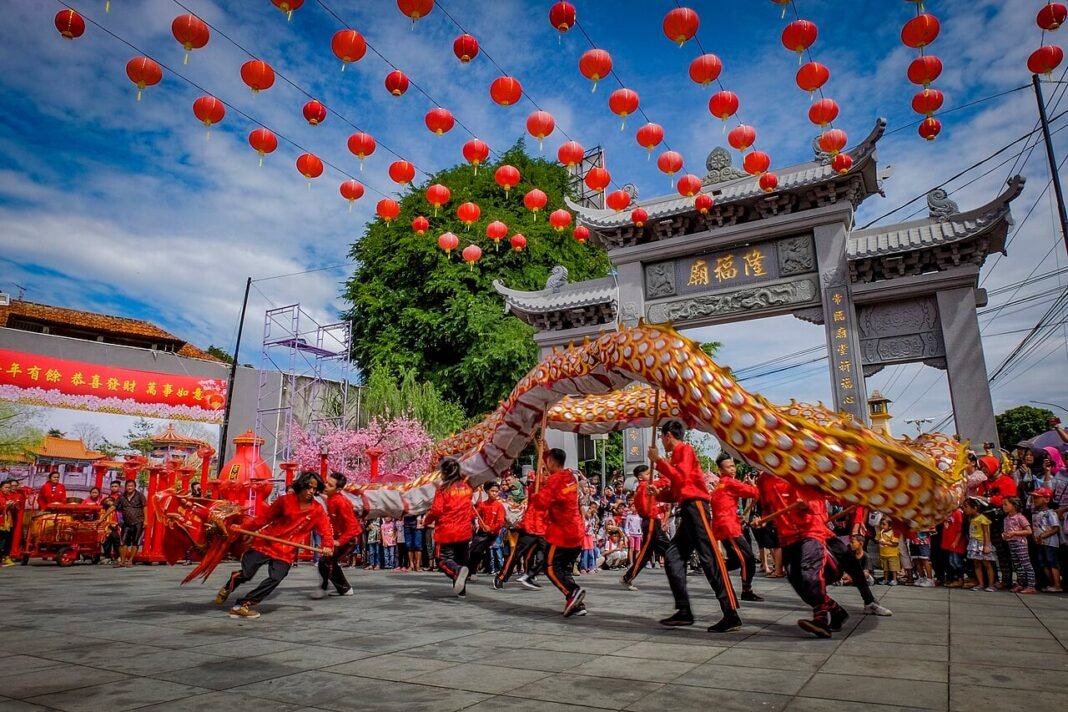
Public celebrations take place across China, with lion dances, parades, and drum performances drawing large crowds. Fireworks light up the night sky, as loud sounds and bright lights are believed to drive away evil spirits.
The Lunar New Year period ends with the Lantern Festival, marking the close of the holiday and the beginning of the months ahead under the Year of the Horse.