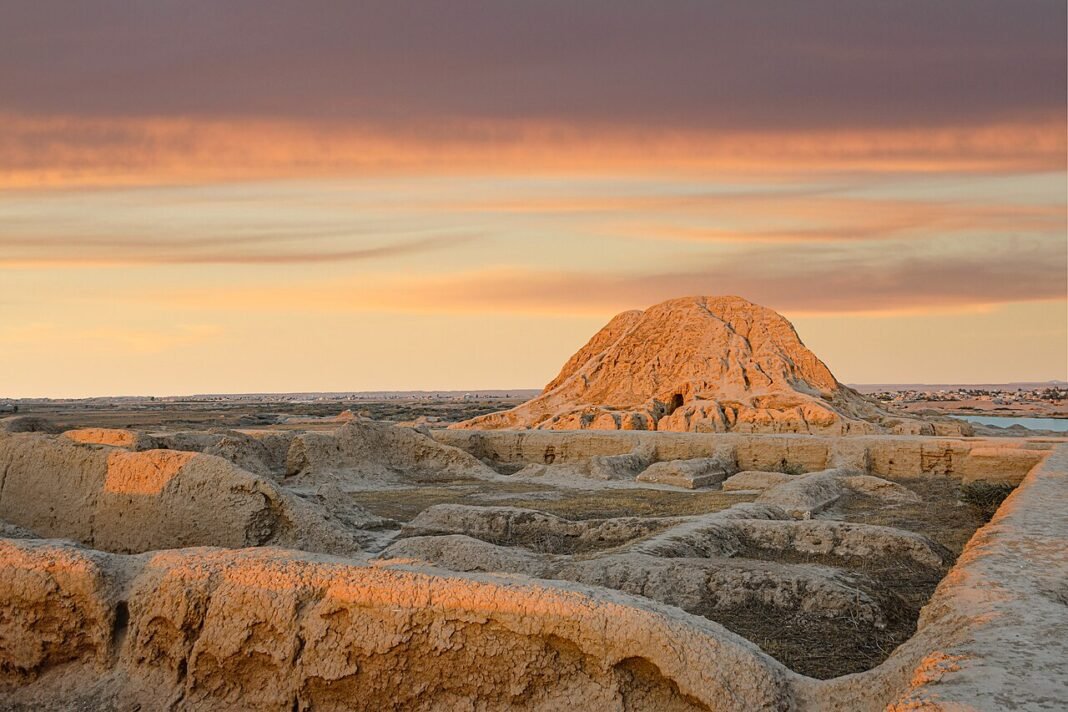

Researchers working at the ancient city of Assur in northern Iraq have uncovered new evidence showing that the earliest Ishtar Temple was built on a carefully prepared layer of imported sand, offering fresh insight into early Mesopotamian ritual practices and the origins of the goddess’s cult.
The discovery comes from a detailed mineral study of sand buried beneath the temple’s foundations. The research, led by Mark Altaweel, was published in the Journal of Archaeological Science: Reports. It marks the first systematic mineral analysis of architectural sands ever conducted at an archaeological site in Iraq.
The sand was found during coring work inside the temple’s central chamber. Beneath the earliest stone walls, researchers encountered a thick, clean layer of yellow sand. It did not match local soils. It also showed no signs of natural river flooding or erosion. That ruled out accidental deposition. Instead, the evidence points to deliberate placement.
A ritual foundation beneath Assur’s oldest sanctuary
The temple stands at Assur, once the political and religious heart of the Assyrian state. While many structures at the site have been excavated since the early 1900s, the deepest layers of Assur’s main temple remain inaccessible. That makes the Ishtar Temple the oldest sanctuary at the site that archaeologists can directly study.
Radiocarbon dating of charcoal recovered from a floor built directly above the sand layer places construction between about 2896 and 2702 B.C. This pushes the temple’s foundation earlier than many scholars had assumed and aligns more closely with early third-millennium dates proposed by the site’s original excavator, Walter Andrae.
Because the earliest occupation layers at Assur were reached at this temple, the new date also reshapes the timeline for the city’s first settlement.
Southern traditions, northern materials

In southern Mesopotamia, placing clean sand beneath temples was a known ritual practice. Ancient texts describe sand as a purifying material, suitable for preparing sacred ground. Until now, that tradition had not been documented in northern Mesopotamia. The Ishtar Temple provides the first clear example.
Mineral analysis revealed that the sand was not brought from the south. Instead, it likely came from nearby wind-blown dunes formed from older sandstone deposits. The mineral mix points to an origin linked to the Zagros Mountains, transported naturally over time and then gathered by builders.
The sand contains distinctive minerals formed under high pressure in mountain environments. These minerals are absent from river sands near Assur. That shows the builders made a conscious choice, bypassing readily available materials along the Tigris River.
What the sand reveals about belief
The finding carries cultural weight. Ishtar was worshipped across Mesopotamia, but scholars have long debated whether her cult at Assur came from southern traditions or developed locally. In the south, she was known as Inana. In the north and nearby mountain regions, similar goddesses were worshipped under Hurrian names.
The deliberate use of ritually clean sand suggests knowledge of southern temple traditions. At the same time, the sand’s regional origin may point to connections with northern or eastern cultural landscapes.
Researchers say the choice may not have been symbolic in only one direction. Assur sat at a crossroads between regions. Its inhabitants may have blended traditions when establishing the sanctuary.
A temple set apart
Coring beneath other major temples at Assur has revealed no comparable sand layers. That makes the Ishtar Temple unique. Its foundation treatment appears to have been intentional and exceptional.
The researchers stress that the sand could not have arrived naturally. The deposit sits well above modern river levels and appears only beneath the temple. Human transport is the only plausible explanation.
The study highlights how materials often overlooked by archaeologists can carry historical meaning. In this case, sand helps clarify when Assur was first settled, how its builders thought about sacred space, and how religious ideas moved across ancient Mesopotamia.
What lies beneath the Ishtar Temple, it turns out, tells a story as important as the walls built above it.