

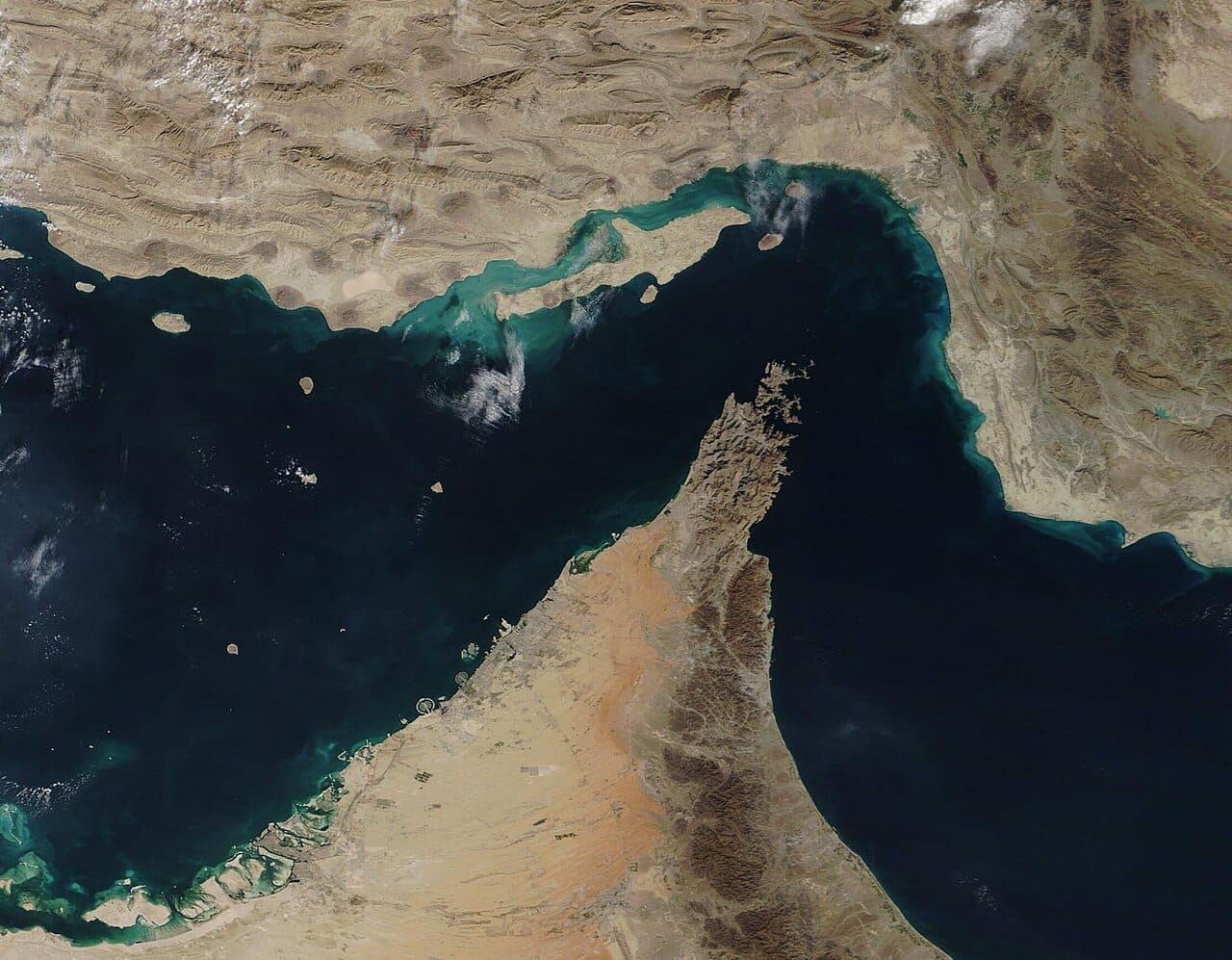
Iran partially closed sections of the strategically critical Strait of Hormuz on Tuesday as indirect nuclear negotiations with the United States opened in Geneva, adding fresh strain to one of the world’s most important energy corridors.
State media reported that the temporary restrictions lasted several hours and stemmed from “security precautions” linked to Revolutionary Guard military drills in the waterway. The move coincided with talks in Switzerland aimed at easing the long running dispute over Tehran’s nuclear program.
Located between Iran and Oman, the Strait of Hormuz remains one of the most important oil choke points in the global system. Around 13 million barrels per day of crude moved through the passage in 2025, accounting for roughly 31 percent of global seaborne crude flows, according to market intelligence firm Kpler.
Iran and US Open Talks as Strait of Hormuz Tensions Rise
The partial closure of the Strait of Hormuz came just hours after US and Iranian officials began indirect negotiations in Geneva with mediation from Oman. A source familiar with the discussions said US envoys Steve Witkoff and Jared Kushner are participating alongside Iranian Foreign Minister Abbas Araqchi.
President Donald Trump said he would take part indirectly in the Geneva track and suggested Iranian leaders face strong pressure to reach an agreement. Speaking aboard Air Force One, he referenced last year’s US B-2 bomber strikes on Iranian nuclear facilities and said Tehran understands the consequences of failing to secure a deal.
Soon after talks began, Iranian media quoted Supreme Leader Ali Khamenei warning that any US attempt to remove the current government would fail. He said even the strongest military force can be struck hard enough that it cannot recover.
Shadow of Earlier Strikes and Current Deployments
Diplomatic efforts are unfolding under the shadow of recent military action. In June last year, Israel launched an air campaign against Iranian targets that later expanded to include US B-2 bomber strikes on nuclear sites. Iranian authorities say they halted uranium enrichment activity after those attacks.
At the same time, two US officials said Washington has deployed additional battle forces to the region and is preparing options for extended operations if ordered. Iran has also conducted new drills around the Strait of Hormuz this week, reinforcing the sense of brinkmanship surrounding the negotiations.
Iran Nuclear Dispute Remains Unresolved
Core disagreements remain in place. The United States and Israel maintain that Iran seeks a nuclear weapons capability, while Tehran rejects that accusation and insists its program is strictly civilian.
Iran remains a signatory to the Nuclear Non Proliferation Treaty, which allows civilian nuclear energy in exchange for renouncing nuclear arms and accepting international inspections.
Iranian officials say progress in Geneva depends on sanctions relief and the removal of what they describe as unrealistic US demands. Tehran has stated it will discuss limits on its nuclear activities only if sanctions are lifted. It has also ruled out ending uranium enrichment entirely or including its missile program in the negotiations.

