The global resonance of the Greek Language Day was celebrated this week, with major landmarks and international organizations paying tribute to its 3,000-year history.
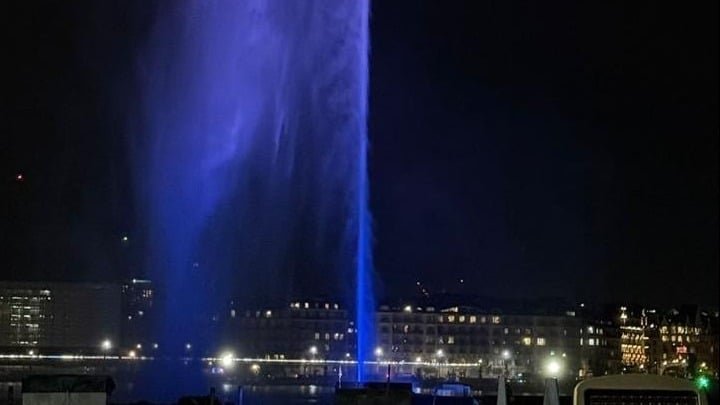
From UNESCO’s headquarters in Paris to the shores of Lake Geneva and the National Library in Athens, the event marked a milestone in cultural diplomacy.
UNESCO celebrates Greek Language Day
“The Greek language is a 3,000-year-old youth,” stated George Koumoutsakos, Greece’s Permanent Representative to UNESCO, marking the official designation of February 9th as International Greek Language Day. The event, held at UNESCO’s Paris headquarters, was widely hailed as a major political and cultural milestone.
The celebration featured a keynote address by Culture Minister Lina Mendoni and a video message from the President of the Parliament, Konstantinos Tasoulas.
Koumoutsakos noted that the UNESCO General Conference reached a unanimous decision to recognize the “brilliant contribution of the Greek language to the evolution of human civilization.” He emphasized that the language’s unbroken continuity makes it a unique and indispensable tool for thought, art, and science.
The evening included literary readings of iconic Greek texts and a musical performance by acclaimed artists Mario Frangoulis and Daphne Krithara.
The universality of the Greek language
In a parallel event at the National Library of Greece, Prime Minister Kyriakos Mitsotakis reinforced the language’s global standing, noting that its universality is now officially cemented through UNESCO’s World Greek Language Day.
He described Greek as the foundational tongue of democracy and civic identity, noting it was the first to define the human being as a citizen and to champion the “golden mean” and freedom as essential virtues. These linguistic roots, the Prime Minister noted, acted as the philosophical bridge that placed modern Greece at the very heart of the West and inspired the democratic ideals of the French and American revolutions.
Challenges in the digital and AI era
Beyond its historical weight, Mitsotakis highlighted the language’s remarkable adaptability, specifically its readiness to be utilized within the “endless universe of algorithms and artificial intelligence.”
However, he also issued a poignant warning regarding the “threat of technology.” As screens replace paper and abbreviations replace formal writing, the Prime Minister emphasized that the loss of written precision endangers the reflection and critical acumen necessary for a functioning democracy.
A national priority for education
Concluding his remarks, the Prime Minister defined the support of the Greek language as a “national priority.” He called for a modernization of how Ancient Greek is taught—moving away from viewing it as a “burden”—and criticized the “mangled” use of the language in modern mass media, where sensationalism often eclipses substance.
Invoking the words of George Seferis, he reminded the audience that the Greek language is resilient, provided it is not mistreated, and echoed Nikos Kazantzakis’ sentiment on the “magical power of a word” to act as a saving force for humanity.