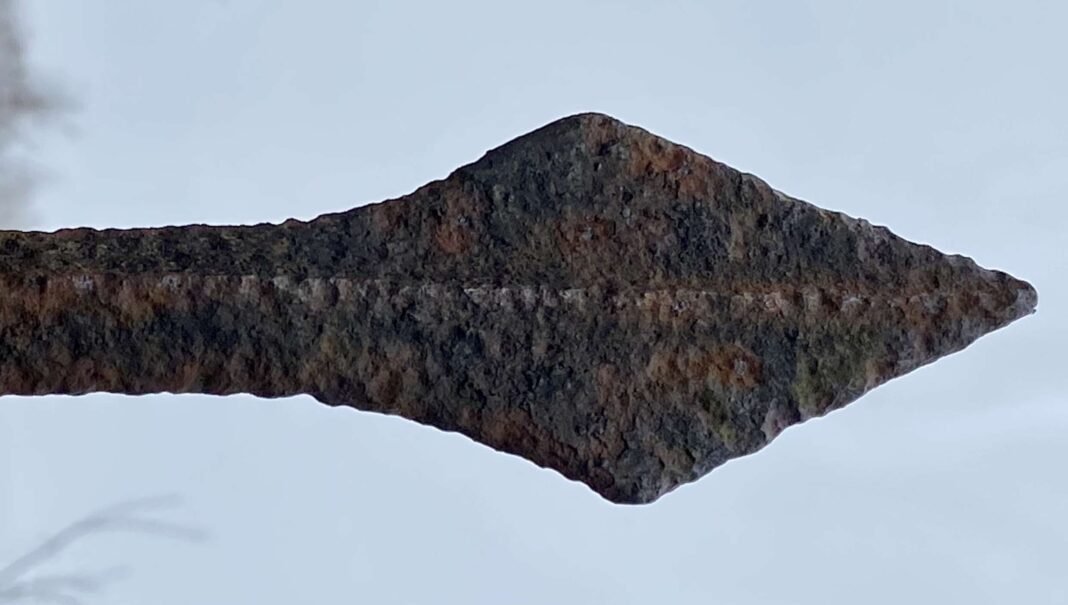
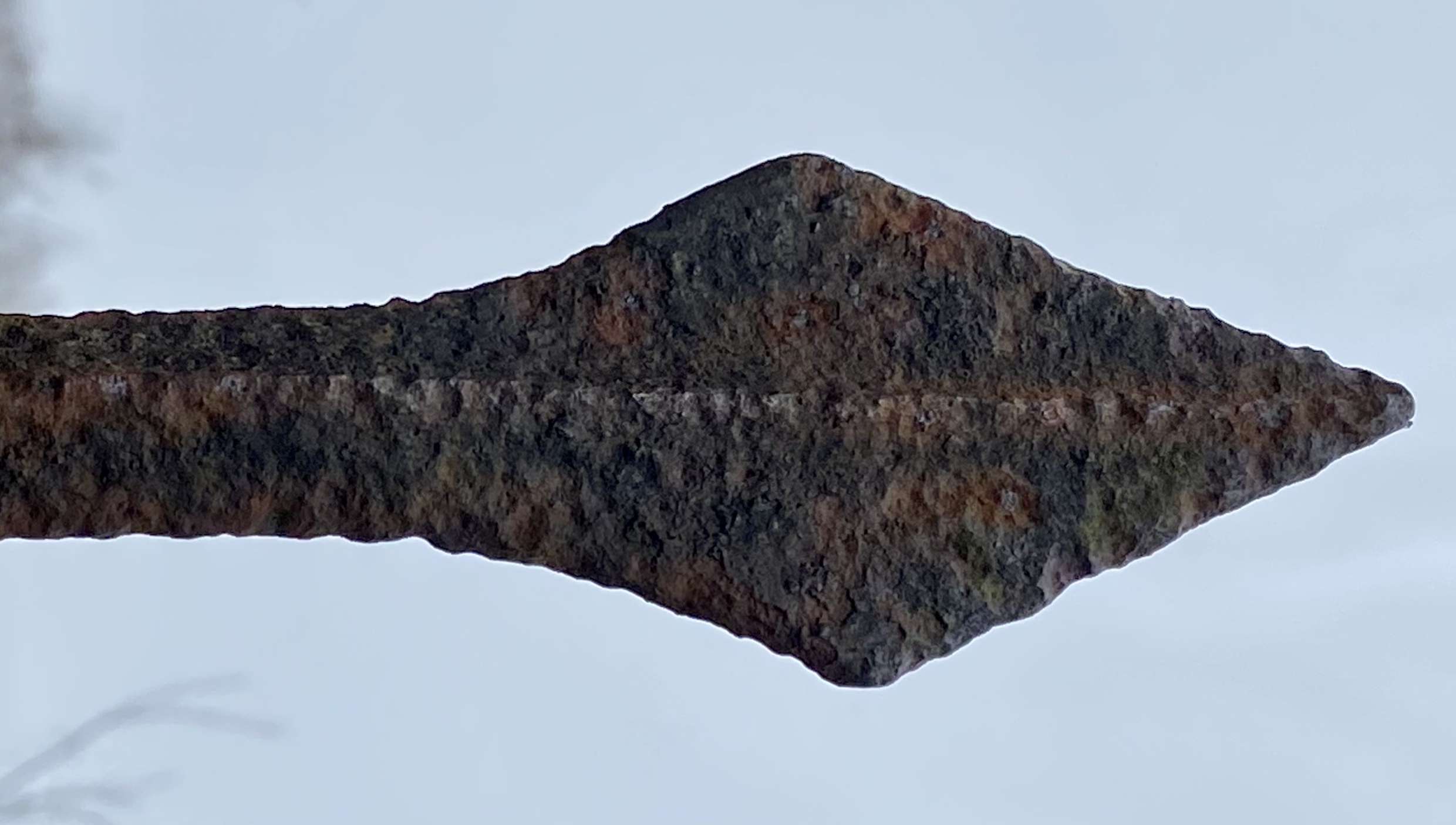
Archaeologists working in southern India have uncovered what is believed to be the longest Iron Age spear ever found in the country, a discovery that is reshaping views of early metalworking in the subcontinent.
The spear measures nearly 2.5 meters, or more than eight feet, from tip to base. Researchers found it at an Iron Age burial site in the southern state of Tamil Nadu. Its exceptional length sets it apart from other iron weapons known from the period, which are typically shorter and simpler in form.
Burial layout points to status and intention
Excavations showed the spear was not placed alone. A second iron spear, slightly shorter, lay beside it in a deliberate cross-like arrangement. Both weapons were positioned near a large burial urn. Inside the urn, archaeologists found gold objects, evidence that the buried individual held a high social status.
Researchers say the burial layout reflects careful planning rather than chance placement. The positioning suggests ritual meaning and deliberate display.
Archaeologists in Tamil Nadu have uncovered India’s longest known Iron Age spears, one 8 ft and another 6.5 ft long, in a burial context, suggesting powerful symbolic or martial roles and advanced Iron Age metallurgy in ancient South India.https://t.co/WEM34HBSQQ#Archaeology… pic.twitter.com/2xzzxeFBb9
— De Antiquis (@DAntiquis) January 27, 2026
Evidence of advanced Iron Age metalworking
Researchers say the find points to advanced ironworking skills during the Iron Age in southern India. Producing a weapon of this size would have required precise control over iron smelting, forging, and shaping.
Such work suggests organized production and access to skilled metalworkers, challenging earlier views that large-scale iron weapon manufacture developed later in the subcontinent.
The weapon likely carried a symbolic meaning
Experts believe the spear may have served more than one role. Its sharp form suggests it could have been used for protection, possibly by warriors guarding livestock or territory. At the same time, its unusual size points to a symbolic purpose.
Scholars say it may have been crafted for a chieftain or elite leader and buried as a marker of rank, authority, and power rather than as a tool for daily use.
Scholars note careful design and preservation
Excavation director K. Vasanthakumar said close examination revealed careful design. One end of the longer spear is slightly rounded, a feature that would have improved grip and handling. He said this detail reflects thoughtful engineering rather than crude manufacture.
Iron Age specialist Vibha Tripathi of Banaras Hindu University said the burial fits a broader pattern seen across Iron Age sites. Weapons frequently appear in such graves, she said, reinforcing the interpretation that the spear belonged to a warrior elite.
She also highlighted the iron’s exceptional preservation, calling it rare and valuable for understanding early weapon technology.
Extreme heat required for iron production
Producing iron requires extreme heat, often between 1,200 and 1,500 degrees Celsius. Researchers say meeting such conditions posed a major technological challenge in the ancient world.
Former Deccan College professor R. K. Mohanty said the spear was likely custom-made rather than mass-produced. He suggested it may have been created for ceremonial display. “Its scale alone suggests it was designed to demonstrate the elevated status of the buried individual,” he said.
Find reopens debate on early iron timelines
The discovery has renewed debate over the timeline of iron technology in southern India. A growing number of scholars argue that iron production in Tamil Nadu may date back as early as 3000 to 2500 B.C.E., far earlier than once assumed.
Academic advisor K. Rajan of the Tamil Nadu Department of Archaeology described the spear as a technological achievement of its time, pointing to early innovation in the region.
Part of a wider metalworking tradition
Archaeologists say the spear adds to a long record of advanced metalworking in Tamil Nadu. Evidence from sites such as Adichanallur, Kodumanal, and Keeladi points to sophisticated knowledge of iron smelting, forging, alloying, and tool-making.
🚨 BIG DISCOVERY 🚨
Archaeologists in Tamil Nadu have UNEARTHED an 8-foot-long iron spear, the LONGEST iron implement from the Iron Age DISCOVERED in India so far.
It may have been used by ANCIENT WARRIORS to protect CATTLE and WEALTH from ENEMIES, or for ceremonial purposes. pic.twitter.com/PvnBTjOZev
— Megh Updates 🚨™ (@MeghUpdates) January 27, 2026
Some nearby sites have produced dates as early as 3345 B.C.E., suggesting iron technology emerged in southern India much earlier than previously believed.
Metal skills shaped the economy and society
Researchers note that ancient Tamil smiths worked not only with iron but also with early forms of high-carbon steel comparable to wootz steel, which later gained wide recognition.
These skills were applied beyond weapons. Agricultural tools, domestic objects, and trade goods made of iron played a key role in farming, exchange, and social organization.
As research continues, archaeologists say the spear stands as more than a weapon. It serves as evidence of India’s deep technological past and underscores Tamil Nadu’s central role in shaping early ironworking traditions that influenced societies across South Asia.