

Archaeologists have unearthed a rare terracotta incense burner featuring the likeness of the Greco-Egyptian god Serapis in the ancient Greek city of Ephesus, in modern-day Turkey, offering new insight into the city’s multicultural spiritual life and long-distance trade activity during the Roman period.
The object, discovered in the Harbor Baths near the ancient port, highlights how cults such as that of the god Serapis became part of everyday life across the Mediterranean.
Discovery in the Harbor Baths highlights cultural integration
The incense burner was found during ongoing excavations under the Turkish Ministry of Culture and Tourism’s “Endless Ephesus: Legacy for the Future” initiative, which began in 2023.
The project focuses on uncovering the Harbor Street area, a 570-meter (1,870-foot) avenue once connecting the city center to its bustling seaport. The Harbor Baths complex, where the burner was located, was among the first structures to greet visitors arriving by sea.
A rare terracotta incense burner depicting the Greek god Serapis has been uncovered in the ancient Greek city of Ephesus. The find sheds light on Roman-era trade, religion, and cultural exchange. 🏛️🔥 #Ephesus #Archaeology #GodSerapis #AncientHistory #UNESCO pic.twitter.com/cSJztficlV
— Tom Marvolo Riddle (@tom_riddle2025) December 8, 2025
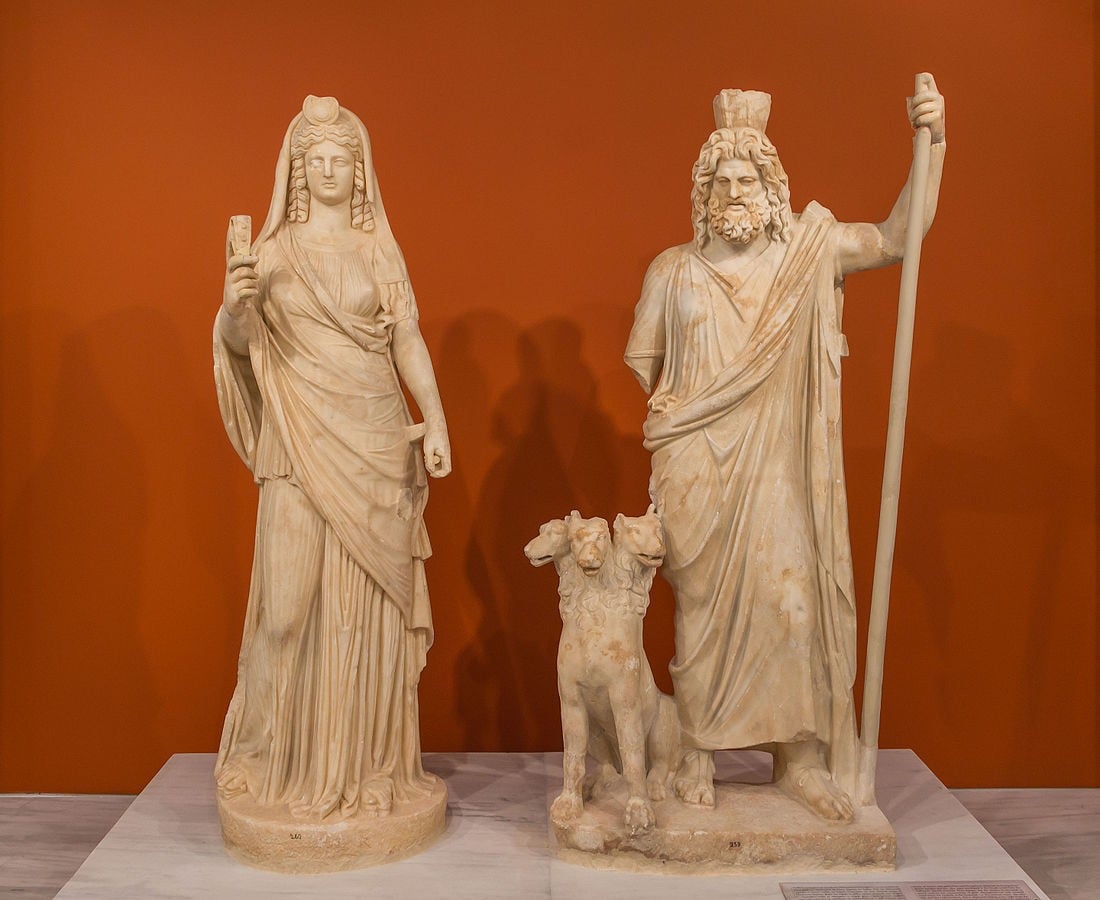
Serapis, introduced in Egypt by Ptolemy I around 300 B.C. as part of a unifying religious policy, blended Greek and Egyptian elements. The god was associated with healing, abundance, and the afterlife, and gained popularity throughout the Roman world.
Project coordinator Professor Serdar Aybek of Dokuz Eylül University said that the figure on the burner is easily identifiable by its flowing hair, full beard, and tall crown, which resembles the modius shape seen in earlier statues, including a famous work attributed to the sculptor Bryaxis.
Incense burner and god Serapis reflect religious exchange
The terracotta burner, complete with an incense chamber and a bust of Serapis on its front, also bears an inscription on the reverse side. That inscription closely matches another previously uncovered in the Terrace Houses, Roman villas known for intricate mosaics and frescoes.
Archaeologists believe this could point to a local workshop in Ephesus producing standardized religious items, or indicate active trade in imported cult artifacts, particularly those linked to Egyptian-origin deities.
Located near the modern town of Selçuk in western Turkey, Ephesus was founded in the 10th century BC by Attic and Ionian Greeks. It became one of the twelve cities of the Ionian League and flourished under Greek and Roman rule.
The city, which researchers estimate reached between 100,000 and 200,000 inhabitants at its peak, was a major hub of commerce and religion, famously housing the Temple of Artemis, one of the Seven Wonders of the Ancient World.
The incense burner will be added to the Ephesus Museum’s growing collection of artifacts, reflecting the city’s deep connections to trade, art and evolving religious traditions.


