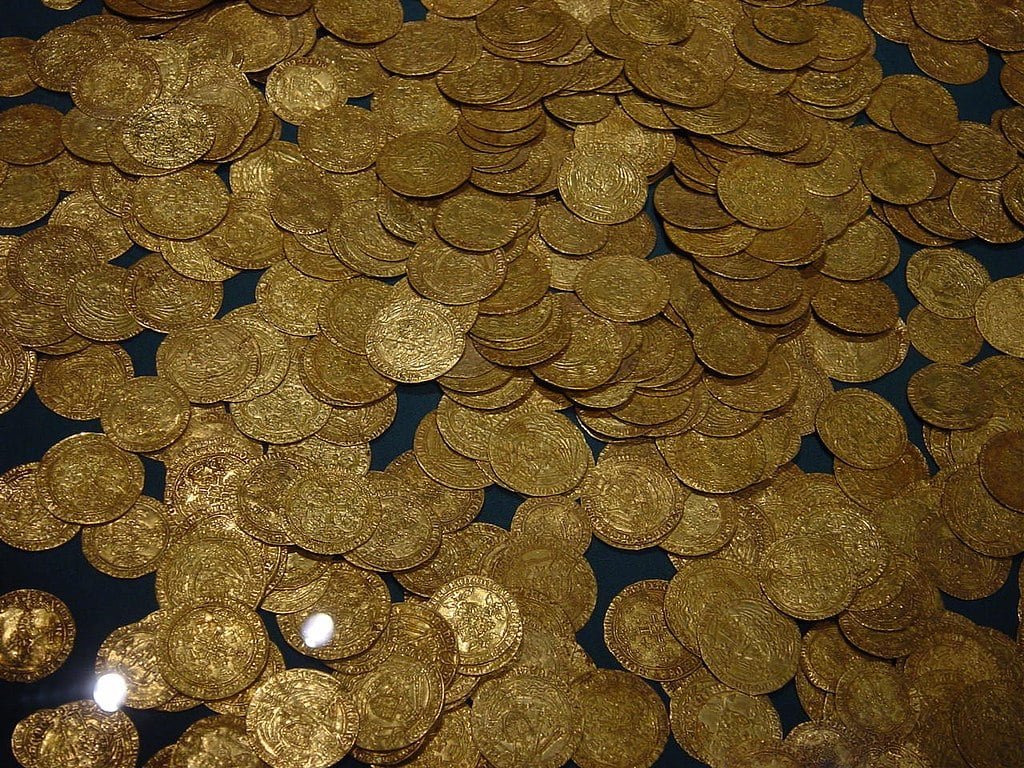
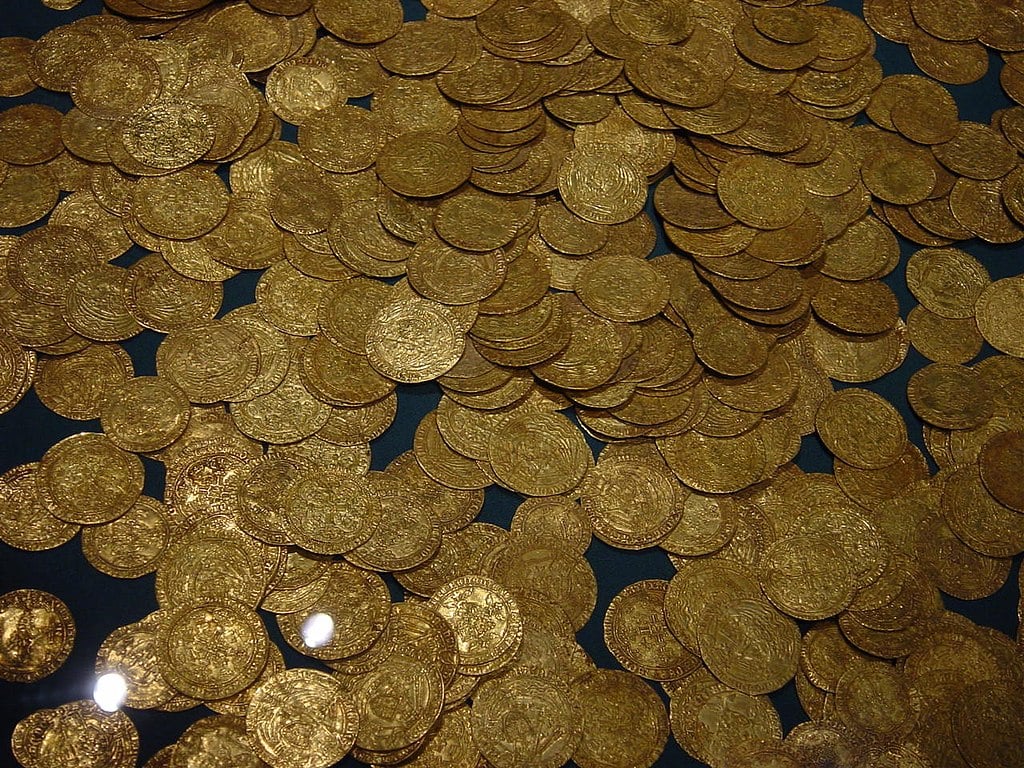
Archaeologists have uncovered hundreds of gold coins buried beneath the foundation of an old house in Torzhok, Russia, revealing how residents protected their wealth during a period of uncertainty in the early twentieth century.
The discovery was made in 2025 during rescue excavations carried out ahead of construction work. Researchers say the coins were likely hidden during a time of growing instability, when people concealed savings to avoid loss or confiscation.
Excavation reveals hidden hoard
The excavation took place on Sadovaya Street in the town’s historic district and covered about 252 square meters. The work was led by the Institute of Archaeology of the Russian Academy of Sciences in partnership with the All-Russian Historical and Ethnographic Museum.
Archaeologists were examining the stone foundations of a wooden house that had been destroyed during World War II and later rebuilt. While dismantling part of an extension, they found a broken clay container hidden beneath the stones. Hundreds of gold coins spilled out during the process.
The coins had been stored inside a small pottery vessel known as a “kandyushka,” a narrow-necked pot with a handle and a brown-yellow glaze. Fragments of the vessel helped specialists identify its type and historical context.
Archaeologists found 409 coins dating back to the late Russian Empire, hidden during a time of unrest after the Russian Revolution. pic.twitter.com/tlz1JamOTY
— Tom Marvolo Riddle (@tom_riddle2025) March 27, 2026
Coins date to the final years of the empire
Analysis shows the hoard contains 409 gold coins minted between 1848 and 1911. The oldest dates to the reign of Nicholas I of Russia, while most were produced under Nicholas II of Russia, the final ruler of the Russian Empire.
Most of the coins are ten-rouble gold pieces, which were widely used at the time. The most recent coin, minted in 1911, suggests the hoard was buried a few years later.
Likely hidden during revolutionary unrest
Researchers link the burial to the turmoil that followed the Russian Revolution. During this period, many residents hid valuables to protect them from confiscation, looting, or sudden political change.
Experts describe the discovery as a “return treasure.” This term refers to valuables hidden with the intention of being recovered later. In many cases, owners never returned due to war, displacement, or ongoing instability.
The owner of the treasure remains unknown
Despite detailed archival research, the identity of the person who buried the coins remains unclear. Historical records show that around 24 households once stood along the street, including clergy, merchants, officials, and artisans.
Researchers say linking the hoard to a specific property is difficult because old house numbering systems do not match modern addresses. This makes it challenging to identify the original owner.
Discovery offers insight into life during a crisis
Specialists say the Torzhok hoard is one of the most important collections of gold coins from the late Russian Empire found through archaeological work. It provides insight into how people managed and protected their wealth during a time of change.
Once the analysis is complete, the coins will be transferred to the All-Russian Historical and Ethnographic Museum. There, they will be restored and prepared for public display.
Beyond its financial value, the discovery reflects a human story shaped by uncertainty. The coins were likely buried in the hope of recovery. More than a century later, they stand as a reminder of lives disrupted and choices made in a time of crisis.