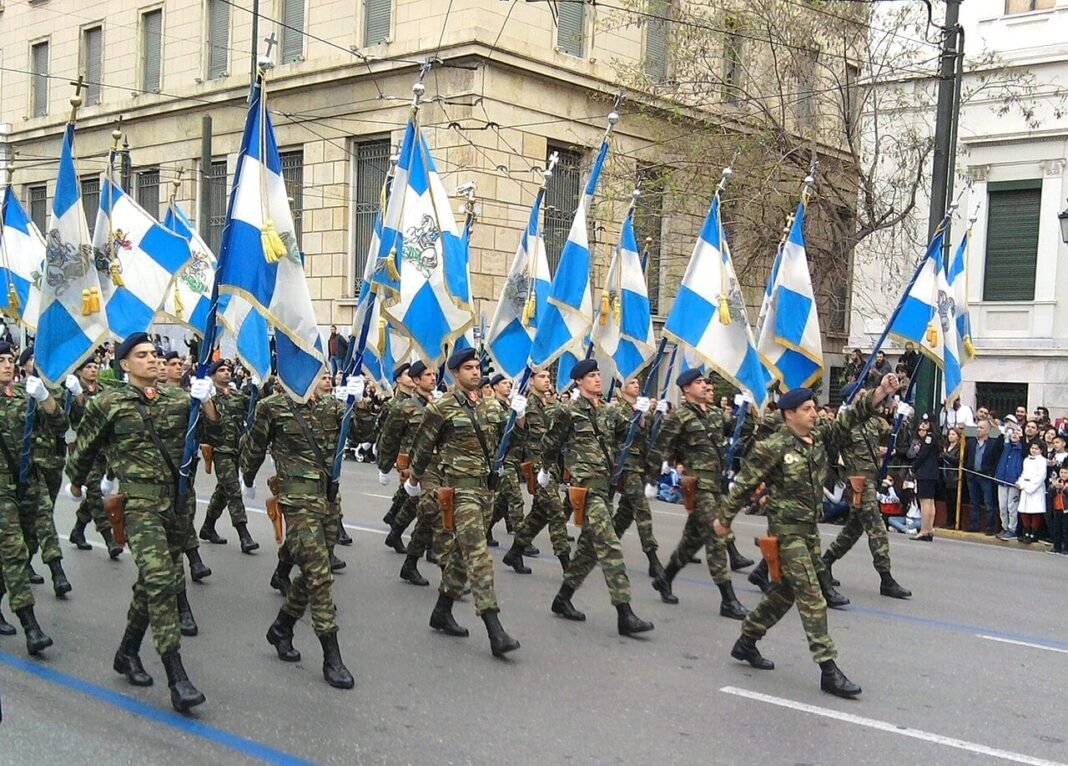

The induction of the “Class of February 2026” (A’ ESSO 2026) marks a historic shift in the Greek military service. Under the “Agenda 2030” reform, spearheaded by Defense Minister Nikos Dendias, the military is transitioning from a traditional conscription model to one focused on high-tech readiness and professional skill-building.
The overarching goal is to transform the mandate from a perceived “chore” into a period of substantive training that provides soldiers with valuable life tools.
Major reforms in Greek military service
1. Structural Realignment
Unified Entry: All conscripts now start their journey in the Army (Land Forces). Only those with specific professional qualifications (doctors, IT specialists, etc.) are transferred to the Air Force or Navy.
Fewer Inductions: The yearly draft cycles have been reduced from six to four (February, May, August, November) to allow for better organized, concentrated training.
Streamlined Specialties: Military roles have been consolidated from 46 down to 19 specialized categories to better reflect modern combat requirements.
2. Modernized Training (“The Combatant Model”)
Basic training has been extended to 10+ weeks, focusing on practical proficiency rather than bureaucracy and include:
- High-Tech Skills: Introduction of Drone (UAV) piloting, including simulator training and certification for high performers.
- Tactical Intensity: Increased frequency of live-fire drills, night exercises, and marches.
- Horizontal Skills: Mandatory training in first aid, fire protection, and environmental awareness.
- Life-Long Learning: Conscripts can now earn professional certifications (e.g., heavy machinery operator, lifeguard, cyber-security) through the military’s new Life-Long Learning Centers.
3. Compensation and Quality of Life
Recognizing the financial burden on families, the reform significantly increases the monthly “soldier’s stipend”:
Standard Pay: Increased from a symbolic €8.80 to €50 for those on the mainland and €100 for those serving on the borders (Thrace and Aegean Islands).
Social Support: Conscripts from large families or those who are parents receive between €150 and €200.
Nutrition: The daily food allowance was raised from €4.50 to €6.40, with new menus designed by military nutritionists to meet the caloric demands of intense training.
4. Service Duration and Placement
Standard Service: 12 months
Reduced Service (9 months): Available for those who volunteer for early induction or serve in high-priority zones (Thrace, Eastern Aegean, Cyprus/ELDYK, or the Presidential Guard).
Operational Priority: 70% of conscripts are now funneled directly to operational units on the borders immediately after their 14-week training period.