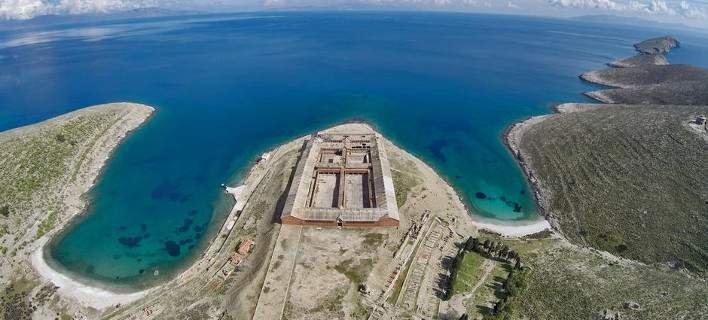
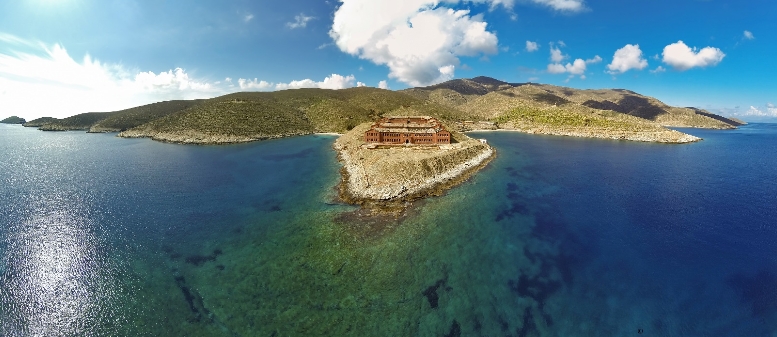
Gyaros, an arid and uninhabited Greek island in the northern Cyclades, was a place of exile and torture during the military dictatorship. Today, the small island is becoming an oasis of life.
“Mediterranean monk seals nurse their young on open beaches and seabirds nest in burrows; on the inaccessible rocks. Lush Posidonia meadows under the surface of the sea, where the sunlight is lost in the endless blue, and even deeper coral formations, shape underwater seascapes of unique environmental value and unparalleled beauty,” says the World Wide Fund for Nature (WWF) Hellas.
Over a decade ago, WWF Hellas launched an initiative to save the forgotten island and protect its natural wealth. Specific regulations were absent regarding destructive human activities, such as: trawler fishing, the main threat to coral formations, or anchoring of vessels, which can cause irreversible damage to the posidonia meadows, home to many species of fish.
Demetres Karavellas, CEO of WWF Hellas said that the organization chose Gyaros to launch the “Cyclades Life” initiative. “Gyaros is a unique place, an island where nature meets history. We wanted this island that was a place of exile and death to become an island of life and hope.”
Haunting history of Gyaros
Following the Civil War (1946-49), the island, which was a place of exile even in Ancient Roman times, continued the grave tradition, with 20,000 people, mostly communists and other dissidents, exiled to Gyaros.
Officially, it was a kind of reformatory, where the unruly would be transformed into “real Greeks” through the use of various punishments. It was a place of forced labor and torture. Some characterized it as a concentration camp on Greek soil—the island of the devil.
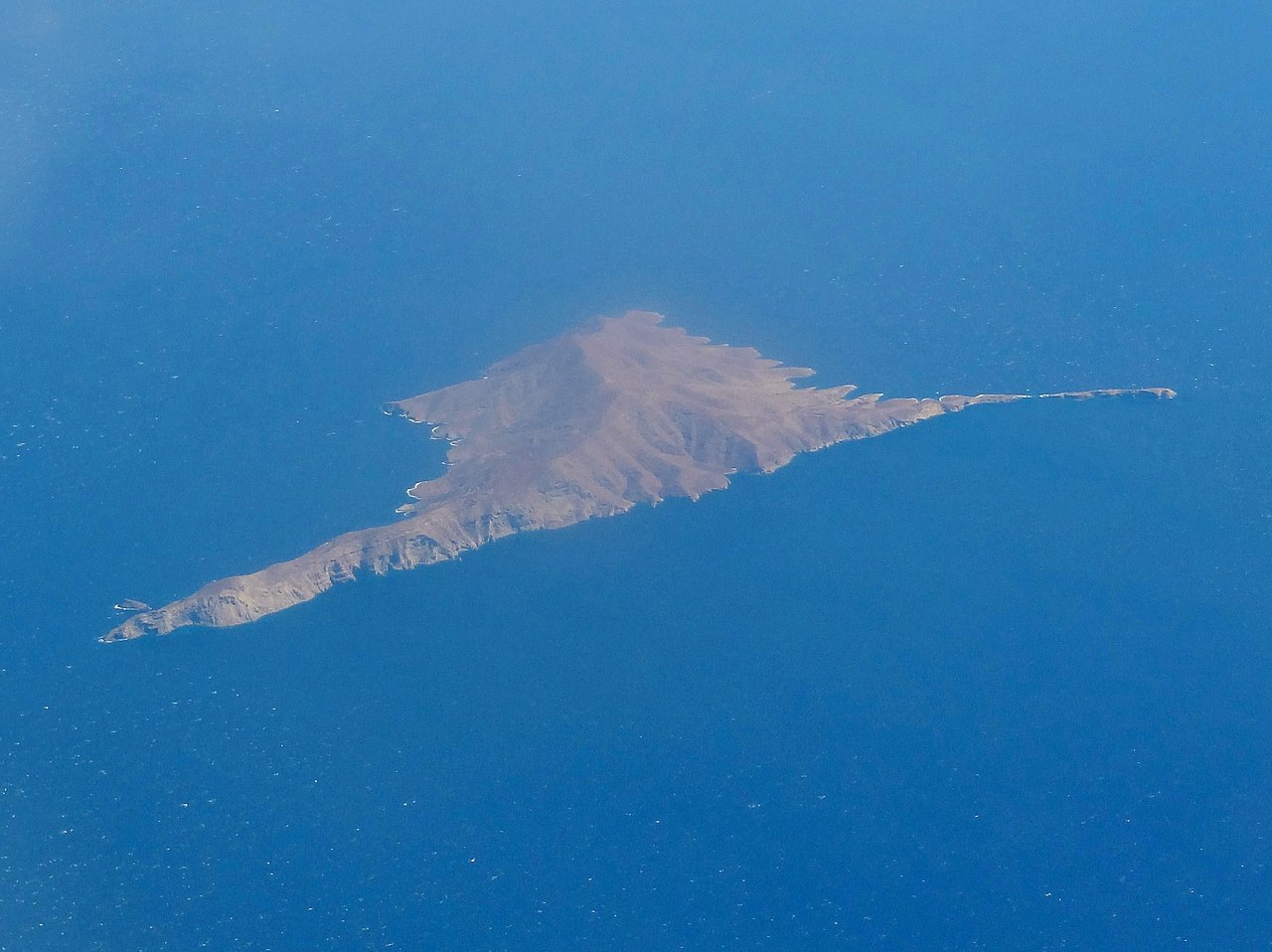
“The architecture of the prison areas is clearly reminiscent of the sites of Nazi concentration camps,” said Kostas Katsimbinis, a lawyer who founded the “GYAROS-HISTORICAL MEMORY” Association, aimed at preserving the historical memory of the island, over twenty years ago.
Looking back to the early post-war years, Katsibinis told Deutsche Welle (DW) recently: “It is no coincidence that the Greek and international press at that time called Gyaros the Dachau in the Mediterranean.”
He added, that the detainees themselves were forced to build the main prison and other auxiliary buildings in the island, and “all this under inhumane living conditions.” In 1952, as soon as the prison was completed, it was abolished. This is because of the outcry from the international community and protests by UN.
Greek authorities were forced to transfer all prisoners to detention centers on the mainland of Greece. However, during the dictatorship (1967-1974), thousands of dissidents were again exiled to Gyaros. For the first time ever, there were even pregnant women among them.
Junta’s lies exposed
According to Katsibinis, the most famous prisoners of Gyaros included the former Foreign Minister of PASOK (1981-1985) Yannis Charalambopoulos and the poet Yiannis Ritsos. The dictatorship denied all the events of Gyaros. However, a German journalist managed to reveal the truth.
In 1967, shortly after military takeover, a reporter from the German magazine Stern flew over Gyaros, took photos, and published them throughout Europe. A few months later, journalists of the French magazine Paris-Match also flew over the island revealing the true purpose of Gyaros to the wider public.
The colonels could no longer deny the truth. Evidence from the prison at Gyaros contributed to the subsequent exclusion of Greece from the Council of Europe for human rights abuses. The dictatorship continued trying to distort the truth, lying about the number of people who had died at Gyaros.
“There are 22 tombs in Gyaros, but the dead are many more. The prison administration did not want to be blamed for the deaths, so they transferred moribund cases to the island of Syros, where they died at the local hospital,” Katsibinis told DW.
From “Devil’s Island” to ecological paradise?
Today, Gyaros is being transformed into a protected ecological area and a paradise for diving. The island is considered a restricted area, and, in 2011, it was included in the Natura 2000.
WWF Hellas pressured Greek authorities to take further measures to protect the island’s ecosystem. Finally, in the summer of 2019, the Ministry of Energy established Gyaros as the first marine protected area in the Cyclades. WWF Hellas says 15 percent of the monachus monachus monk seal population lives in the marine area around Gyaros, perhaps the largest colony of the species worldwide.
It was added that the island’s decades-long uninhabited status has left nature undisturbed. The aim is to open the “devil’s island” to visitors but in such a way as to preserve both its historic character and natural beauty. However, the project remains complicated in light of an unclear legal framework.
In 2001, Gyaros was declared a historic monument, which means that all building activities are actually prohibited. Despite this, the good news is that the local communities of neighboring islands are in favor of mild tourist development on the island of Gyaros.