

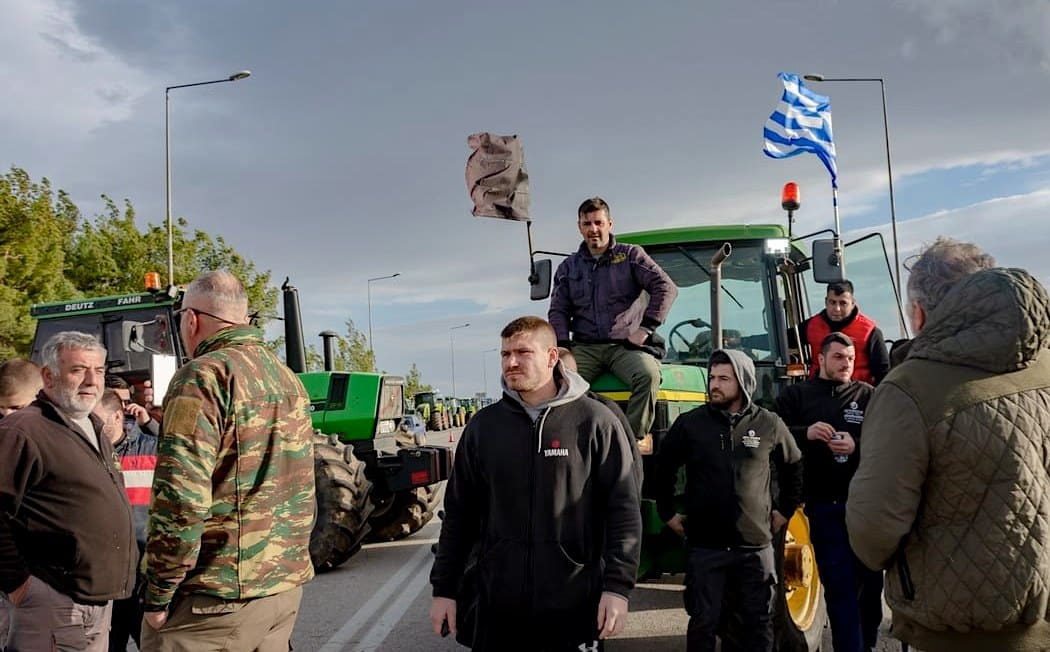
Greek farmers are escalating their protests by blockading the Athens-Thessaloniki National Road.
The main motorway in Greece remains closed on Monday near Nikaia in Thessaly, where farmers have been lined up on the roadway with their tractors since yesterday afternoon, marking the start of their agricultural mobilizations.
The presence of farmers and agricultural associations remains strong at the site, with more machinery gradually arriving at the roadblock. The majority of reinforcements are expected today to strengthen the blockade.
The Traffic Police continue to implement traffic diversions via alternative routes to prevent major congestion and vehicle flow problems.
Farmers are facing significant problems that have driven them to take their tractors to the streets just before the holidays.
Despite the government’s recent announcements, farmers insist on continuing the mobilizations, as they believe no substantial change is forthcoming.
On Thursday, November 27, Deputy Prime Minister Kostis Hatzidakis stated: “€3.7 billion will be paid to farmers in 2025 by OPEKEPE, the Ministry of Rural Development and Food (YPAAT), and the Ministry of Finance. Payments from OPEKEPE in 2024 amounted to €2.7 billion. Payments for 2025 are expected to reach €3.3 billion by December 31.”
OPEKEPE is Greece’s national agency responsible for distributing EU aid to farmers.
Greek farmers are not convinced
Despite these figures, the farmers are not convinced. claiming that many farmers will be excluded from payments due to the new systems that include satellite imagery.
They also say that the government’s aid measures for farmers and livestock breeders do not include compensation for the summer fires and the Daniel storm, which are still pending.
Farmers’ associations estimate that approximately 113,000 farmers will receive no aid whatsoever. “What will these people do? How will they get through the holidays?” said Vangelis Betsas, President of the Federation of Agricultural Associations of Arta.
Breeders are also protesting for the delayed and inefficient state response to the sheeppox outbreak which has continued to decimate the country’s livestock for over a year, forcing many units to shut down.


