
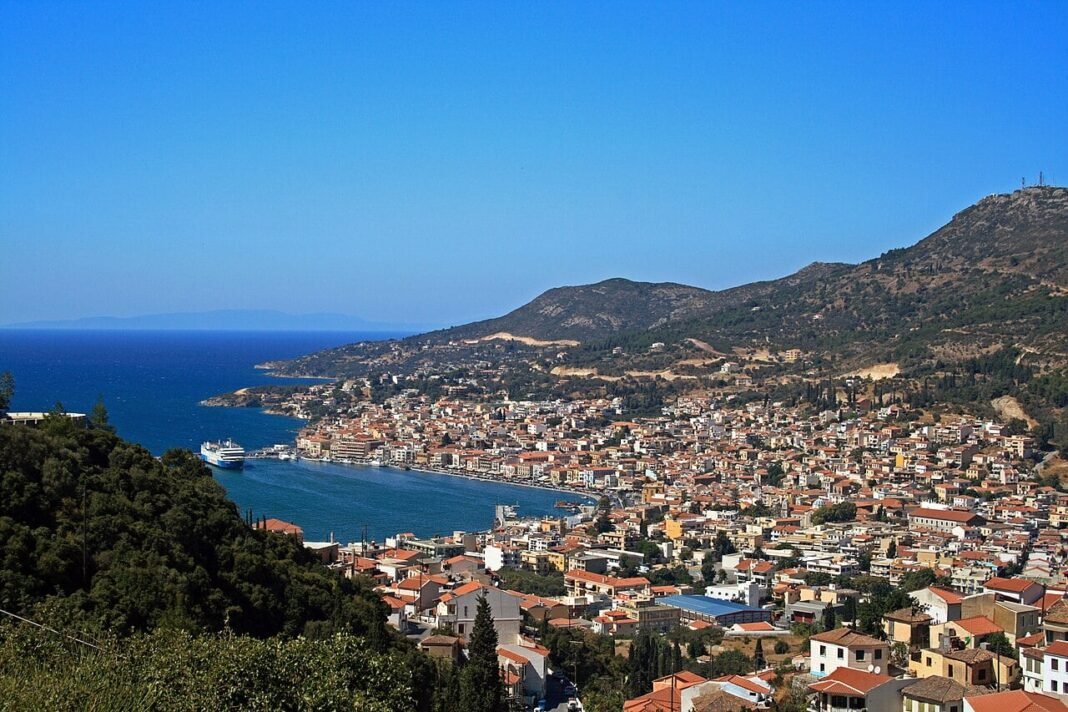
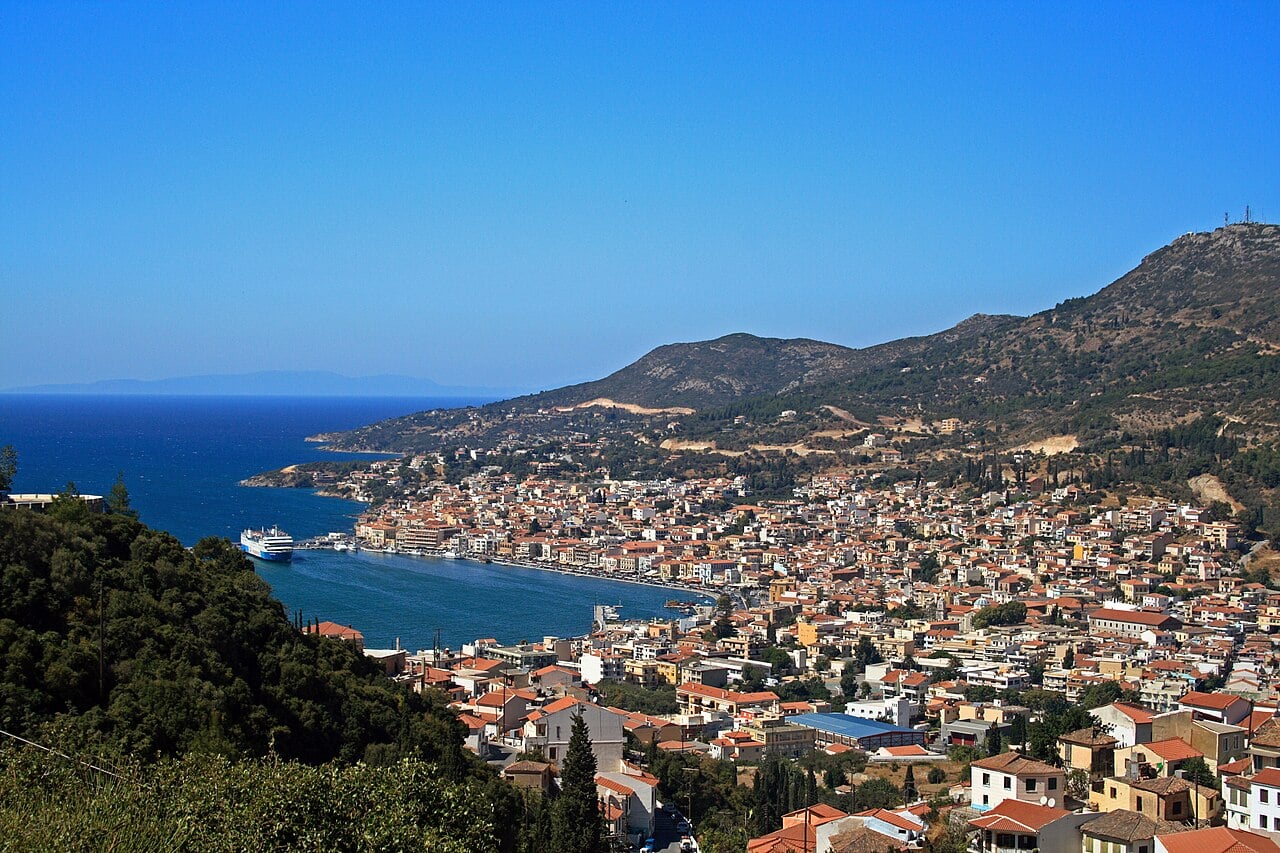
Greece’s Samos is moving rapidly into the international spotlight as one of the most promising new choices for British travelers. New direct flight connections from UK airports and expanding international media coverage are already driving a noticeable rise in early bookings ahead of the upcoming travel season.
Several major British outlets now highlight Samos as a leading new-access destination for vacationers who want a balanced mix of scenery, heritage, and outdoor activity rather than purely resort-based stays.
Strong media attention and market demand for Samos among British travelers
UK press reports point to a sharp increase in traveler interest directly linked to the launch of nonstop routes. Coverage consistently highlights the island’s diversity, including sandy beaches, archaeological landmarks, traditional villages, and a well-established wine culture. Travel features aimed at British tourists encourage exploration beyond the shoreline, with a focus on rural settlements, local gastronomy, and hiking routes on mountains.
One major travel industry publication ranked Samos third worldwide among destinations newly connected by direct UK flights. The same global list includes Seoul, St. Louis, Punta Cana, Ottawa, Tirana, New Jersey, and Nice, placing the Greek island in strong competitive company for route-driven tourism growth.
Experience-driven travel attracting British tourists to Greece’s Samos
Tourism authorities in western Samos are expanding international outreach campaigns to align with new air connections. Their strategy positions the island as a multi-dimensional destination rather than a single-theme beach market.
Local officials report growing interest from British travelers in food culture, guided exploration, hiking, village touring, and historical sites. Current partnership discussions with UK tourism bodies focus on promoting alternative and experience-led travel segments, including gastronomy and outdoor recreation.
Geography and strategic position
Samos stands out in the Aegean for its rare combination of accessible coastline and rugged vertical terrain. Two dominant mountain ranges, Kerkis (also known as Kerketeas) and Ambelos (also called Karvounis), define the landscape and support extensive hiking networks and panoramic routes. This mountainous structure sets Samos apart from many other Greek islands and contributes to high biodiversity and varied microclimates.
The island occupies a strategic maritime position at the crossroads of sea lanes linking mainland Greece with the Eastern Mediterranean and Egypt. It lies just off the Asia Minor coastline of modern Turkey, separated by a narrow strait less than a mile wide at its closest point. This proximity strongly influenced the island’s commercial and cultural development in antiquity. Classical historian Herodotus described Samos as one of the greatest cities known to Greeks and non-Greeks alike.
Archaeological research confirms that the main ancient urban center stood on the site of modern Pythagorio. Excavations on Kastro Hill show continuous human presence dating back to the Neolithic period in the fifth millennium BC, placing Samos among the oldest continuously inhabited locations in the Aegean region.
Mythic origins and historical legacy
Samos carries a deep historical and mythological identity. Scholars recognize it as the birthplace of mathematician and philosopher Pythagoras and astronomer Aristarchus, linking the island directly to early scientific thought and intellectual history.
Mythic tradition names Angaios (also recorded as Aggeus) of Arcadia as one of the earliest settlers. He took part in the expedition of Jason and the Argonauts in the search for the Golden Fleece. Greek mythology also identifies Samos as the birthplace of Hera, queen of the gods, giving the island a central place in sacred narratives.
Another tradition credits the first habitation of the island to the Nereids, sea nymphs associated with Poseidon who protected sailors and guided ships through storms. The most famous among them was Thetis, later known as the mother of Achilles.
There are two theories related to the island’s name. One connects it to Samos, the son of Angaios. The other traces it to the Phoenician root sama, meaning elevated ground or high place, a description that matches the island’s mountainous profile shaped by Kerkis and Ambelos. Together, geography, legend, and early settlement history establish Samos as both a cultural landmark and strategic hub of the ancient Aegean world.
Related: Greece’s Island of Samos: The Birthplace of Philosophers and Gods


