

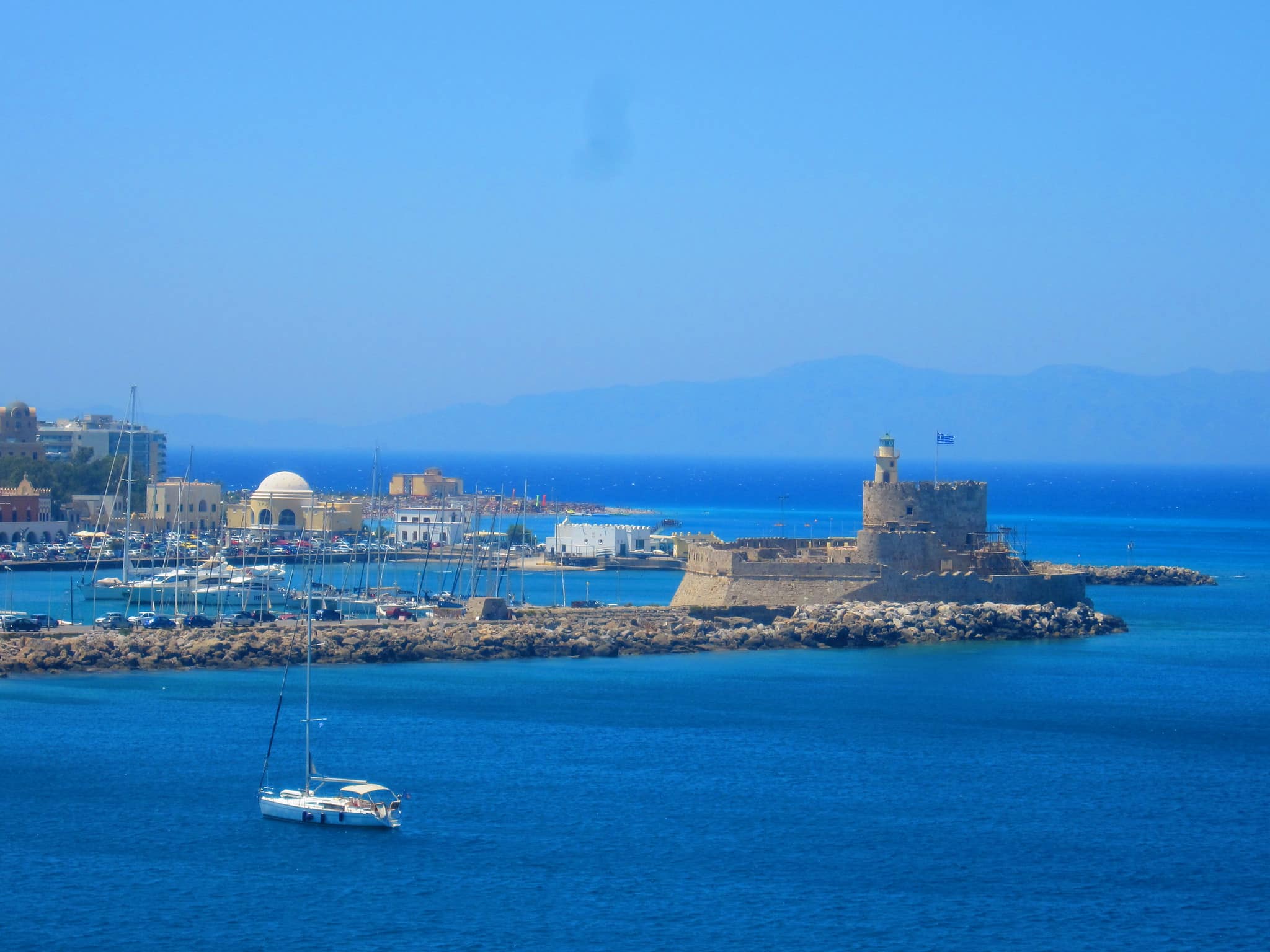
Greece’s island of Rhodes will deploy drones, ground patrols, gate controls, and rapid-response teams to monitor its Medieval City after violent incidents raised security concerns inside one of the country’s most historic urban landmarks.
The municipality will fund the €1.26 million ($1.46 million) project, which will be awarded mainly through an open international electronic tender. A separate one-month contract may be assigned directly to cover urgent needs during the summer and fire-risk season.
Why is Rhodes turning to drones?
The municipal study describes the Medieval City of Rhodes as a particularly sensitive urban and cultural area. It attracts large numbers of visitors, hosts intense commercial activity, and serves as a venue for cultural events and public gatherings, especially during the tourist season.
The area covers about almost a quarter of mile and has a dense network of narrow streets and alleys. In several parts of the Medieval City, conventional vehicles have limited or no access. According to the study, these conditions require continuous monitoring, rapid response to unlawful behavior, documented checks on the use of public spaces, and quick intervention in emergencies.
Municipal authorities have recorded repeated occupation of public spaces beyond approved limits and aggressive solicitation of customers that has led to tensions and disturbances. Illegal vehicle entry and parking despite existing gate control systems as well as safety concerns linked to overcrowding and incidents requiring first aid have also been observed.
The new services aim to prevent and deter unlawful activity, support rapid intervention, and monitor commercial zones and entrance gates. In addition, violations will be documented, and the municipality’s inspection mechanisms will be supported. The system may also utilize artificial intelligence.
Drone surveillance to run longer during tourist season
The drone surveillance schedule will vary by season. From May 1 to October 30, monitoring will operate from 8 a.m. until midnight. From November 1 to April 30, it will run from 8 a.m. to 4 p.m.
Certified drone operators will carry out the flights and provide real-time coverage of the Medieval City’s perimeter. The drones will also monitor areas that cannot be seen from the ground or are difficult to access. The system will support immediate intervention in cases involving public order, fire safety, prevention, and health emergencies.
Drones will transmit live video to an Operations Center and to computers or mobile devices monitored by authorized municipal employees. They will help officials identify violations as they begin, monitor crowding, supervise hard-to-reach areas, and guide ground teams in real time.
Drones to monitor walls and monuments on Rhodes, Greece
The plan also includes provisions for monuments and fortifications. Drones will carry out regular flights to detect damage to walls or monuments that ground teams may not be able to see and that may require urgent maintenance.
This part of the project links public safety with heritage protection. The Medieval City’s architecture, fortifications, and historic buildings help make Rhodes one of Greece’s most vital cultural destinations.
The enduring history of Greece’s Rhodes
Rhodes has a rich and layered history shaped by its strategic position at the crossroads of civilizations. Its story began in antiquity, when the island developed into a major maritime and trading power. The Colossus of Rhodes, one of the Seven Wonders of the Ancient World, once stood at the island’s harbor entrance. The massive bronze statue of the sun god Helios was deemed a symbol of Rhodes’ ancient power and influence.
Rhodes later became an important center during the Roman and Byzantine periods. Its most recognizable architectural legacy, however, took shape under the Knights Hospitaller of Saint John, who ruled the island from the 14th to the 16th centuries. During that period, the Knights transformed Rhodes Town into a major medieval fortress. Its imposing walls, the Palace of the Grand Master, and Gothic buildings made up one of the most remarkable fortified urban centers in the Mediterranean.
The Medieval City remains exceptionally well preserved and is listed as a UNESCO World Heritage site. Later Ottoman and Italian rule added further cultural and architectural layers, giving Rhodes its distinctive historical character.
The breathtaking beauty of the Greek island
Beyond its history, Rhodes remains one of Greece’s most visually striking islands. Its eastern coast is known for its sunlit, golden beaches, serene waters, and popular swimming spots, while the more rugged, wind-swept western coast attracts windsurfers and kiteboarders.
Inland, areas such as the Valley of the Butterflies, known locally as Petaloudes, offer a greener and quieter side of the island, with distinctive flora and fauna. Pine and cypress forests cover the hills and lead to viewpoints over the Aegean Sea.
Traditional villages across the countryside preserve the atmosphere of the Greek islands, accompanied by whitewashed houses, narrow lanes, and bougainvillea-covered walls. With its turquoise waters, dramatic coastlines, lush interiors, and year-round sunshine, Rhodes remains one of Greece’s premier destinations.


