
Greece’s IRIS Payments system has expanded beyond the domestic market, allowing instant cross-border money transfers to selected countries in Europe through the recipient’s mobile phone number.
The service became available at the end of June through EuroPA, the European Payments Alliance. In its first phase, IRIS connects Greece with equivalent payment systems in Spain, Portugal, Italy, and Andorra.
The new function applies only to person-to-person transfers between individuals. It allows users to send money to registered users of participating European payment services without entering an IBAN.
IRIS joins European payment platforms
EuroPA links national account-to-account instant payment systems, including IRIS Payments in Greece, Bizum in Spain, MB WAY in Portugal, and BANCOMAT Pay in Italy.
According to DIAS, Greece’s national interbank payment clearing institution, the first phase covers 57.3 million European citizens across five countries. The network is expected to expand to more than 176 million citizens in eighteen European countries by the end of the year.
In 2027, interoperability is planned to extend to payments at online and physical retail stores. For now, the service is limited to transfers between private individuals. The transfer limits remain the same as those that apply in the Greek market. Users can send up to 1,000 euros (around $1,140) per day to another individual, with a monthly limit of 5,000 euros ($5,700).
Use of Greece’s IRIS payments system increased in 2025
The European expansion follows a year of increased use for instant payments in Greece. In 2025, 122.1 million instant payments were processed, an increase of 72.8 percent compared with 2024. Instant payments represented 27 percent of credit transfers. In December 2025, the system recorded a monthly high of 15.4 million instant payments, while on December 14 it reached a peak of 235 transactions per second.
IRIS P2P, the service used for transfers between individuals, recorded 111.4 million transactions in 2025. The number of registered users reached 4.3 million. Use among professionals also increased. Transactions involving freelancers and sole proprietors rose by 197 percent compared with 2024, while 583,445 professionals had activated IRIS.
In e-commerce and retail infrastructure, IRIS was available across approximately 1.2 million POS terminals and 70,000 e-shops. Transactions through IRIS Commerce increased by 70.8 percent.
According to data from DIAS, Greece’s interbank payment system, users aged 25 to 54 are the most active group. Among professional categories, lawyers account for the largest number of IRIS activations, although psychologists record higher actual use of the service.
Physical store of IRIS payments system use remains limited
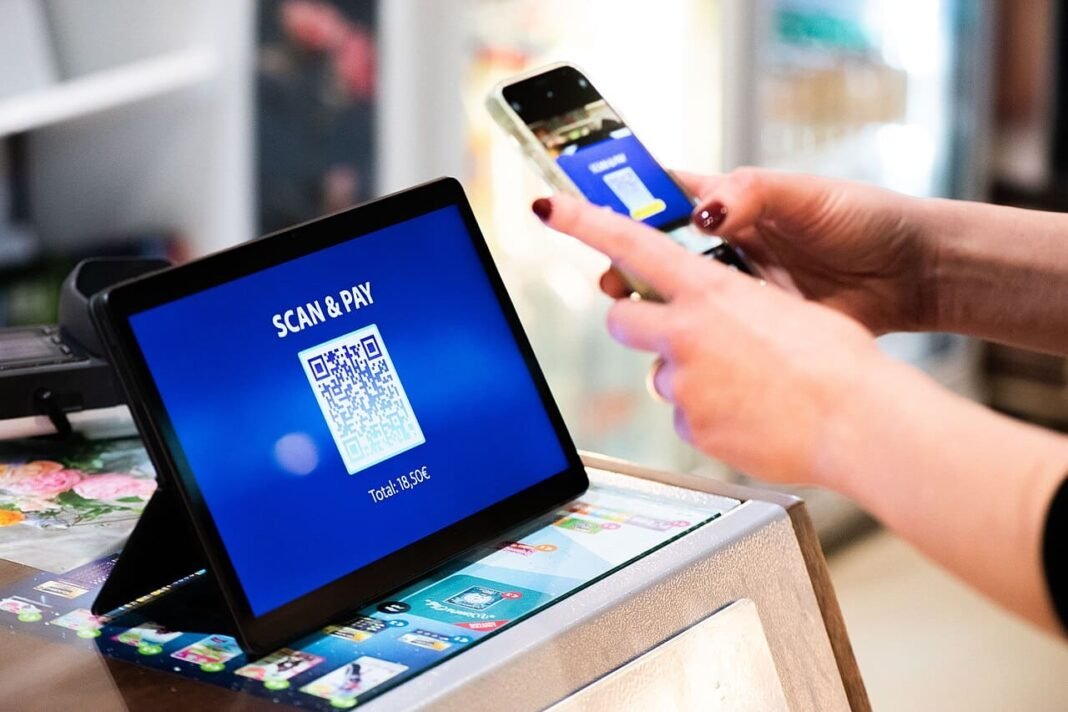
Despite the expansion of the system, adoption at physical points of sale remains limited. Since December 1, 2025, IRIS has been available across physical stores in Greece through POS terminals, with no transaction limit for retail payments. DIAS has described Greece as the first country in Europe with universal acceptance of account-to-account instant payments at points of sale.
However, Economy and Finance Minister Kyriakos Pierrakakis recently revealed that IRIS transactions in physical stores remained low, at around 55,000 per month. According to Pierrakakis, wider use would require greater visibility of IRIS at checkout points, consumers would need to be better informed, and there would need to be stronger incentives for merchants as well as reward mechanisms similar to cashback programs offered by card providers.
He also referred to the need for a payment experience similar to Tap & Pay through NFC technology, allowing users to pay with a simple contactless action comparable to Apple Pay or Google Pay.
Greece’s IRIS payments system expands account-to-account payments in Europe
The expansion of IRIS into cross-border transfers comes as European payment providers seek to make instant account-to-account payments more interoperable across national markets. The service currently covers only person-to-person transfers between individuals in participating countries. Cross-border payments at online and physical stores are not yet possible.
The next stage will depend on the expansion of participating banks and payment providers, as well as consumer adoption outside of the country. Within Greece, the main challenge remains the shift from technical availability to regular use in everyday purchases.