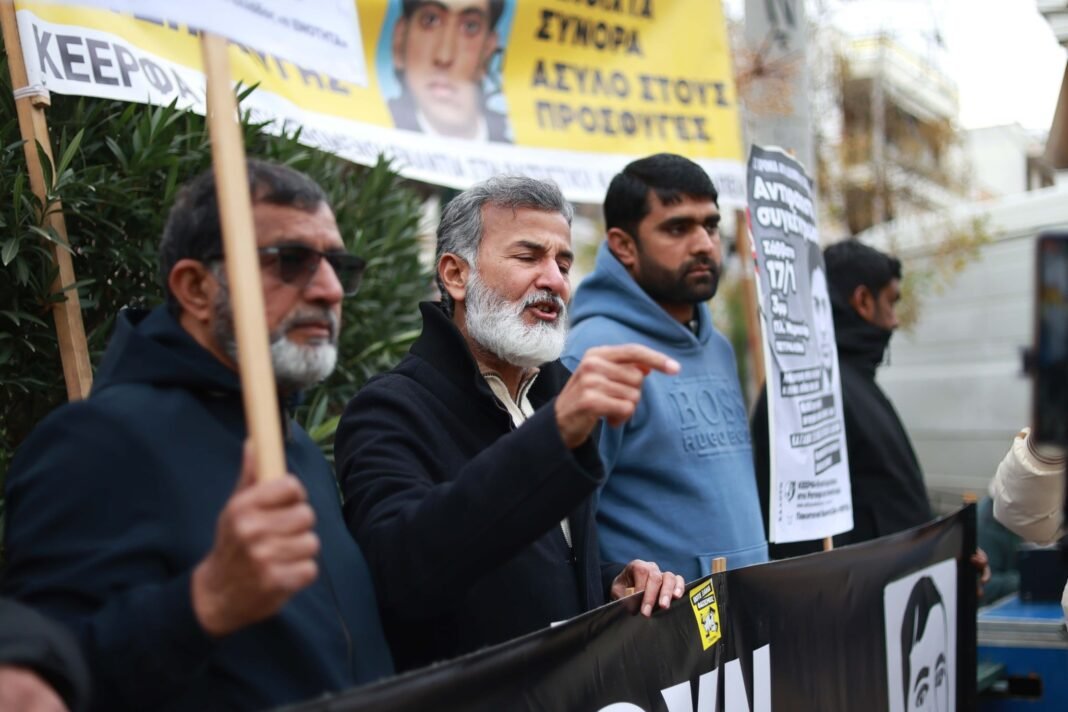
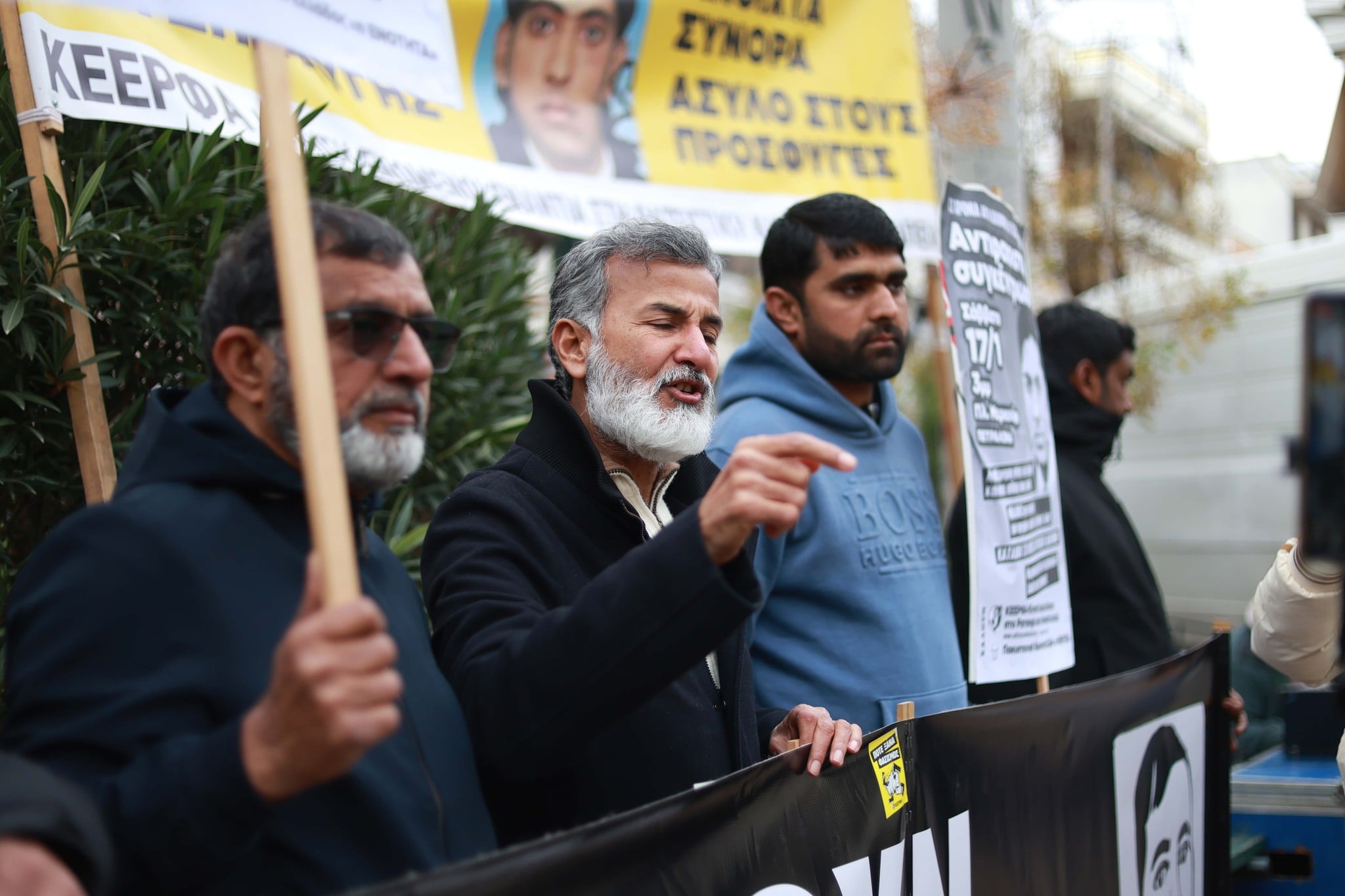
Greek authorities have reportedly launched formal proceedings to revoke the asylum status of Javed Aslam, the long-standing president of the Pakistani Community of Greece.
The move is part of a sharply accelerating government crackdown on international protection cases, according to reports released Monday.
Three decades of the Pakistani leader’s activism in Greece
Aslam, who has led the “Pakistani Unity Organization” since the mid-2000s, has been a fixture of Greek social activism for nearly 30 years. His tenure has been marked by:
Labor Advocacy: Championing the rights of migrant agricultural and manual laborers.
Anti-Racism: Frequent leadership in street demonstrations against far-right groups.
Legal Battles: In 2007, the Greek Council of Appeals unanimously rejected an extradition request from Islamabad, which sought Aslam on human trafficking charges—a move his supporters claimed was politically motivated.
However, Aslam has often been a lightning rod for criticism. Conservative circles frequently point to his more militant rhetoric, such as his warning during an anti-racist rally: “Migrants also have hands… and at some point, in response to the threats they face, they can fight back.”
Greece implements tougher rules in asylum policy
The move against Aslam follows a directive from Migration Minister Thanos Plevris to reassess asylum files. The Ministry reported that in the last two weeks alone, revocation procedures were initiated for 33 nationals from countries including Syria, Pakistan, Egypt, and Iraq.
The statistical shift under the current administration is stark:
2013–2020: Only 19 asylum statuses were revoked.
2021–2025: 583 statuses were revoked.
2026 (YTD): 47 cases have already been launched.
Legal next steps
According to reports, the Greek Asylum Service has granted Aslam 15 working days to submit written objections. Under Greek law, asylum may be withdrawn if an individual is deemed a threat to national security, a danger to society following a criminal conviction, or if the circumstances in their home country have improved significantly enough to no longer justify protection.
Should the initial decision go against him, Aslam retains the right to a second-instance appeal.
The Pakistani Diaspora in Greece
The first significant wave arrived in the 1970s and 80s, primarily working in the shipping and textile industries. Today, the community is estimated at roughly 60,000 to 80,000 people, many of whom are essential to Greece’s agricultural sector (particularly in Manolada, Peloponnese) and construction.
While many are well-integrated business owners, a large portion of the community exists in a state of “permanent temporality,” facing rigorous bureaucratic hurdles for residency renewals.
Under Aslam’s leadership, the community became one of the most politically vocal migrant groups in Athens, often aligning with Greek leftist and human rights organizations.
Related: Greece Announces Crackdown on Illegal Places of Worship