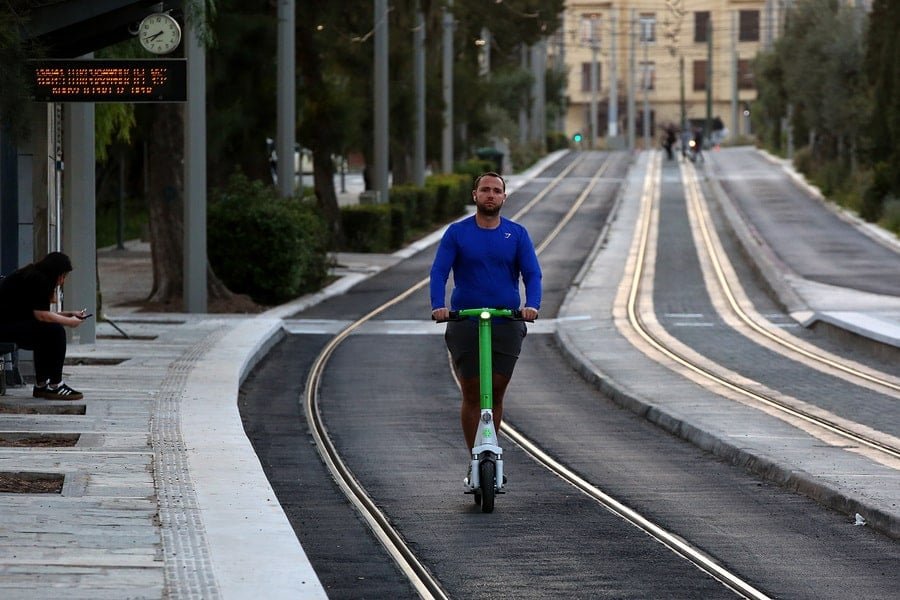
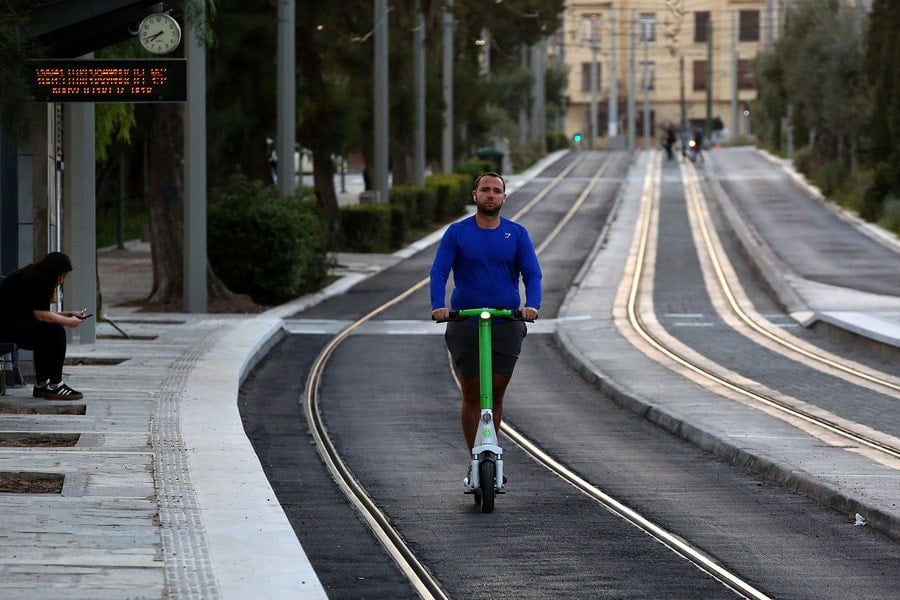
Greece has introduced draft legislation that would impose an e-scooter ban on riders under 17, require third-party liability insurance, and sharply increase fines for unsafe use after a surge in child injuries.
The proposal, backed by the Ministry of Infrastructure and Transport, aims to create a stricter legal framework for a form of transport that has become increasingly common in Greek cities. Officials say the rules seek to protect young riders, pedestrians, and other road users as e-scooter accidents involving children continue to raise public concern.
Under the draft law, people under 17 would not be allowed to ride electric scooters on public roads, except in cases involving mobility devices used by people with disabilities. Riders who violate the age restriction would face a €150 fine.
The bill would also ban the sale, rental, or provision of electric scooters to anyone under 17. Companies would have to check a customer’s age before providing a scooter. Businesses that violate the rule would face a €1,000 fine, or about $1,170.
Greece’s e-scooter ban includes new fines and insurance requirements
The legislation would sharply increase the penalty for riding an electric scooter on roads where the speed limit exceeds 50 kilometers per hour, or 31 miles per hour. The fine would rise from €30, about $35, to €350, about $410.
Riders would also need to carry valid identification and proof of insurance. In addition, scooter owners, rental companies, and sellers would have to ensure third-party liability insurance, which would cover injuries or property damage caused in an accident.
The new rules would mark a significant shift in Greece’s approach to micromobility. E-scooters have gained popularity because they offer a low-cost and convenient way to travel short distances. However, their rapid spread has also created safety concerns in dense urban areas, where riders often share space with cars, cyclists, and pedestrians.
Hundreds of children injured in Greece
The draft legislation follows alarming injury figures. Greek reports have cited around 400 accidents involving minors in 2025, with roughly half of the injured children requiring hospitalization.
Officials have also warned that hundreds of children have been hospitalized over the past year after e-scooter accidents. In the past two years, three minors have died in similar incidents. Medical experts say e-scooters now account for an estimated 3% to 8% of all pediatric injuries treated in emergency rooms.
Orthopedic surgeon Antonis Angoules, speaking to a Greek radio station, said head injuries make up roughly one-third of e-scooter-related cases. Children, he said, often suffer fractures to the upper limbs, especially the wrists and elbows, because they instinctively stretch out their arms when they fall.
Adults tend to sustain different injuries. Because they often fall with greater force and momentum, they more frequently injure their ankles, knees, and shoulders, including shoulder dislocations.
Angoules also noted that many accidents occur the first time someone rides an e-scooter, citing a study that highlights the need for basic training before riders enter traffic. Children face particular risk, he said, because their musculoskeletal systems have not yet fully matured, which limits motor control and reaction ability.
Speed limits often ignored
Under current Greek law, children between 12 and 15 may ride e-scooters at a maximum speed of 6 kilometers per hour, only slightly faster than walking pace. Riders over 15 may use scooters that travel at up to 25 kilometers per hour. Angoules said riders frequently ignore those limits.
The popularity of e-scooters has grown sharply in recent years, driven by their low cost and ease of use. That accessibility, experts warn, has encouraged reckless use, especially among children.
Angoules called for strict legislation to save lives and reduce serious accidents involving both riders and pedestrians.
Greece’s e-scooter ban reflects a wider international problem
The safety problem extends beyond Greece. In the United States, e-scooter injuries rose from around 4,000 in 2014 to nearly 30,000 in 2019, reflecting the vehicle’s rapid spread worldwide.
Research has also highlighted the importance of helmets. A University of Graz study found that helmet use can reduce head injuries by 44%. Angoules stressed that riding e-scooters on busy roads without a helmet, or while using a mobile phone or wearing headphones, creates an unacceptable risk.