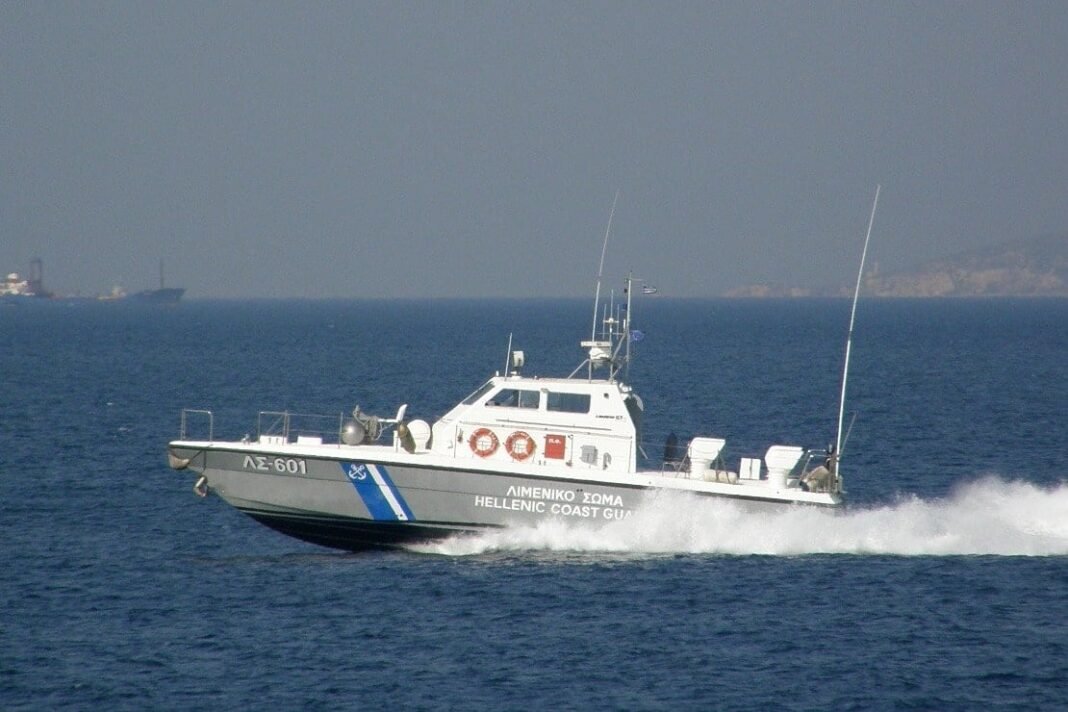
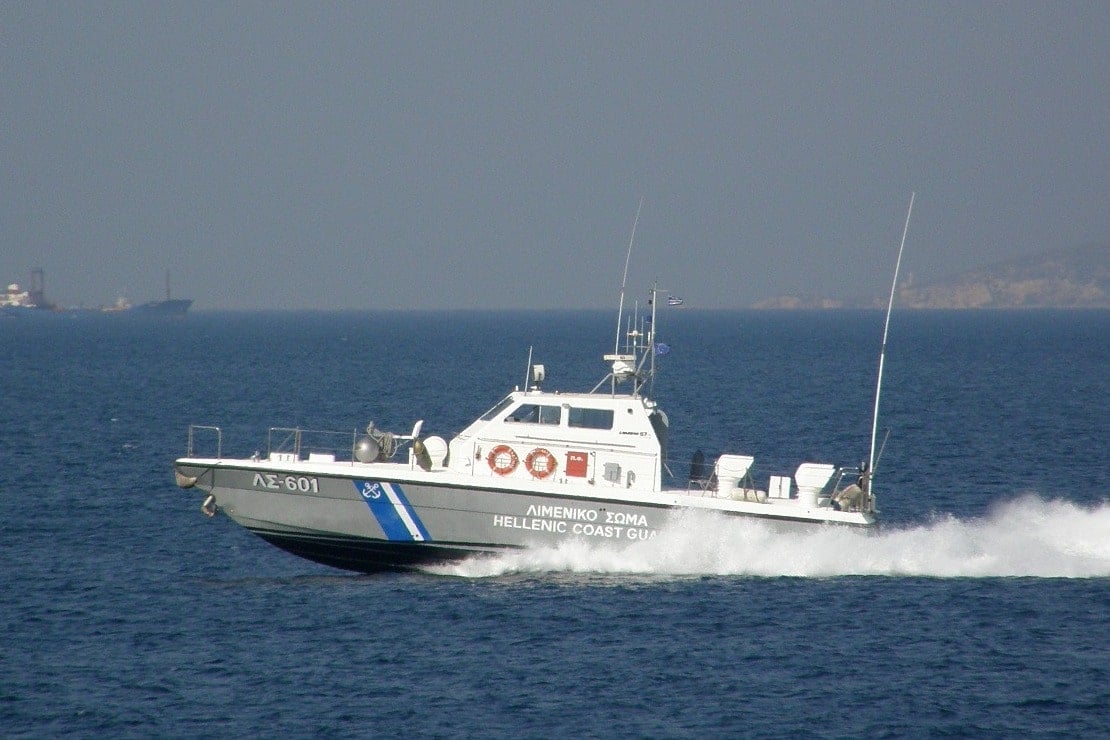
Migrant arrivals to southern Greece through the so-called “southern corridor” linking Libya with Gavdos and Crete have risen sharply in 2025, according to official figures from the Hellenic Coast Guard. From January through late December, 19,948 people reached Greece via Libya, compared with 4,935 during all of 2024—an increase of more than 400 percent.
The final month of the year proved especially intense, with roughly 3,000 migrants landing on Gavdos and Crete. During just three days between 26 and 28 December, authorities recorded twelve arrivals involving around 1,000 people. Coast Guard sources attributed the spike partly to favorable weather conditions across the southeastern Mediterranean, noting that deteriorating winds temporarily slowed departures.
Large scale rescues off Crete and Gavdos
Operations have continued at a rapid pace. On one recent Saturday, a commercial vessel rescued 31 migrants from waters around 49 nautical miles south of Crete. The group reported departing Tobruk, Libya, on the evening of 26 December and said they each paid between 150,000 and 200,000 Egyptian pounds—about €2,500—to smugglers.
The following day, another ship picked up 109 migrants south of Gavdos and brought them to Paleochora. Authorities said 49 were Egyptian nationals, 40 from Bangladesh, and 20 from Sudan. Officials also noted a marked rise in the number of Bangladeshi migrants using the Libya-to-Crete route in recent weeks. In a major rescue earlier in December, most of the 540 people on board a fishing vessel south of Gavdos were Bangladeshi.
Libyan coastal enforcement has faced capacity constraints, with its only ocean-going patrol vessel reportedly out of service due to mechanical failure.
Smuggling networks shift routes and tactics
Greek officials acknowledge that bilateral engagement with Libyan authorities in 2025 has so far failed to reduce departures from North Africa. They argue that stronger pressure is needed to disrupt smuggling operations before migrants reach the shoreline, pointing to approaches previously taken by Italy and Malta.
Coast Guard sources also report indications that Turkish smuggling rings have shifted operations from the eastern Aegean to the Libya-Crete corridor. Investigators believe some of the inflatable boats used in the crossings are manufactured in Turkey and shipped to Libya for smugglers’ use. Turkey’s political influence in parts of Libya adds another layer of complexity to enforcement efforts.
Tougher Greek laws fail to deter migrant arrivals to Greece
Greece introduced stricter migration legislation in September, but the measures have not deterred crossings to Crete and Gavdos. Nearly 3,000 people arrived in December alone, compared with 299 during the same month in 2024.
While the government reports an overall year-on-year decline in arrivals nationwide—56,105 in the first eleven months of 2024 versus 42,900 in the same period of 2025—the southern route has surged.
A temporary three-month suspension of asylum applications earlier in the year also failed to discourage departures and instead created administrative backlogs: 32,462 cases were pending in November 2025, up from 26,275 a year earlier.
Relocation and strain on reception capacity
Arrivals are transferred from Crete to mainland facilities according to vulnerability and protection status. Families and those with refugee profiles are commonly sent to accommodation centers in Malakasa and Koutsochero, while many Egyptian nationals are housed at a closed center in Serres, which is reportedly nearing capacity.
At the local level, accommodation pressure remains high. In Chania, 832 people were being hosted at a temporary facility in Agyia, with another 183 in Heraklion. These structures are designed for short-term stays only. During the holiday period, limited ferry capacity delayed transfers to Athens, prompting temporary overcrowding until additional sailings resumed.
Healthcare demand has also increased. In one recent case, a Sudanese migrant diagnosed with malaria was hospitalized in stable condition. Authorities emphasized that the risk of local transmission is minimal during winter months.
Rising local costs amid Greece’s surge in migrant arrivals
Municipal officials in Chania estimate that spending on food, care, and basic services for arriving migrants has exceeded €1 million ($ 1,176 million) so far, while government reimbursements to date stand at roughly €425,000 ($ 499.941).
Catering alone costs €8.30 ($9.79) per person per day, meaning expenses escalate rapidly when hundreds of people require support simultaneously.
With flows to Crete and Gavdos continuing at historically high levels, authorities face pressure to expand reception capacity while addressing increasingly complex smuggling networks operating across the central Mediterranean.