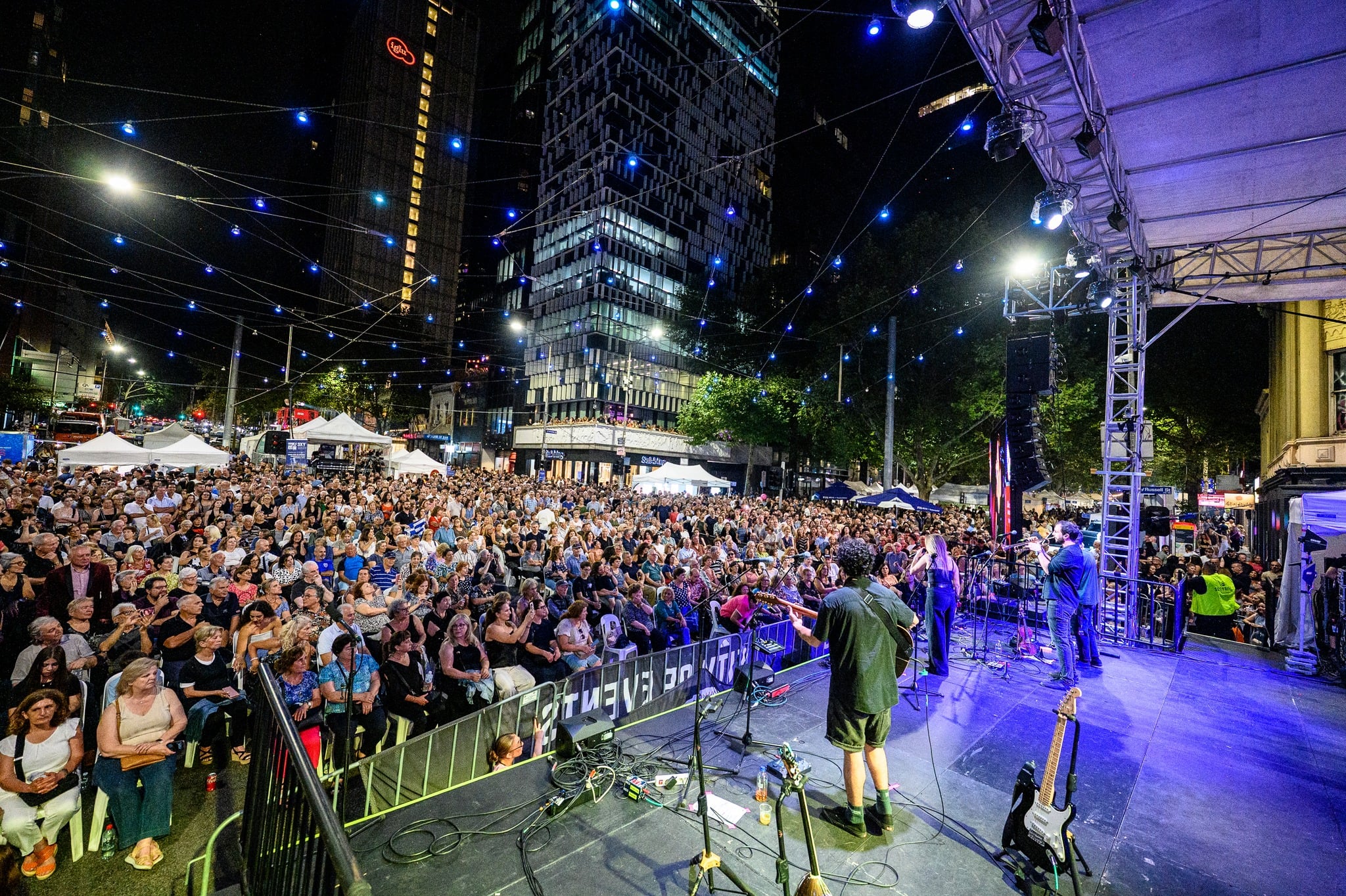
For three days, the sounds and spirit of Greece resonated through downtown Melbourne as the 38th Antipodes Festival drew tens of thousands into the city’s historic Greek district. Along Lonsdale Street, music, language, and memories converged in one of the largest celebrations of Greek culture.
Despite intermittent rain, crowds filled the streets from Friday evening through Sunday. Families, students, and visitors moved between stages and food stalls while bouzouki melodies rose above the hum of conversation. The atmosphere felt less like a diaspora gathering and more like a living extension of Greece itself.
Melbourne’s Greek community, widely regarded as one of the largest in the world outside the homeland, has shaped the city for generations. The Antipodes Festival gives public expression to that legacy. It functions not only as a cultural celebration but as a statement of continuity, resilience, and confidence.
Melbourne and Greece at the Antipodes Festival
The official opening underscored the festival’s broader significance. Vasilis Papastergiadis, President of the Greek Community of Melbourne, emphasized that sustained institutional support has ensured the event’s longevity. He acknowledged the Victorian government, the Greek Consulate, and the Church, noting that collaboration has allowed the festival to expand in both scale and visibility.
Victorian state Premier Jacinta Allan addressed the crowd with remarks that connected migration history to present-day achievement, paying tribute to Greek migrants who arrived in Australia with limited means yet established families, businesses, and institutions that helped shape modern Victoria. Their children and grandchildren, she said, now serve as educators, doctors, entrepreneurs, public officials, and community leaders.
Her reference to the Parthenon Marbles drew strong applause. Allan stated that the sculptures were unlawfully removed and belong in Greece, reinforcing a cultural issue that resonates deeply across the global Greek community.
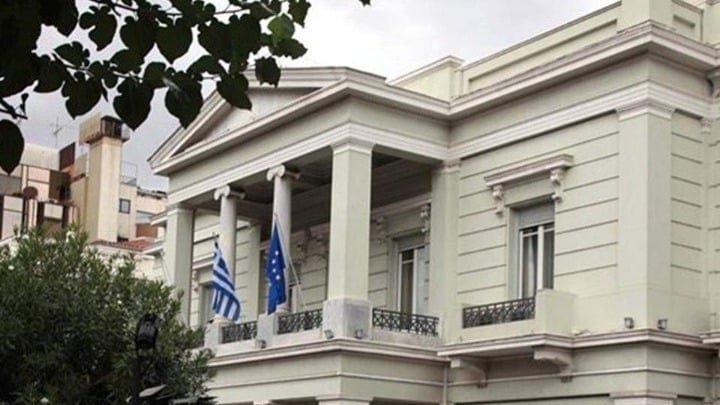
Greek Consul General Dimitra Georgantzoglou described the festival as a living bridge between Greece and Australia. She highlighted the vitality of Melbourne’s Greek community and emphasized the importance of preserving the Greek language. She also pointed to the opening of a Greek National Tourism Organization office in Melbourne as a concrete step toward strengthening bilateral ties.
Victorian state government ministers Steve Dimopoulos and Ingrid Stitt, along with Members of the Victorian Parliament Lee Tarlamis, Kat Theophanous, and Nina Taylor, also attended the event. Australian Senator Jane Hume, deputy leader of the Liberal Party in the Senate, joined them on stage, underscoring broad political recognition of the Greek community’s contribution to public life in Victoria and across Australia.
Culture in motion at the Antipodes Festival
Beyond the speeches, the Antipodes Festival unfolded as a celebration in motion. Traditional dance groups performed regional dances, youth ensembles represented the next generation, and acclaimed singer Ioulia Karapataki delivered a headline performance that connected contemporary Greek music with diaspora audiences.
Food vendors offered a broad range of traditional flavors, from souvlaki and spit-roasted pork (kontosouvli) to Greek-style donuts (loukoumades), Greek custard pie (or else bougatsa), and powdered Greek butter cookies (kourabiedes). The scent of grilled meats and sweet pastries mixed with live music, creating a sensory landscape that felt unmistakably Greek.
Organizers also honored businessman Andreas Andrianopoulos for his longstanding support. After thirty-eight years, it is evident through the Antipodes Festival that Hellenism does not fade with distance.