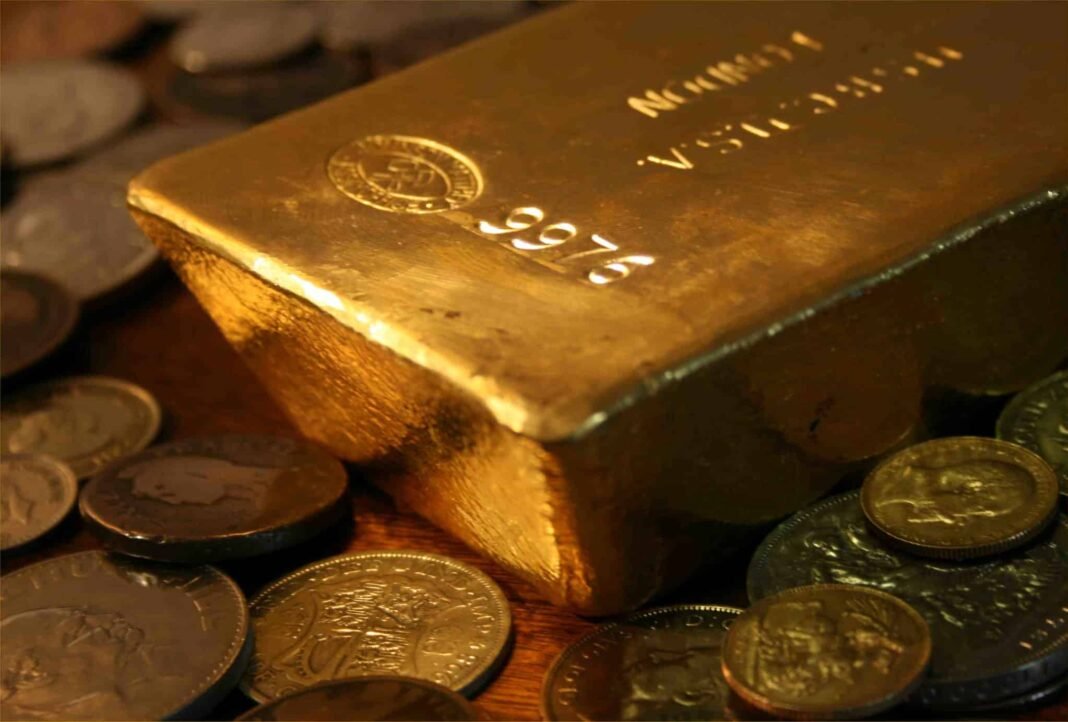

Gold prices surged past US $5,000 price per ounce for the first time late Sunday and into Monday, extending a historic rally driven by deepening geopolitical instability and investor anxiety regarding US foreign and domestic policy.
The precious metal, traditionally viewed as a safe-haven asset during periods of market volatility, reached a high of $5,058 a an ounce on Sunday evening before topping $5,100 in trading on Monday. In the first 26 days of 2026 alone, the price of gold has jumped 15%, building on a record-breaking year in 2025 when prices skyrocketed 65%, the largest annual gain since 1979.
Analysts attribute the surge to a sudden flight toward hard assets amidst a series of destabilizing moves by US President Donald Trump. These include threats of tariffs against NATO allies and Canada, military operations in Venezuela, and a criminal investigation into Federal Reserve Chair Jerome Powell.
Geopolitical and domestic tensions have caused gold to soar
Analysts say investors have been rattled by policy whiplash from the White House. Tensions escalated recently after the US capture of Venezuelan President Nicolás Maduro and threats against the Iranian regime amid a crackdown on protesters.
Additionally, markets reacted to a dispute over Greenland. President Trump had threatened tariffs on European allies who opposed his plans to acquire the territory. While the administration later claimed a framework of a deal had been reached with NATO, the unpredictability unsettled investors. Further complicating trade relations, Trump threatened over the weekend to impose 100% tariffs on Canada should the US neighbor finalize a trade deal with China.
Domestically, the political independence of the US central bank has been questioned after federal prosecutors opened a criminal investigation into Federal Reserve Chair Jerome Powell earlier this month, following renewed attacks from the President.
Economic drivers of the surge in the Gold price
Beyond geopolitics, economic fundamentals are fueling the rally. Demand has been bolstered by a weakening US dollar, higher-than-expected inflation, and expectations of further interest rate cuts by the Federal Reserve.
The dollar has taken a hit due to concerns regarding tariffs and high government spending. Because gold is priced in dollars globally, a weaker US currency makes the metal cheaper for holders of other currencies, often increasing demand.
Central bank buying has also provided support, with China extending its gold-buying spree for a fourteenth consecutive month in December. Concerns over US debt levels persist. In May, Moody’s downgraded the US credit rating from Aaa to Aa1, citing rising government debt.
Markets forecast a further increase
Despite the record high, many analysts remain skeptical of the increase in the commodity. According to reporting by Reuters, independent analyst Ross Norman said, “Our forecast for the year is that gold will see a high of $6,400 an ounce with an average of $5,375.” Major financial institutions echo this sentiment. Bank of America’s chief investment officer, Michael Hartnett, noted prices could peak above $6,000, while Société Générale analysts also forecast the metal reaching $6,000 by year-end.
Goldman Sachs analysts raised their forecasts to $5,400 per troy ounce last week, citing lingering global policy uncertainty.
Additionally, the rally has extended to other precious metals. Silver prices surpassed $100 per ounce, rising 4.5% to $107.8 on Sunday. Like gold, silver recorded its best performance since 1979 last year, with a price increase of over 140%. Platinum also reached an all-time high, surpassing $2,800 per ounce on Monday.