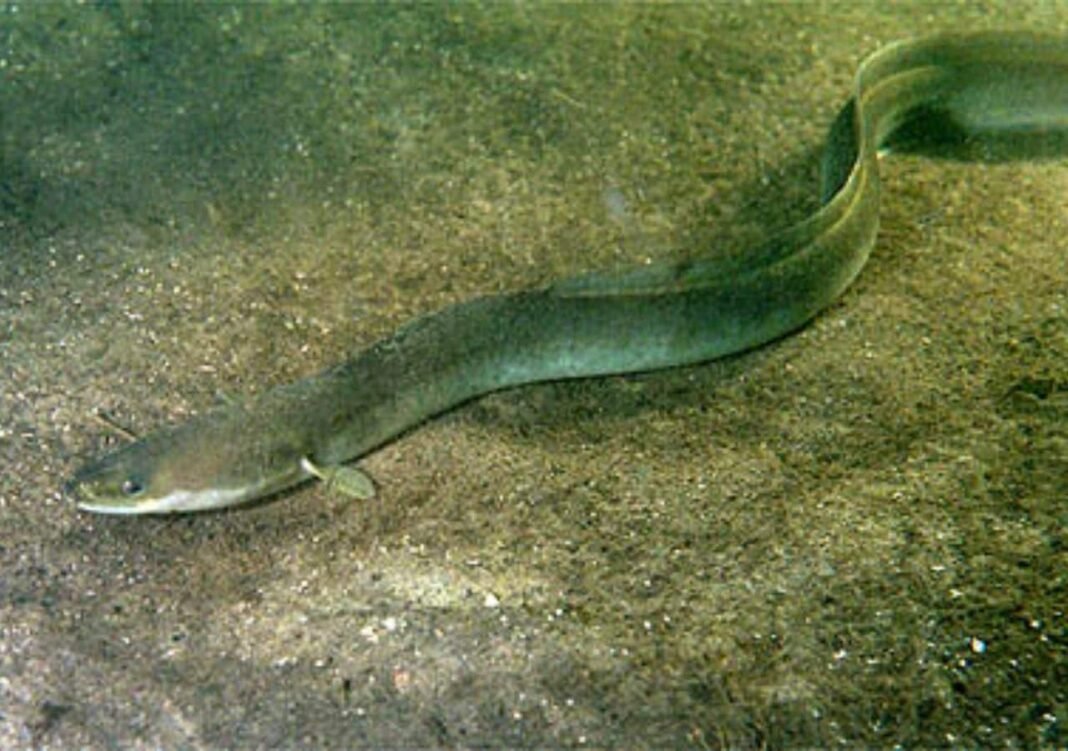

Researchers at Bournemouth University have confirmed the first record of a silver European eel in Cyprus’ inland waters, marking the easternmost point at which the species has been observed in this life stage.
The finding, published in the Journal of Fish Biology, shows the eel has not only survived in local rivers but reached maturity, a development researchers describe as significant for understanding the species’ range.
The research team, working with partners from the University of Inverness, Cyprus University of Technology and the Environment Agency, documented the presence of mature eels across several freshwater locations.
The discovery highlights how an eel that begins life in the Sargasso Sea can travel thousands of miles, arrive in continental waters as a glass eel and spend years in rivers before transforming into a silver eel that returns to the ocean to reproduce.
Impact on habitat and migration of the silver European eel
Lead researcher Sotiris Meletiou said the eastern Mediterranean has long lacked information on this life stage. He explained that the surveys in Cyprus were designed to target places and seasons where silvering and migration would most likely occur.
The team confirmed that mature eels are present and moving along the farthest boundary of the species’ known distribution.
First record of a silver European eel found in Cyprus’ inland waters. A major step for understanding eel migration and strengthening conservation efforts for this critically endangered species. 🌍🐟 #Conservation #WildlifeResearch #Cyprus pic.twitter.com/ZJFAlrct6G
— Tom Marvolo Riddle (@tom_riddle2025) February 12, 2026
European eel populations have dropped sharply over the past century because of pollution, habitat loss, extreme weather, parasites and exploitation. Current estimates suggest numbers have fallen to about one-tenth of the levels recorded when monitoring first began, placing the species on the IUCN Red List as critically endangered.
One area of focus in the study was the Polis River in the Paphos region, where researchers found that some young eels were able to travel upstream. Meletiou said stretches of the river that had dried out created breaks in the waterway, restricting movement and delaying migrations in both directions.
Environmental pressures affecting eel survival
Demetra Andrea, who analyzed the survey data as part of the UK team, said the conditions in the Polis River show how habitat fragmentation shapes the success of maturing eels. She noted that these disruptions prevent many silver eels from reaching the ocean and ultimately reduce the number returning to the Sargasso Sea to spawn.
Although European Union rules require countries to establish Eel Management Plans, Cyprus is currently exempt. Malen I. Vasquez from Cyprus University of Technology said the presence of all eel life stages in an unexploited population gives the island an opportunity to support regional recovery and provides a starting point for developing a management plan.
Ros Wright from the Environment Agency said the ability of eels to reach the silvering stage despite habitat loss and drought offers new insight into how the species responds to increasingly extreme climate conditions.
The study recommends improvements to barriers and structures in lakes and rivers to support safer upstream and downstream migrations.