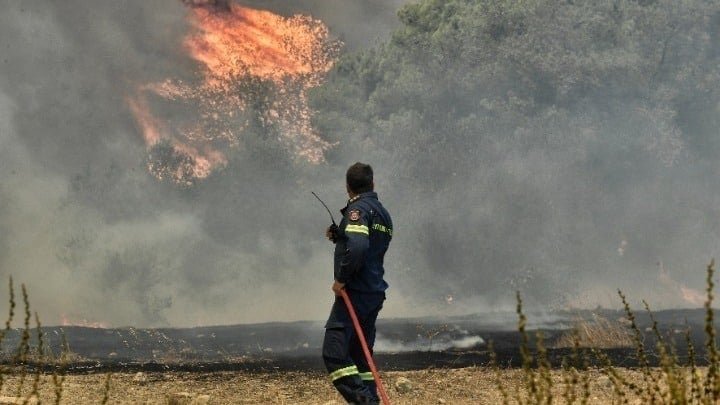
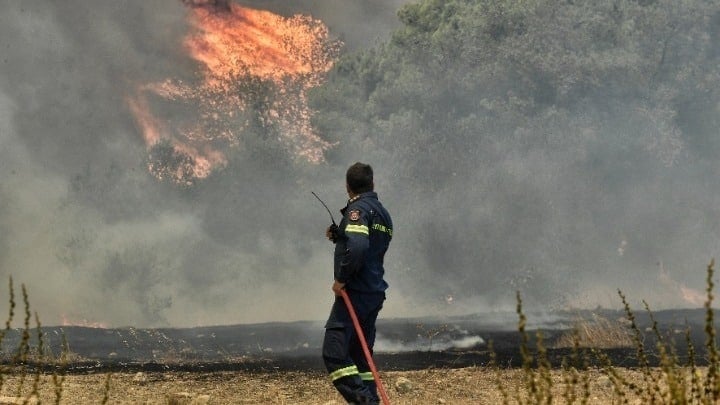
The EU is launching a 300-member rapid-response wildfire force to bolster cross-border support during increasingly severe fire seasons. The initiative emphasizes faster deployment and improved coordination rather than expanding Europe’s overall firefighter numbers.
Officials describe the move as a structural upgrade in how authorities mobilize resources when multiple large fires break out at the same time across different countries. In practical terms, the program fills a specific gap in international surge response capacity.
EU wildfire response force targeting increased efficiency
Across EU member states, over 390,000 firefighters serve in national and local brigades. The new 300-person unit does not significantly increase that overall workforce. Instead, the program delivers guaranteed availability and centralized coordination.
The design allows trained crews to deploy quickly across borders during peak wildfire periods, when national services often reach their limits. Because of that structure, support shifts away from ad hoc assistance toward pre-arranged multinational readiness.
Why EU wildfire response coordination is becoming more challenging
Wildfires across Europe now break out more often, are deadlier, and spread across wider areas. They also account for a growing share of insured disaster losses. At the same time, longer heatwaves, more intense droughts, and earlier fire seasons raise the chances that several nations could face major incidents simultaneously, especially in Southern Europe.
Under those conditions, the current system struggles. National authorities often keep crews and equipment at home when domestic risk stays high, even when other countries submit requests through EU channels.
How the new force will operate
The 300 firefighters will operate under the EU Civil Protection Mechanism, with the Emergency Response Coordination Centre in Brussels directing deployments. EU authorities say planners will pre-contract the force before high-risk months and keep teams on standby during wildfire seasons. Units will deploy within hours of a formal request and focus on early intervention before fires become uncontrollable.
After arrival, teams will work under the host country’s incident command and integrate with local crews. EU coordinators will handle strategy, logistics, and redeployment decisions. This model allows for the establishment of a reinforcement force rather than a standalone EU fire service.
How this differs from past EU wildfire support
In recent wildfire seasons, the EU has pre-positioned up to 650 firefighters in high-risk countries such as Greece, Spain, Portugal, and France. Those missions depended on temporary national contributions and real-time availability.
The new 300-member force replaces that uncertainty with a dedicated, pre-contracted pool. Officials expect this structure to cut response times, especially during the early hours of major fires.
Scale limits and resource constraints
More rapid deployment does not eliminate scale limits. If several large fires ignite at once, planners may divide the 300 firefighters into smaller detachments, which reduces impact at each location.
Air assets, often decisive in wildfire suppression, also remain limited and shared across member states. The new ground force does not solve that constraint. As a result, the program improves speed and predictability, but it does not dramatically expand total surge capacity.
A pilot model for future expansion
EU officials have presented the force as a pilot framework rather than a final solution. Performance data from upcoming fire seasons will guide decisions on whether to expand centralized firefighting capacity or increase joint investment in prevention and preparedness.
The shift reflects a broader reality. Europe designed its wildfire response model for localized disasters, but climate-driven extremes now create continent-wide pressure. The rapid reaction force marks an early step toward a more coordinated EU wildfire response system.