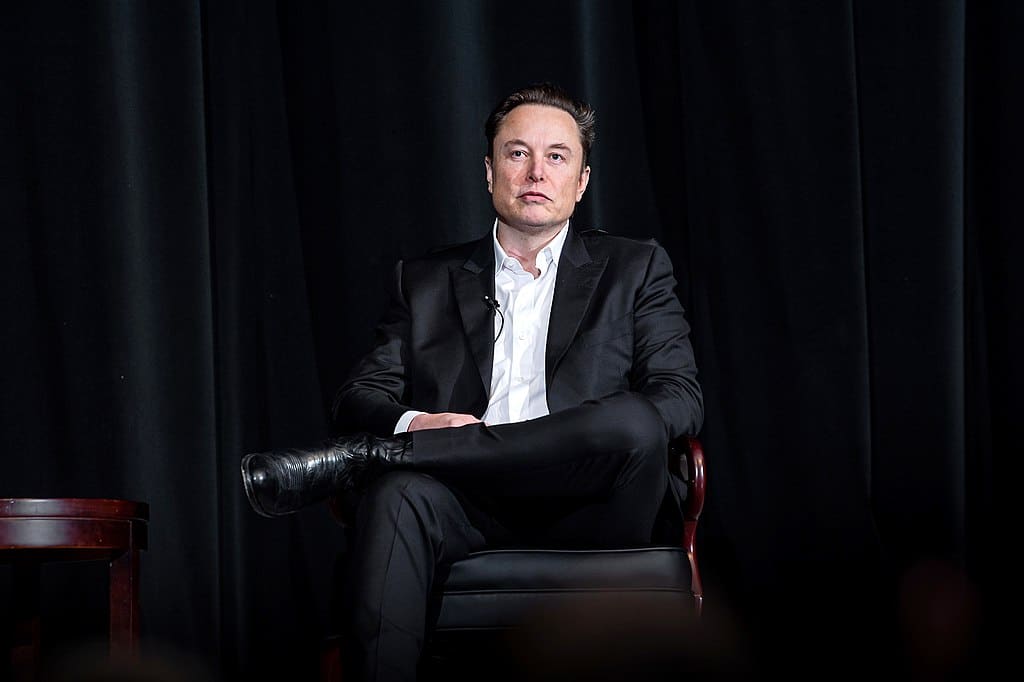
Elon Musk believes the global labor market is heading toward a profound transformation driven by rapid advances in AI and robotics. According to the Tesla CEO, the pace of technological progress is accelerating to the point where many existing jobs may no longer be needed within the next 10 to 20 years.
Musk argues that AI is no longer confined to experimental applications. It is becoming a powerful force capable of performing complex cognitive tasks, raising fundamental questions about the future role of human labor.
Why digital professions face the greatest risk, according to Musk’s AI projections
In recent public remarks, Musk has pointed to digital and technology-driven roles as the most vulnerable. Jobs that rely heavily on software, data processing, and computational work are easier to automate as AI systems become more efficient, accurate, and cost-effective.
He compares the current technological shift to earlier industrial revolutions but emphasizes that this transition is unfolding far more rapidly. In his view, certain professions may disappear before workers and institutions can realistically adapt.
Manual jobs may be less affected in the short term
Musk does not expect all forms of work to disappear at the same pace. He notes that manual and hands-on professions are likely to be affected more gradually.
Because artificial intelligence operates primarily in digital environments, its immediate impact on physical labor is more supportive than substitutive. In many cases, AI may help improve productivity, safety, and efficiency while humans continue to carry out the core physical tasks.
A future where work is no longer essential
One of Musk’s most debated predictions is that work itself may eventually become optional. He suggests that advances in AI and robotics could reach a point where people no longer need to work to secure their basic needs.
In this future, individuals may still choose to work to pursue ambition, innovation, or personal fulfillment, but not out of financial necessity. Musk likens this shift to everyday lifestyle choices, such as growing food as a hobby rather than a requirement.
What Elon Musk’s AI predictions mean for society
If Musk’s projections prove accurate, the implications would extend far beyond the labor market. Governments, education systems, and economic models would need to adapt to a reality where human work is no longer central to productivity and income generation.
While experts continue to debate the timeline and feasibility of such a transition, Musk’s warning highlights a broader concern: artificial intelligence is advancing faster than social and institutional frameworks are prepared to respond, and its impact will reach far beyond technology itself.