

The recent chaos in the global oil and gas market, fueled in part by tensions surrounding the Iran war, has turned the Middle East into a high-stakes arena for US oil and gas interests.
Attention is now fixed on the immediate consequences: soaring oil prices and the panic sweeping international trading floors. Amid this turbulence, a fairly cynical theory has gained traction online. Some analysts suggest that recent military and political maneuvers involving Iran are part of a calculated strategy aimed at enriching American oil and gas giants.
Are US oil and gas companies cashing in on the Gulf’s instability in the midst of the Iran war?
The internet thrives on conspiracy, but the reality is far more complex. To understand what’s happening, we need to separate hard economic facts from the noise circulating online.
The US is already the undisputed heavyweight in energy exports, and this turmoil has handed domestic producers what amounts to a winning lottery ticket. With Brent Crude surging past $110 a barrel, the numbers translate to roughly $60 billion in unexpected revenue for American companies. These are profits they would not have seen if prices had remained at pre-war levels.
With Middle Eastern supply chains heavily disrupted, panicked buyers in Europe and Asia are scrambling to secure energy. So what’s their solution? It’s simple: lock into costly, premium-priced contracts with American suppliers safely positioned across the ocean from the conflict.
This represents a fundamental shift from the past. Recall the oil shocks of the 1970s, when Western dependence on the Persian Gulf resulted in massive vulnerabilities and brought entire economies to their knees. Almost fifty years later, the landscape has changed dramatically. The historical drive for energy independence transformed the US from a desperate buyer into the dominant seller, giving Western powers economic leverage as a diplomatic tool in ways that would have been unimaginable half a century ago.
Qatar’s energy chokepoint
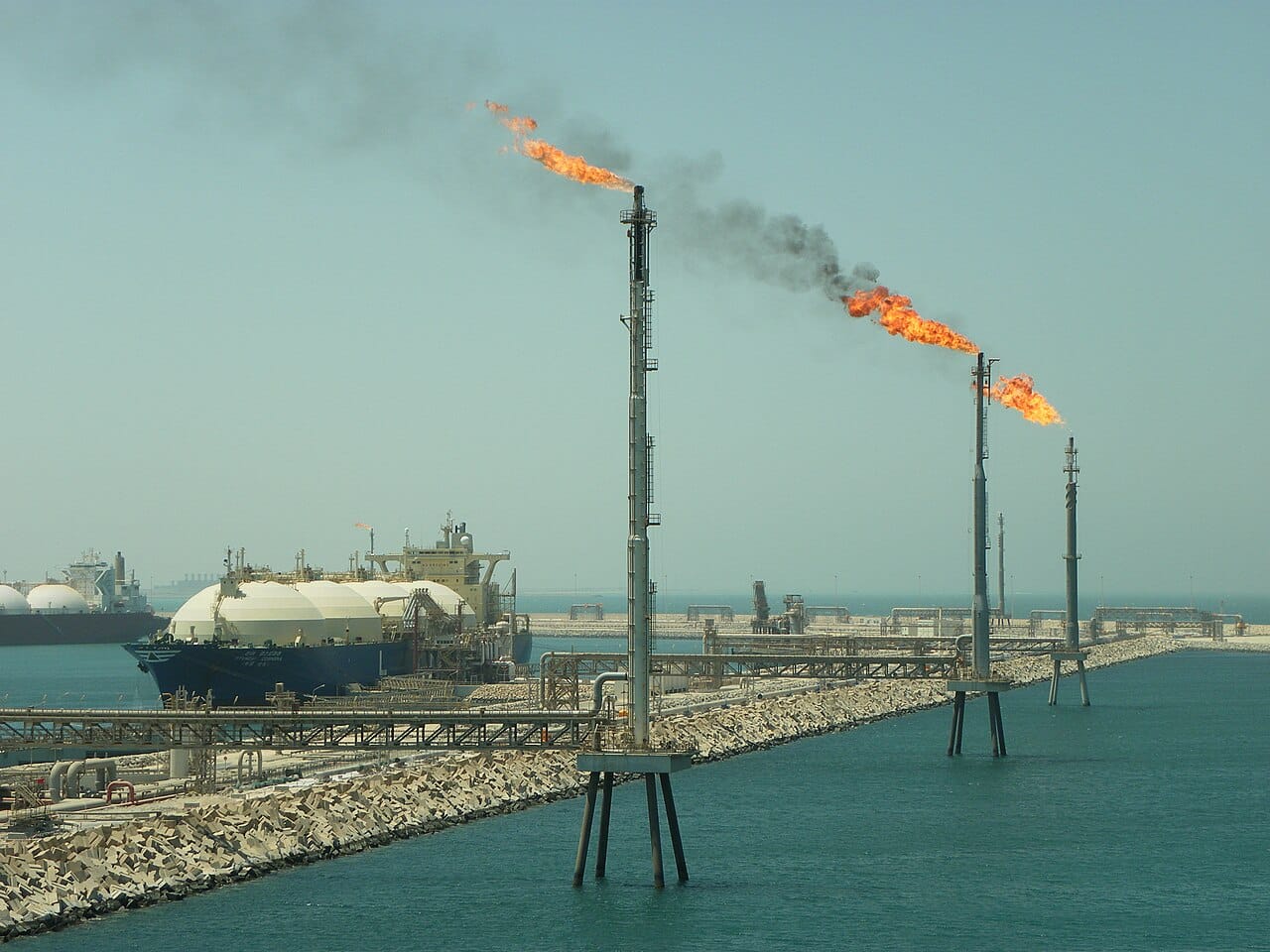
Things went from bad to worse with the recent strikes on Qatar’s Ras Laffan industrial hub by the Iranian regime. Taking out roughly 17% of Qatar’s export capacity overnight created a massive bottleneck in global supply on top of the already huge issue of the Strait of Hormuz. This physical destruction of one of Qatar’s most important gas-producing fields in the midst of the Iran war was a direct gift to US oil and energy competitors, who have the infrastructure and reserves ready to swiftly swoop in and fill the void.
This highlights a harsh reality that military and naval strategists have known for a century—cramming immense economic power into a small and turbulent geographic area like the Middle East is incredibly risky. A single night of targeted strikes just proved that in the age of precision weapons, you can disrupt the chain of global energy and hand billions to foreign rivals before the sun even comes up.
Fact vs. fiction in the energy market and the Iran war
That said, while corporate American profit margins are very real, it would be both irresponsible and misleading to frame this as a flawlessly executed, consequence-free conspiracy. Let’s examine the actual fallout.
The myth of the insulated American public: Some analysts supporting Donald Trump’s policies argue that rising energy prices aren’t hurting everyday Americans. In reality, the opposite is true. The economic impact at home—and across Europe and other regions—is significant. Ordinary people are facing higher prices at the pump and broader inflation seeping into everyday goods. Conditions became so severe that the US administration had to issue a 30-day sanctions waiver on Iranian oil just to try to stabilize the market.
The myth of a defeated Qatar: Social media chatter suggests that Qatar has been entirely sidelined in the energy sector. Losing roughly a fifth of its capacity is certainly a major setback, likely requiring years—and billions of dollars—to recover. Yet Qatar is far from defeated. Its massive sovereign wealth allows it to weather the storm, rebuild infrastructure, and maintain its position as a major global player in energy.
The myth of Qatari control in Texas: Perhaps the most outlandish rumor is that Qatar controls most of the Texas energy grid. This reflects a misunderstanding of corporate assets. The Golden Pass LNG project is often cited, but it represents just one joint venture between QatarEnergy and ExxonMobil at a single terminal rather than widespread ownership.
Global crises such as that of the Iran war inevitably create winners and losers, and right now, the US oil and energy sector is clearly in the winning column. Yet reducing global conflict to a corporate spreadsheet is dangerously simplistic. While the short-term gains for American energy giants are substantial, the long-term consequences of a destabilized Middle East carry risks no model can fully predict. We must look beyond the immediate windfall and recognize just how fragile our interconnected global economy truly is.


