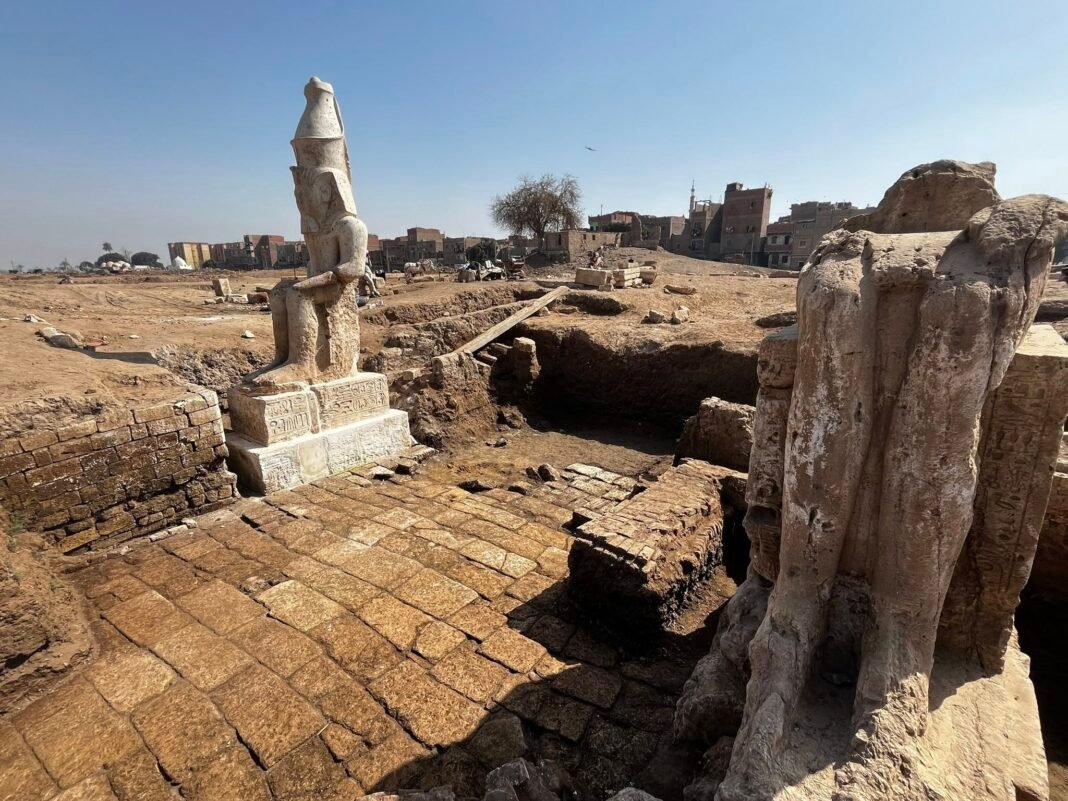
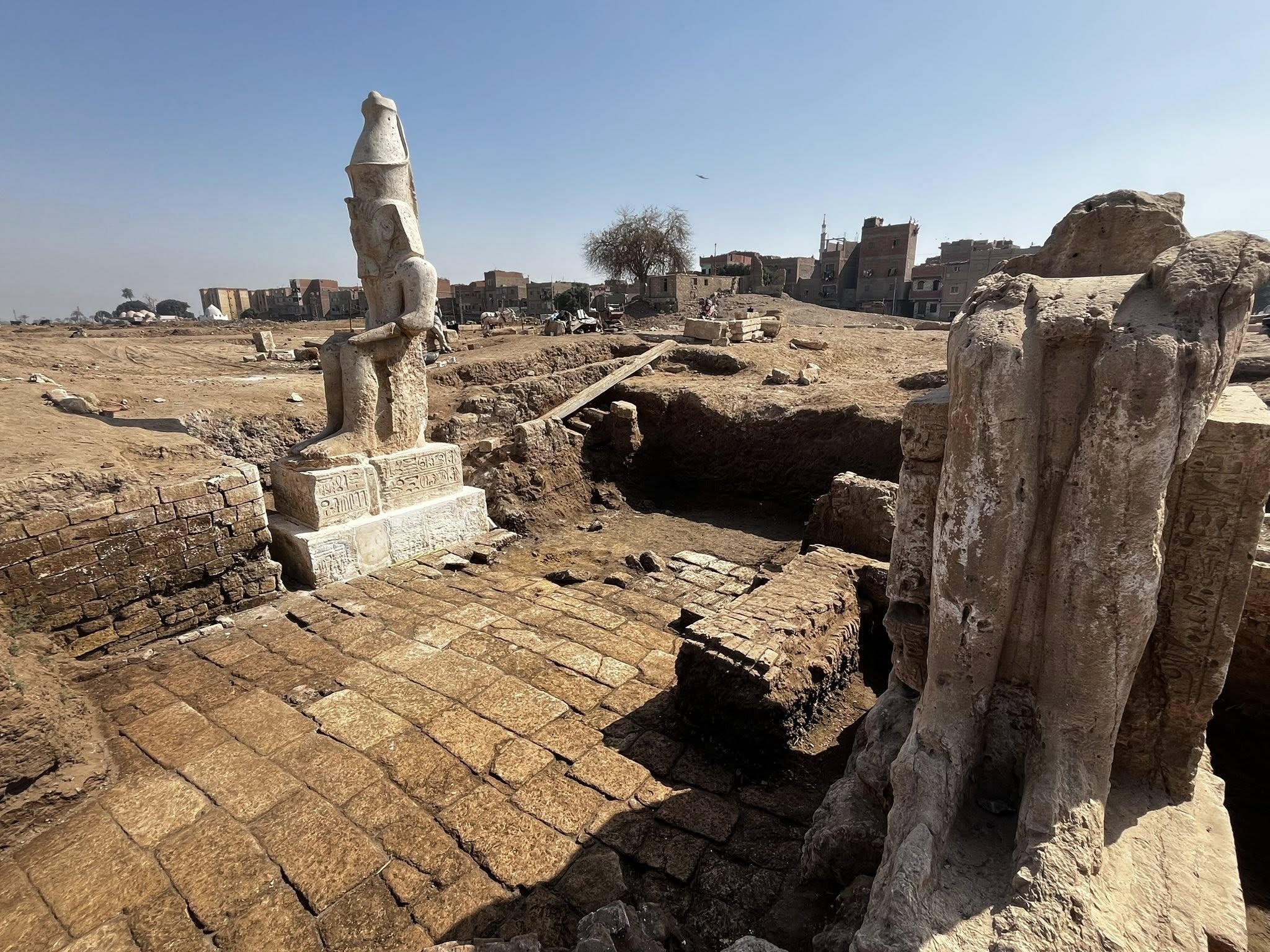
Archaeologists have completed the restoration and re-erection of a massive limestone statue of Ramesses II at the ancient site of El-Ashmunein, Egypt.
The work was carried out by a joint Egyptian-American archaeological mission in Minya Governorate, south of Cairo. The statue once stood at the northern entrance of a major temple complex. In antiquity, the site was known as Hermopolis and served as a key religious and administrative center.
Statue found in fragments across the site
Researchers said the statue was discovered in a fragmented condition. Large limestone blocks lay scattered across the archaeological zone after centuries of collapse and burial.
Restoration specialists documented each fragment before starting work. They cleaned the stone, reinforced weakened areas, and prepared the pieces for reassembly using modern conservation techniques that preserve the original material.
The statue depicts Ramesses II in a traditional royal pose. He wears a crown and ceremonial kilt, symbols of kingship and authority. Its monumental scale reflects the power of a ruler who reigned for more than 60 years during the 13th century BCE and left monuments across Egypt.
Upper section uncovered nearly a century later
The restoration followed a major discovery in February 2024, when archaeologists uncovered the statue’s upper section. The find came nearly 100 years after the lower portion was first discovered in 1930. Researchers said the upper part had been buried beneath layers from later historical periods.
After restoration, the newly found section was carefully placed back onto the base. This returned the monument to its original position at the northern entrance of the temple.
Officials highlight heritage protection and cooperation
Tourism and Antiquities Minister Sherif Fathy said the project reflects Egypt’s commitment to protecting its cultural heritage.
He said the work followed international scientific standards and showed strong cooperation between Egyptian experts and foreign archaeological missions. He added that the restored statue strengthens Minya’s archaeological importance and supports cultural tourism.
Hisham El-Leithy, Secretary-General of the Supreme Council of Antiquities, said the project demonstrates the technical expertise of Egyptian specialists. He said the council relies on modern scientific methods to document and preserve large monuments.
Rare example of New Kingdom sculpture
According to Mohamed Abdel Badei, head of the Ancient Egyptian Antiquities Sector, the statue is one of only two known examples located in the northern part of the temple at El-Ashmunein. He said the sculpture shows Ramesses II seated on a throne and reflects the artistic style of the New Kingdom period.
Scientific methods used to confirm reconstruction
The mission has worked at El-Ashmunein since 2023 under the leadership of Bassem Gehad of the Supreme Council of Antiquities and Yvona Trnka from the University of Colorado.
Gehad said the upper section measures about 3.7 meters (12 feet) in height and weighs nearly 12 metric tons (about 13 tons). Researchers used digital documentation, structural assessments, and stone analysis to confirm that the two sections belonged to the same monument. The team also stabilized the statue’s five-block foundation.
Monument returned to its original setting
Restoration work officially began in September 2025 after approval from the Permanent Committee for Ancient Egyptian Antiquities. The process included dismantling unstable elements, restoring damaged stone blocks, and reinstalling them in their original position based on detailed technical documentation.
Officials said the completed project returns a major Ramesses II monument to its original setting at El-Ashmunein. The site is considered one of Upper Egypt’s most important archaeological centers and continues to reveal new insights into Egypt’s ancient past.