
Archaeologists working in southern Spain have uncovered a rare and detailed Bronze Age necropolis, offering new insight into burial customs in the Guadalquivir Valley. The site, known as Siete Arroyos, lies beside the long-occupied Mesa Redonda settlement and contains both individual and collective graves dating back more than 3,500 years.
The findings come from a study led by Martin Bartelheim and published in Publikationen des Deutschen Archäologischen Instituts. Researchers say the site stands out in a region where Bronze Age burials are often fragmentary, poorly preserved, or missing altogether.
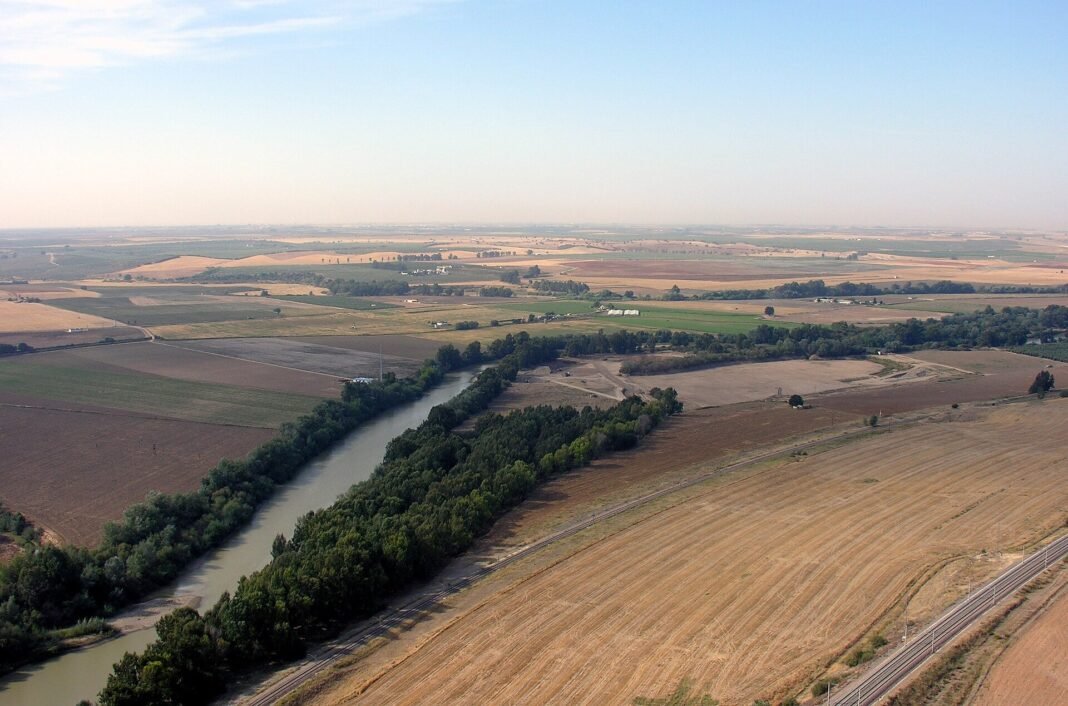
A strategic location above the Guadalquivir Valley
Siete Arroyos sits on the northern edge of the lower Guadalquivir Valley, near present-day Villaverde del Río in Seville province. The burial area occupies a narrow terrace and adjacent slope below the Mesa Redonda hilltop, part of the Sierra Morena foothills.
Archaeological work began in 2018 as part of a long-term research project examining how communities used land and resources over time. Early surveys focused on the hilltop settlement. Later fieldwork expanded downslope, where dense pottery scatters and stone alignments hinted at additional activity.
A drone image captures Trench T1 at the Siete Arroyos site in southern Spain, showing the layout of stone structures across quadrants A, C, E and F. The excavation reveals a rare Bronze Age necropolis linked to long-term settlement in the Guadalquivir Valley. pic.twitter.com/aqMs4BuBuQ
— Tom Marvolo Riddle (@tom_riddle2025) February 20, 2026
One terrace, overlooking a seasonal stream, drew particular attention. While Roman and medieval material appeared closer to the surface, researchers found a concentrated cluster of prehistoric pottery just below the terrace edge. That discovery led to targeted excavations.
Graves uncovered on a steep slope
Excavations on the western slope revealed seven graves arranged in a loose line parallel to the terrace. The burials were placed at roughly the same elevation, suggesting a planned funerary area rather than scattered or accidental interments.
The graves varied in construction. Some were simple earth pits. Others were built as stone cists using upright slabs. One burial consisted of a stone-built chamber accessed through a narrow corridor. This diversity of grave types is unusual for the Guadalquivir Valley during the Bronze Age.
New images from the Siete Arroyos excavation in southern Spain reveal multiple Bronze Age graves, ranging from simple earth pits to stone-built cists and a collective burial chamber. The site offers rare insight into funerary practices in the Guadalquivir Valley. pic.twitter.com/AMBf5iRLVD
— Tom Marvolo Riddle (@tom_riddle2025) February 20, 2026
Two of the burials were found just beneath the surface. Both contained adult individuals placed on their left side in a crouched position, without grave goods. Erosion had damaged the bones, but radiocarbon dating placed the individuals firmly within the second millennium B.C.
Evidence of collective burial practices
The most striking discovery came from a collective grave constructed of stone. Inside, researchers found the commingled remains of at least 20 people of different ages. The bones were deposited in layers, suggesting the chamber was reopened repeatedly over time.
Grave goods included a ceramic vessel and two bronze awls found near the entrance. Radiocarbon dates from several individuals ranged from the early to mid-second millennium B.C., indicating long-term use rather than a single burial episode.
Such collective burial practices were common in earlier Copper Age societies in southern Iberia. Until now, they had not been clearly documented for the Bronze Age in the Guadalquivir Valley.
Signs of health, stress, and daily life
Although many remains were fragmented, the bones and teeth provided important clues about life and health. Several individuals showed heavy tooth wear, cavities, and enamel defects linked to childhood stress. Others displayed signs of joint degeneration.
Researchers caution that these observations are preliminary. More detailed bioarchaeological analysis is planned and may reveal patterns of diet, mobility, kinship, and disease within the buried population.
A rare window into Bronze Age burial customs
According to the research team, Siete Arroyos currently represents the most complete Bronze Age necropolis documented in the middle and lower Guadalquivir Valley. The combination of individual and collective graves, along with varied burial structures, sets it apart from other sites in the region.
Equally important is the site’s close connection to the Mesa Redonda settlement. This spatial link offers a rare opportunity to study how a Bronze Age community organized both daily life and burial practices within the same landscape.
Gradual change over centuries
Pottery recovered from the graves and surrounding layers shows a gradual shift in styles over time. Lower levels align with what archaeologists classify as the Full Bronze Age. Higher layers display forms linked to the Late and Final Bronze Age.
The transition appears smooth, without clear breaks. This finding adds to growing evidence that cultural change in southern Iberia during the Bronze Age unfolded gradually rather than through sudden disruption.
Researchers say further excavation and dating at Siete Arroyos could help refine the poorly defined Bronze Age timeline for the Guadalquivir Valley. For now, the site provides a rare and valuable glimpse into how Bronze Age communities in Spain buried their dead and maintained ties between the living and the landscape they inhabited.