The frescoes preserved at Akrotiri on the Greek island of Santorini provide some of the strongest evidence for the reach and sophistication of the Minoan navy during the Bronze Age. Buried beneath volcanic ash after the eruption of Thera around the 17th century B.C., the artworks offer a rare glimpse into a maritime civilization that dominated the Aegean Sea.
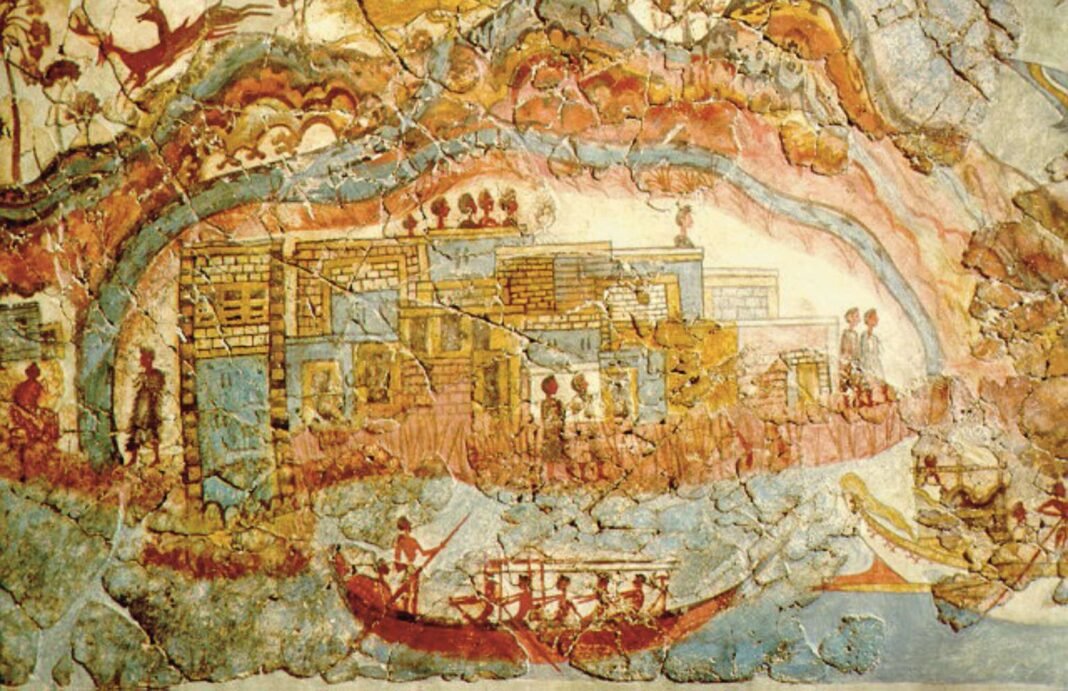
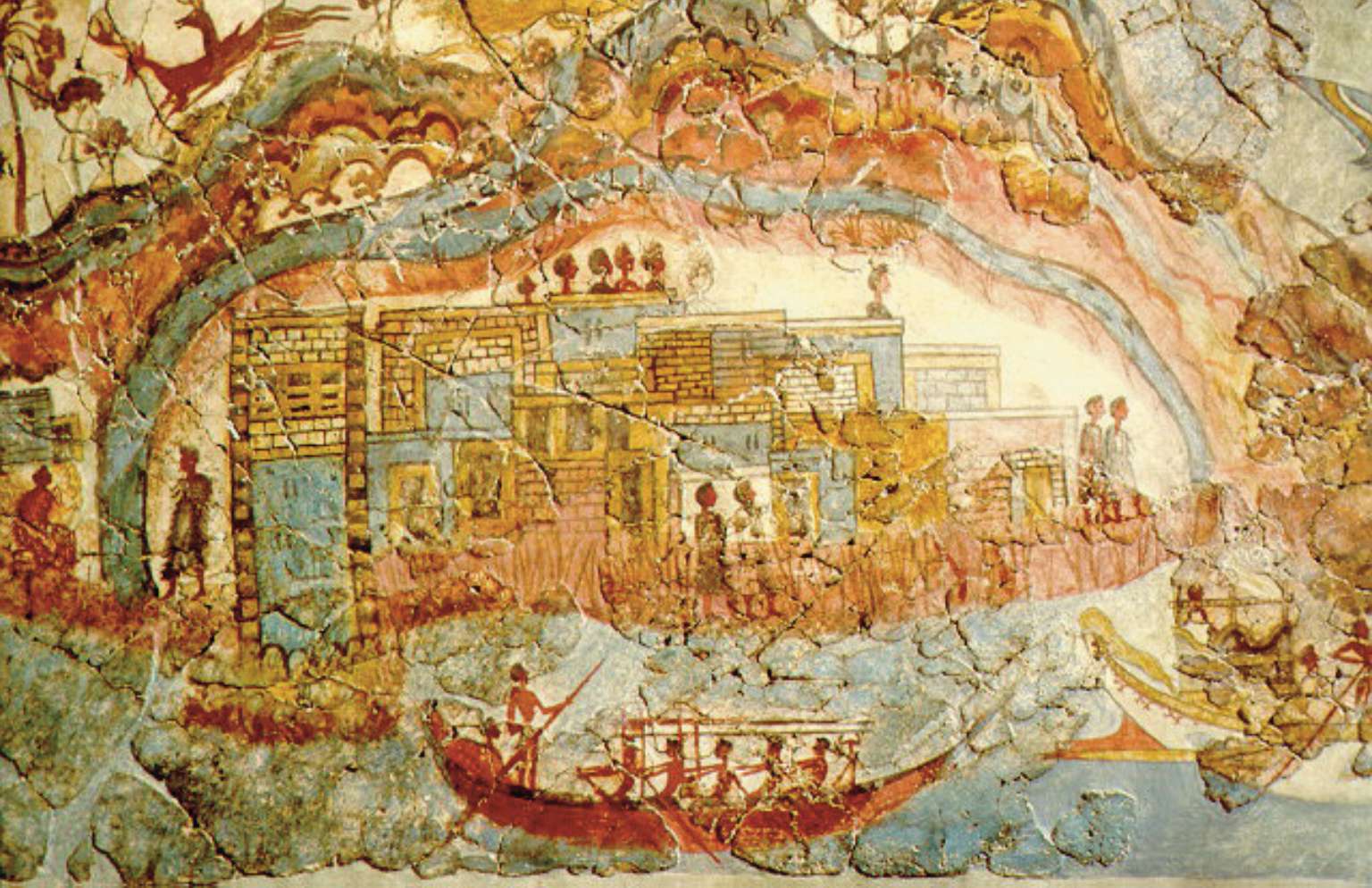
Among the most important discoveries is the “Flotilla Fresco,” a large mural found in the West House at Akrotiri. The painting depicts a fleet of ships traveling between coastal settlements and remains one of the clearest visual records of ancient seafaring in the Mediterranean.
Ships built for trade and travel
Researchers use the fresco to better understand how the Minoan navy operated. The mural shows several types of vessels, ranging from small passenger boats to larger ceremonial ships. Many feature tall sterns and decorated prows adorned with floral and bird-inspired motifs.
Rows of oars and visible masts indicate that crews relied on both rowing and sailing. The ships also display advanced construction details. Archaeologists say features resembling hull planks and lashings match evidence from Bronze Age shipwrecks, suggesting that Minoan shipbuilders developed durable vessels capable of handling long-distance voyages.
One notable feature is the upward-curving prow seen on many ships. Researchers believe the design may have helped stabilize vessels in the rough and unpredictable waters of the Aegean.
A fleet at the center of Minoan power
The frescoes suggest that the Minoan navy played a far broader role than transportation alone. Experts believe the voyage shown in the mural may represent a ceremonial expedition or diplomatic mission.
Sailors, passengers, and armed guards appear throughout the scene, indicating that ships supported trade, communication, and political influence across the region.
The Minoan navy may have been the dominant maritime force of the Bronze Age Aegean.
Frescoes preserved beneath volcanic ash at Akrotiri on Santorini reveal advanced ships, busy ports and trade networks that connected Crete with Cyprus, Egypt and beyond more than 3,500 years ago. pic.twitter.com/D441kLXgvk
— Tom Marvolo Riddle (@tom_riddle2025) May 29, 2026
The paintings also reveal the importance of Minoan ports. Busy harbors, waterfront activity, and multi-story buildings point to highly organized coastal centers that served as hubs for commerce and administration.
Researchers say these maritime networks connected Crete with other parts of the eastern Mediterranean, including Cyprus and Egypt. Through these connections, goods, raw materials, and cultural ideas moved across the sea, helping to strengthen Minoan influence throughout the region.
Religion and seafaring are intertwined
Many vessels in the frescoes are decorated with garlands, colorful canopies, and symbolic imagery. These details suggest that maritime travel was closely linked to religious practices and ceremonial events.
Researchers believe the navy helped transport not only goods and people but also cultural traditions and beliefs. As a result, ships served both practical and symbolic functions within Minoan society.
A maritime empire vulnerable to disaster
Control of major sea routes helped the Minoans build one of the most influential civilizations of the Bronze Age. However, their dependence on maritime networks may also have created vulnerabilities.
Researchers believe the eruption of Thera triggered powerful tsunamis that damaged ports, disrupted trade routes, and weakened the naval system that supported Minoan prosperity. The disaster may have contributed to the decline of a civilization built around the sea.
Today, the Akrotiri frescoes remain one of the most valuable sources for understanding the Minoan navy. More than 3,500 years after they were created, the paintings continue to reveal how ships, trade, and maritime connections helped shape the ancient Mediterranean world.