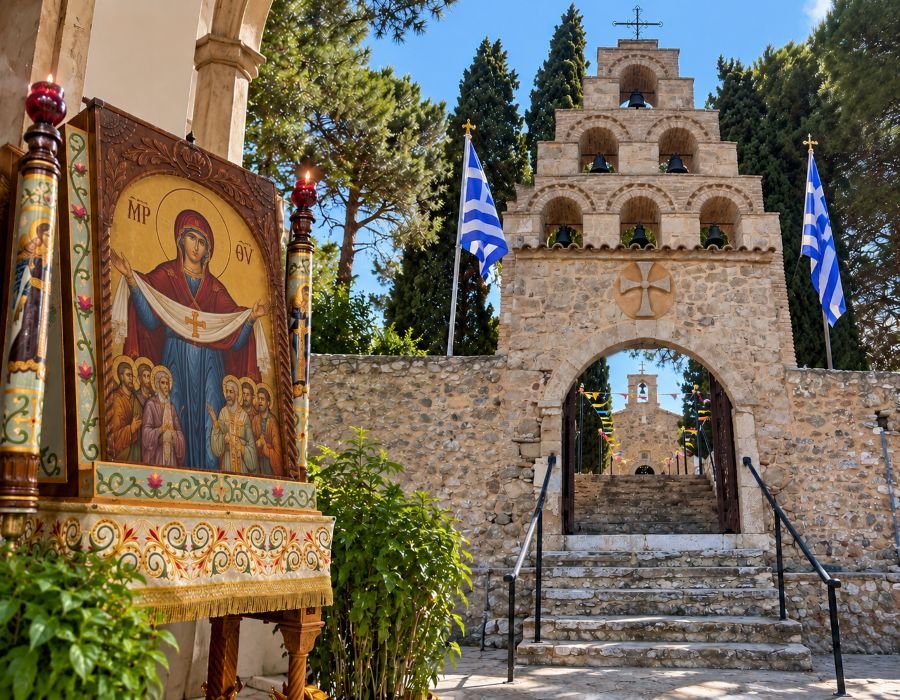
Every October 28, Greece remembers the defiant “OXI” that marked the country’s entry into World War II. Yet the date also carries deep religious meaning. The Church of Greece celebrates the Holy Protection of the Virgin Mary, known in Greek as Agia Skepi, on the same day.
The feast honors the belief that the Virgin Mary protects the faithful through her prayers. Its place on Greece’s national anniversary reflects a longstanding connection between Orthodox faith and the country’s historical memory.
Why October 28 has a religious meaning in Greece
On October 28, 1940, Greece rejected an ultimatum from Fascist Italy demanding that Italian forces be allowed to enter the country. The refusal became known as the “Oxi” and marked a defining moment in modern Greek history.
For many Greek Orthodox Christians, the struggle that followed also carried a spiritual dimension. Religious tradition and accounts from the period describe Greek soldiers turning to the Virgin Mary for protection during the war.
The Church of Greece later gave this religious association a formal place in the calendar. The Feast of the Holy Protection became part of the annual observance of October 28, alongside the national anniversary.
Why the Church of Greece chose October 28
The change dates to 1952. In a circular issued on October 31 of that year, the Holy Synod of the Church of Greece explained its decision to celebrate the feast on October 28, together with the national holiday. The circular noted that Greeks had traditionally marked major national events with religious observances. It also referred to the nation’s expressions of gratitude to the Virgin Mary, whom Orthodox Christians honor as a protector and intercessor.
The decision did not create a new feast. Instead, it established October 28 as the date for its celebration in Greece, linking an existing religious observance with a defining moment in the country’s modern history.
The Byzantine tradition behind the Holy Protection
The feast draws on a tradition associated with the Church of Blachernae in Constantinople. According to the account preserved in the life of Saint Andrew the Fool for Christ, the Virgin Mary appeared above the faithful during a church service and spread her veil over them.
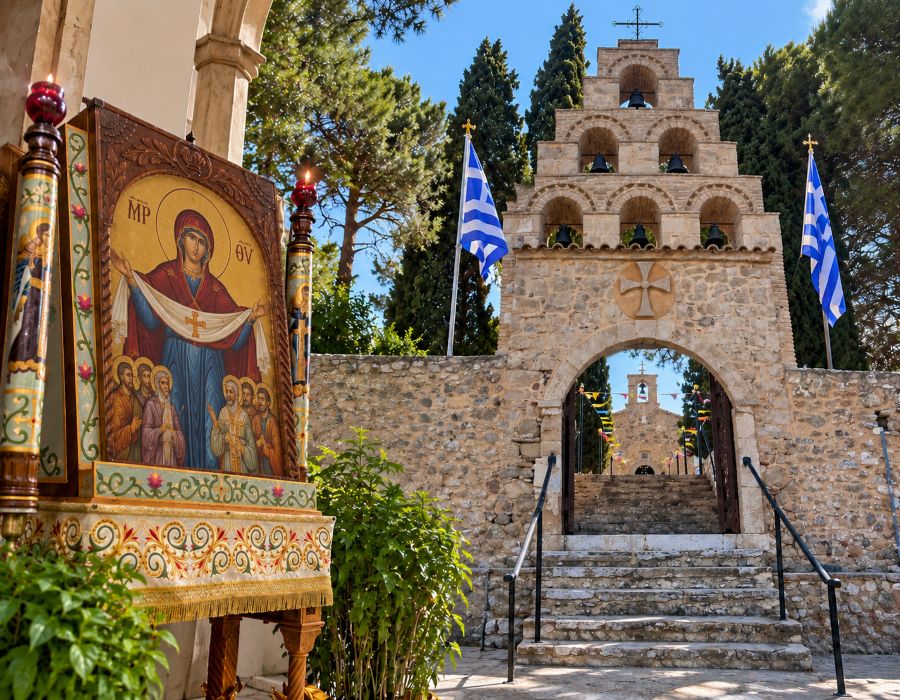
The vision came to symbolize her continuing protection of Christians. Orthodox icons of the Holy Protection often depict Mary with her veil extended over a gathering of worshippers. This account belongs to the Church’s religious tradition. Its significance lies in the meaning Orthodox Christians draw from it: the Virgin Mary’s maternal care, intercession and shelter in times of danger.
Why other Orthodox Churches celebrate on October 1
October 1 remains the traditional date of the Feast of the Holy Protection in many Orthodox calendars. The Church of Greece, however, observes it on October 28, following the decision of 1952. The difference reflects distinct liturgical practices rather than a disagreement over the feast’s religious meaning.
Both dates honor the protection of the Virgin Mary, while the Greek observance gives the feast a particular connection to the country’s national history.