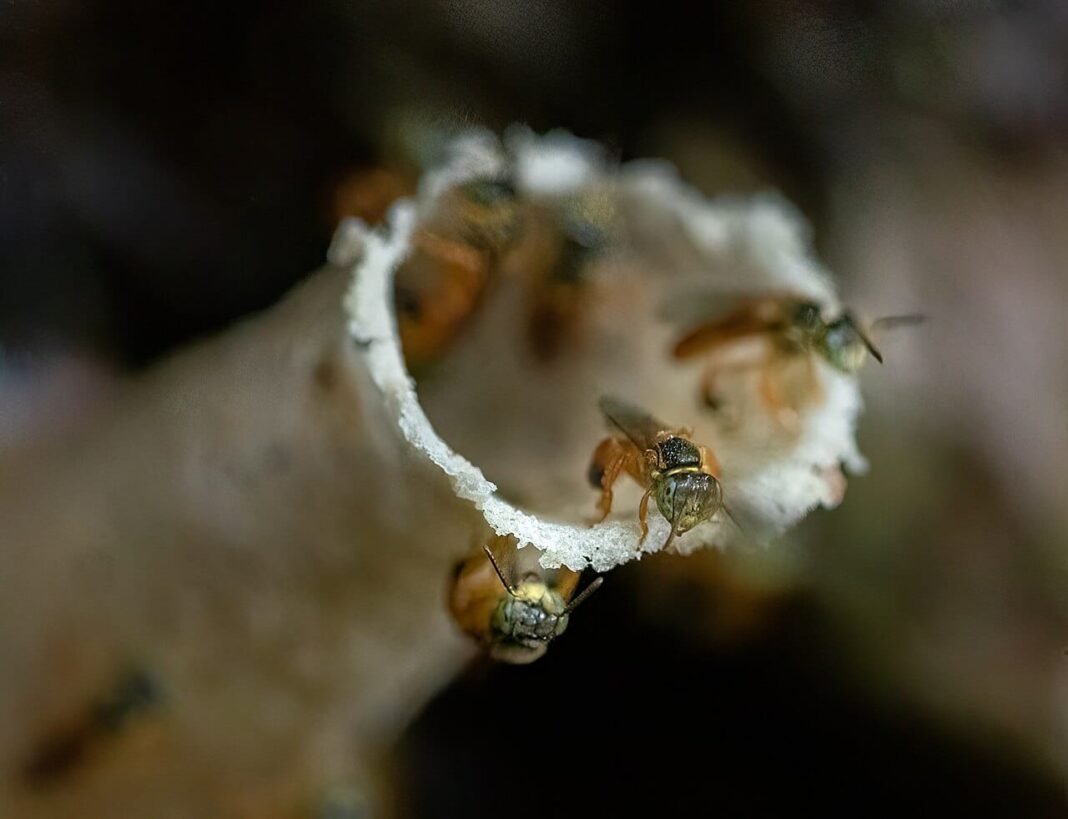
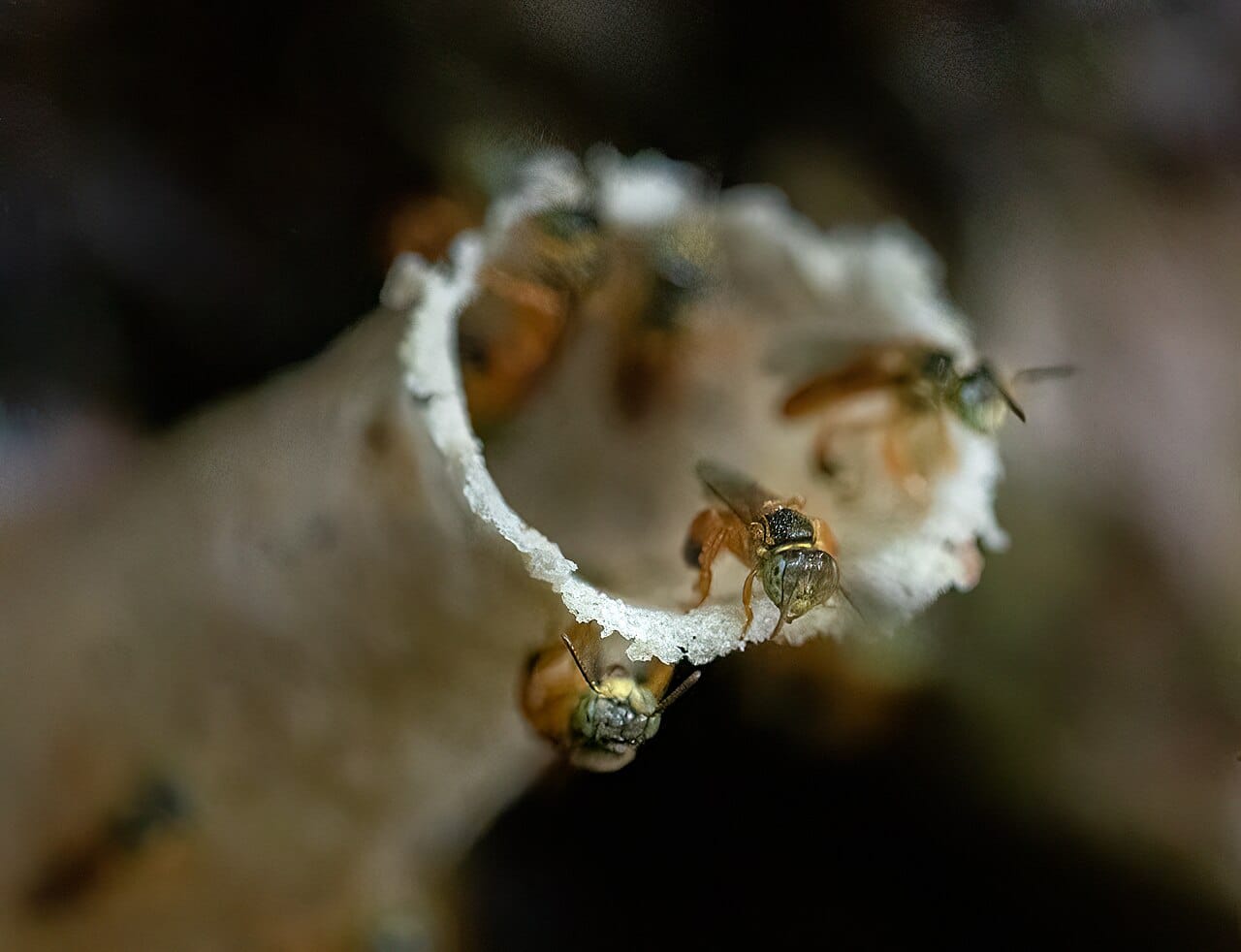
Stingless bees native to the Peruvian Amazon have become the first insects in the world to receive legal rights, marking a historic shift in how nature is treated under the law.
The new ordinances grant the bees the right to exist, survive, and thrive across protected rainforest areas. Conservation experts say the move could reshape global efforts to protect pollinators at a time when bee populations are declining worldwide.
Ancient pollinators critical to rainforest health
Unlike European honeybees, stingless bees do not sting. They have lived in the Amazon for thousands of years and were cultivated by Indigenous communities long before European contact.
Researchers say the insects are among the rainforest’s most important pollinators, supporting biodiversity and ecosystem stability. In the Amazon, stingless bees are responsible for pollinating more than 80 percent of plant species, including cacao, coffee, and avocados.
Mounting threats push species toward decline
For decades, stingless bees received little legal or scientific attention. That is changing as researchers warn the species faces mounting threats.
Climate change is altering rainfall and temperatures. Deforestation is destroying nesting areas. Pesticides are contaminating food sources. Introduced European and Africanised honeybees are also competing with native species for space and nectar.
Scientists say this combination of pressures has placed stingless bees at risk. Many species are declining, yet few appear on international conservation lists.
Research uncovers medicinal value and alarming trends
The legal breakthrough follows years of research and advocacy led by Rosa Vásquez Espinoza, founder of Amazon Research Internacional.
Stingless bees also called Melipona or Meliponini are gentle tropical bees with no functional stinger and are often kept for their honey. pic.twitter.com/SoaB3HVhiF
— Interesting World (@_fluxfeeds) February 8, 2026
Espinoza began studying stingless bees in 2020 after being asked to analyze their honey. During the COVID-19 pandemic, Indigenous communities used the honey when access to medical treatment was limited.
Laboratory testing revealed hundreds of compounds with known medicinal properties. Researchers identified molecules linked to anti-inflammatory, antiviral, antibacterial, and antioxidant effects.
Fieldwork reveals disappearing bees and chemical exposure
Field research showed stingless bees were becoming harder to find. Community members reported that trips that once took minutes now required hours of searching.
Chemical analysis raised further concerns. Traces of pesticides appeared in honey samples, even from hives far from industrial farming. Researchers said the findings showed chemical pollution had reached remote rainforest regions.
Data gap slows protection efforts
Despite growing evidence, progress was slow. For years, only the European honeybees introduced in the 1500s were formally recognized under Peruvian law.
Native stingless bees were excluded from conservation frameworks. Researchers said that made it difficult to secure funding, since official recognition required data that could not be gathered without financial support.
Mapping project leads to national recognition
In 2023, Espinoza and her team launched a large-scale mapping project to document the distribution and ecology of stingless bees.
The data revealed a strong link between deforestation and declining bee populations. In 2024, Peru passed a national law recognizing stingless bees as the country’s native bees, triggering legal protections under existing environmental rules.
Local ordinances grant enforceable rights
In October, the municipality of Satipo became the first in the world to grant legal rights to stingless bees. A second municipality, Nauta, followed in December.
The ordinances guarantee the bees the right to a healthy habitat, stable climate conditions, and legal representation in cases of harm or threat.
Global attention follows Peru’s example
Constanza Prieto, Latin American director at the Earth Law Center, said the ordinances establish a legal duty to protect the bees through habitat restoration, pesticide regulation, climate adaptation, and scientific research.
Momentum is growing beyond Peru. A global petition launched by Avaaz has gathered more than 386,000 signatures. Groups in Bolivia, the Netherlands, and the United States are exploring similar legal approaches.
Indigenous leaders say law reflects lived knowledge
Indigenous leaders say the law reflects knowledge long held in the rainforest. Apu Cesar Ramos, president of EcoAshaninka, said stingless bees provide food and medicine and carry ancestral knowledge. He said protecting the bees also protects Indigenous culture and the rainforest itself.