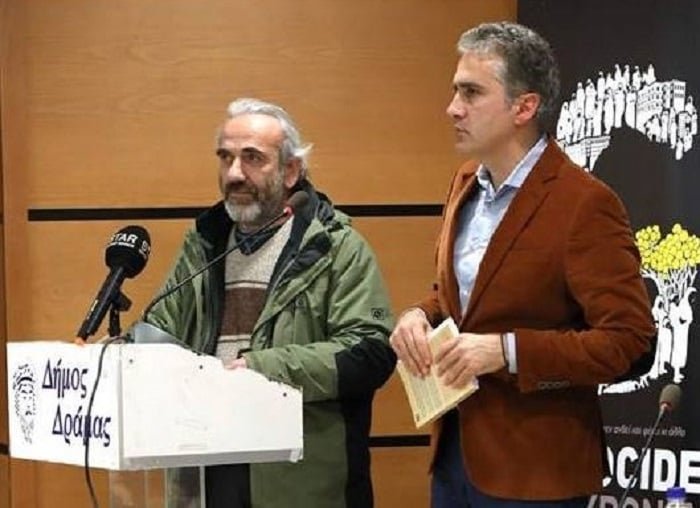
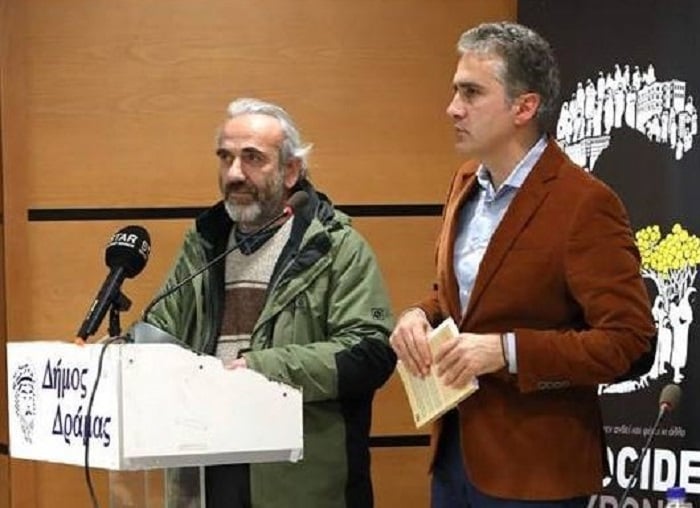
In a tense parliamentary session on February 18, 2026, Greek Minister for Migration and Asylum Thanos Plevris addressed the uncertain future of activist Yannis Vasilis Yaylalı. A Turkish national of Pontian Greek descent, Yaylalı faces potential deportation following the initial rejection of his asylum application.
Yannis Vasilis Yaylalı: From commando to activist
Born İbrahim Yaylalı, he served as a commando in the Turkish army during the 1990s, a period marked by brutal conflict with Kurdish insurgents.
After being captured by the PKK, his life took a radical turn: his family discovered their hidden Greek-Pontian roots, leading him to reject Turkish nationalism, change his name to Yannis Vasilis, and become a vocal advocate for the recognition of the Pontian Genocide.
The legal deadlock: “War crimes” vs. political asylum
The current controversy centers on Article 1F of the 1951 Geneva Convention. Minister Plevris revealed that Yaylalı’s first-degree asylum rejection was not based on political persecution, but on the activist’s own testimony regarding his military service.
According to the asylum examiner, Yaylalı’s “narrative interviews” detailed his involvement in—or witness to—acts such as the burning of Kurdish villages, forced displacements, and the mistreatment of prisoners.
Minister Plevris stated, “If an applicant has committed war crimes or crimes against humanity, the exclusion clause for international protection is activated. I imagine no one agrees to grant protection to someone who has committed such acts.”
The political reaction
Dimitris Natsios, president of the Niki party, challenged the rejection, calling the potential deportation “incomprehensible” and “heartless.” Natsios argued that:
The allegations stem from Turkish contexts that lack credibility.
Returning Yaylalı to Turkey would be a “death sentence” given his activism.
Greece has a “moral responsibility” to protect a man who embraced his Greek heritage at great personal cost.
Minister Plevris countered that the information did not come from Turkish authorities, but from Yaylalı’s own six-part interview process. “He narratively describes heinous acts he saw and atrocious acts in which he participated,” Plevris noted, adding that he will review the full file only after the second-instance decision is reached by the independent administrative courts.
The paradox of Yaylalı’s case
The legal mechanism Minister Plevris referred to is a critical part of international refugee law. It is designed to ensure that the status of “refugee” is not used to grant impunity to individuals who have committed serious crimes.
The case presents a profound paradox: Yaylalı is being denied asylum based on the very “confessions” that fueled his transformation into an activist. While his supporters see these accounts as acts of repentance and truth-telling, the Asylum Service views them as self-incriminating evidence of participation in war crimes.
The final decision now rests with the secondary appeals committee and, potentially, the Greek administrative courts.