
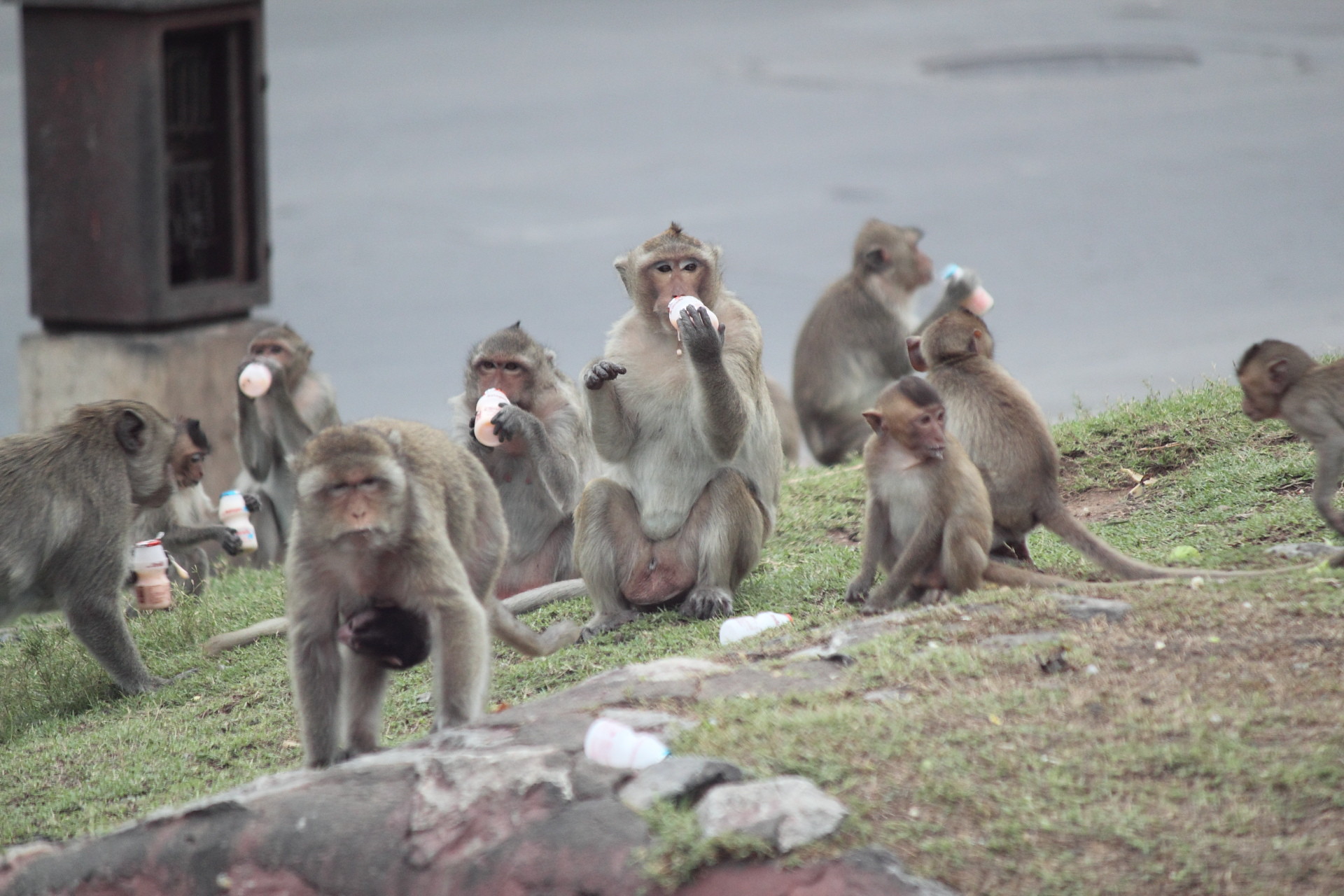
A massive group of monkeys, numbering in the thousands, has caused significant problems in a city in central Thailand. Many stores and businesses had closed down and moved away. Investors have stopped investing, and the once-bustling city of Lopburi has lost most of its shoppers.
This city, which used to attract tourists eager to see its wild macaques, is now entirely dominated by a strong force of 3,500 monkeys. Some residents have left town, while others are barricading their homes to safeguard against the monkeys.
Once a thriving commercial center, the city of Lopburi in Thailand is at risk of becoming a ‘ghost town’ with thousands of monkeys invading the space, vandalizing shops and harassing tourists. pic.twitter.com/iu2QiijzTd
— REPORTER (@reporter99999) February 1, 2024
Kuljira Taechawattanawanna, a resident of Lopburi, expressed to AFP, “We live in a cage but the monkeys live outside.” She shared the struggle of having to protect her home by covering her terrace to prevent the monkeys from invading and searching for food.
Monkeys and their sugary treats
Lopburi has had to mark certain areas as no-go zones due to conflicts between rival monkey gangs. Initially, residents tried to control the situation by offering the monkeys junk food, but this strategy backfired, leading to increased aggression.
The locals had been providing the monkeys with sugary treats like sweets, fizzy drinks, and cereal, known to make monkeys more energetic and sexually active.
Suttipong Kamtaptim from the Department of National Parks explained that sugary foods can boost the monkeys’ productivity and stimulate them to reproduce more.
Female monkeys can naturally reproduce twice a year, and the frequent sugar intake has provided them with extra energy for this purpose.
Before the pandemic, monkeys and humans coexisted harmoniously in the city. The macaques drew tourists who bought bananas to feed and interact with the animals, as reported by The Sun.
Tayland’da maymun istilası
Tayland’ın Lopburi şehri, binlerce maymunun alanı istila etmesi, dükkanları tahrip etmesi ve turistleri taciz etmesi nedeniyle bir ‘hayalet şehir’ olma riskiyle karşı karşıya. pic.twitter.com/CUjDCOtScp
— EFEKIZ Nermin Seçkin 𐰣𐰾𐰀𐰲𐰚𐰃𐰤 (@NerminSekin1) February 1, 2024
Collapse in human-monkeys balance in Lopburi
The delicate balance between humans and monkeys crumbled when lockdowns stopped the regular inflow of tourists, leaving the macaques searching desperately for alternative food sources.
Somsaksri Janhon, a market stall seller, shared with the Guardian, “The monkeys are hungrier and more aggressive than before.”
“They take anything they can. The comb, the mirror. If I leave the food unattended they steal the food as well,” Janhon added.
The monkeys have spread everywhere – perched on rooftops, causing chaos on the roads, and even engaging in robberies of passing cars.
Several high-profile cases of monkey-human conflict recently convinced authorities in Lopburi that they had to reduce the animals’ numbers. The roaming monkeys have long been a symbol of the town, 90 miles north of Bangkok, and are a major tourist draw. They’ve become increasingly aggressive, however, with several videos of them snatching food from residents and causing injuries being widely shared online.
To address the escalating monkey population, Thailand’s Department of National Parks has initiated a sterilization program, aiming to control the rapid growth of the monkey community in the city.
Officials successfully used a strategy of using sizable fruits to lure several hundred monkeys into cages, allowing for their sterilization.
But no one is expecting it to be easy.
“With the monkey’s intelligence, if some of them go into the cage and are caught, the others outside won’t enter the cage to get the food because they’ve already learnt what’s happened to their friends,” said Patarapol Maneeorn, from Thailand’s Department of National Parks, Wildlife and Plant Conservation.