Archaeologists in central Romania have uncovered a 7,500-year-old artifact that offers a rare look into the spiritual world of early farming communities. The Neolithic figurine found near Sfântu Gheorghe was recovered during required preventive excavations, and researchers say the discovery strengthens understanding of ritual practices in what is now Romania. The find also adds important evidence to the broader study of Neolithic figurine traditions in Europe.
The object emerged during work at the “Arcuș – Platoul Târgului” site, where crews planned to extend electrical connections for Sepsi Arena. Archaeologists carried out systematic excavations ahead of construction, and what began as routine fieldwork quickly shifted when the clay statue appeared in the soil.
The figurine came from a settlement dated between 5,800 and 5,500 BC, where researchers documented remnants of homes, pottery, burned clay, and charcoal.
Cultural context and physical description of the figurine
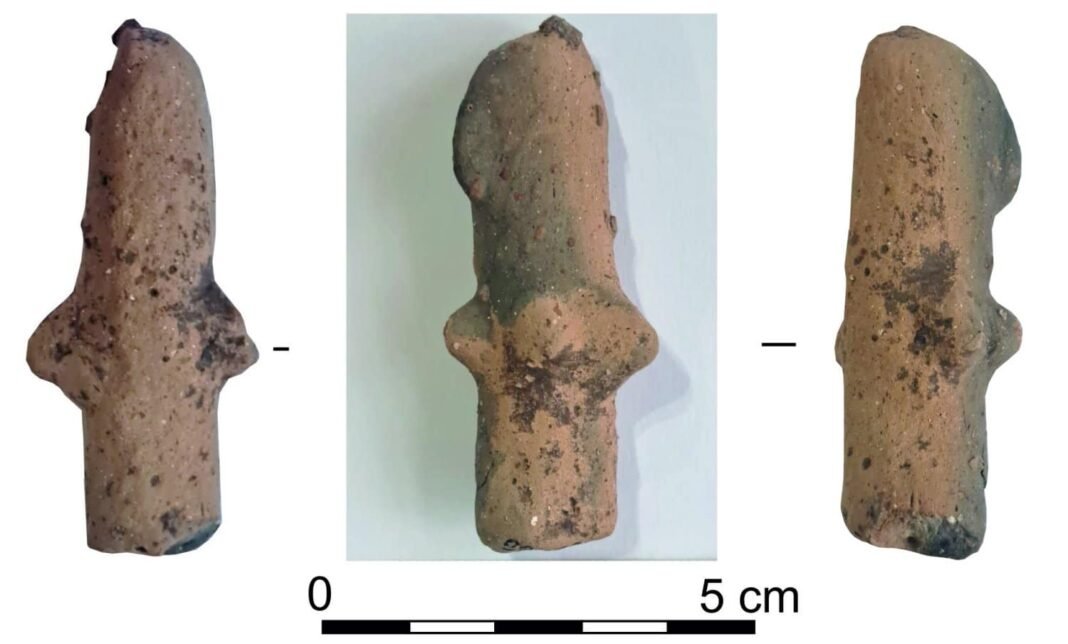
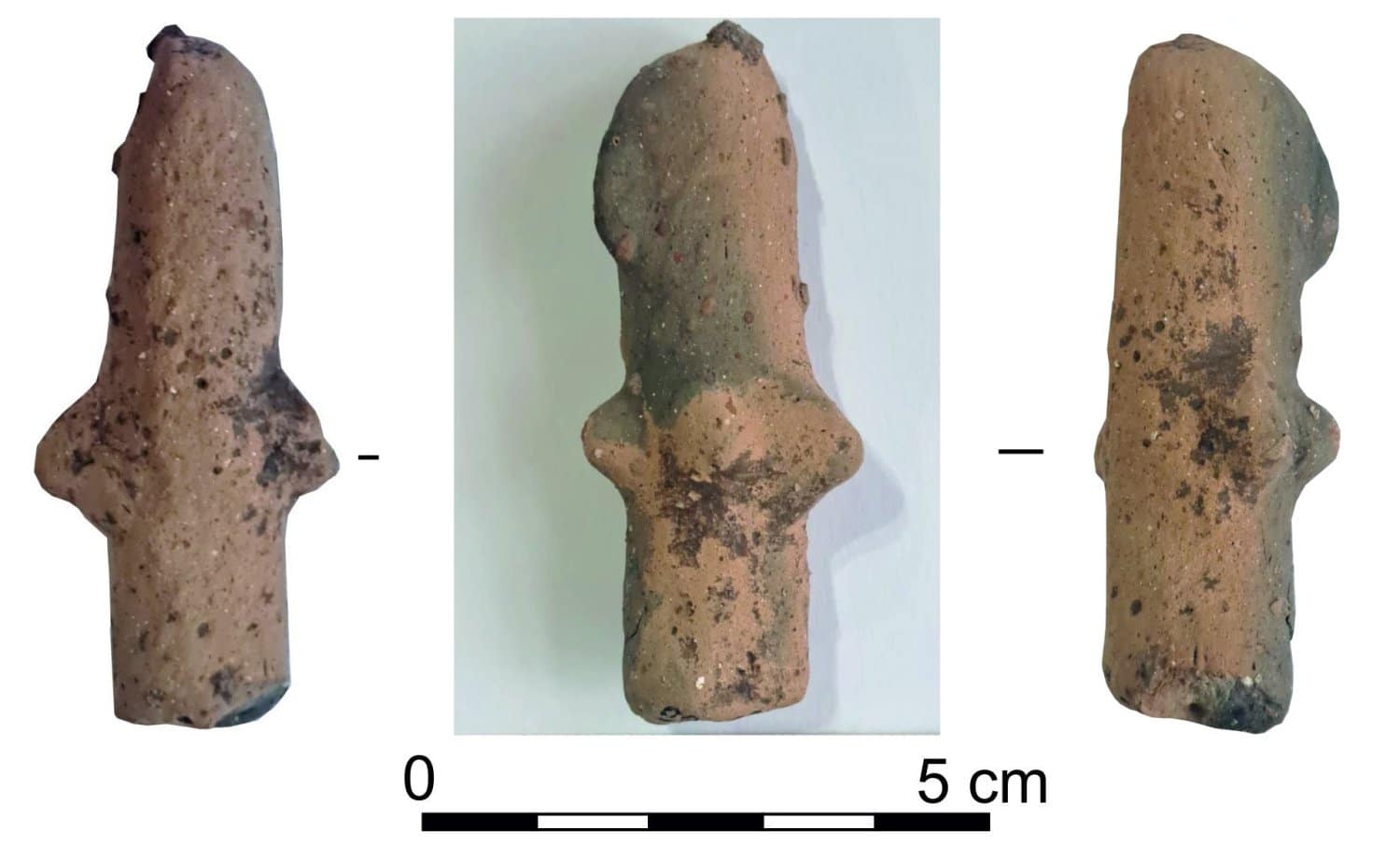
Inside one of the ancient structures, the team uncovered the small clay sculpture shaped into a female form with arms extended to the sides.
The figure belonged to the Starčevo-Criș culture, an early farming society that helped spread agriculture across the Balkans and into the Carpathian Basin. These communities were among the first in the region to establish permanent settlements, farm crops and raise domesticated animals.
The figurine measures about six centimeters (2.4 inches) in height. It was formed from clay tempered with chaff and sand, then fired at high temperatures that produced a brick red color. Darker areas on the front suggest uneven heating during the firing process.
Although the face is simple, the features are distinct. The eyes are carved in a V shape, the nose appears as a small oval and fine incisions indicate long hair likely tied into a bun.
Specialists consider this one of the earliest hairstyling representations found north of the Danube. Two small protrusions on the torso confirm the female identity. Unlike the more exaggerated Venus-type figurines common in prehistoric Europe, this sculpture has a slimmer, understated profile.
Neolithic clay figurine in Romania’s archaeological record
Researchers say clay figurines are uncommon within the Starčevo-Criș culture. Most previous examples come from Banat and the Criș River basin, often with strong fertility symbolism. The restrained style of the Arcuș figurine may reflect regional variation or a different purpose.
The meaning of the artifact is still under study. Archaeologists suggest it may have served as a household amulet, a ritual object or a symbolic offering. The raised-arm position is often linked to prayer or invocation in Neolithic art.
Dan Lucian Buzea, one of the researchers on the project, noted that objects like this carry strong emotional weight because they offer a direct connection to the beliefs and inner lives of early farmers.
The excavation team was led by Dan Călin Ștefan with participation from Buzea, Puskás Jozsef and several collaborating specialists. They completed detailed documentation to preserve information before construction moved forward.
The figurine now stands as a rare reminder of a transformative era when communities shifted from mobile hunting groups to settled agricultural society. Its survival after thousands of years continues to raise questions about ritual, belief and the ways early people expressed meaning through art.