

Mithraism was far more flexible than previously believed, with Roman worship practices shaped by local landscapes, traditions and everyday life, according to a new study. Researchers argue that worship of the god Mithras was not based on a single, standardized religious model. nstead, communities adapted the cult to their own environments, creating distinct local expressions across the Roman Empire.
The study, led by Ian S. Wilson and published in the Journal of Roman Archaeology, focuses on a little-known sanctuary at Močići in modern-day Croatia. The findings suggest that local geography played a much larger role in Mithraic worship than previously believed.
For decades, scholars have viewed Mithraic sanctuaries as highly uniform spaces. Most known temples dedicated to Mithras featured long, enclosed rooms with raised benches along the sides and an image of the god killing a bull at the far end. Researchers often interpreted these spaces as symbolic representations of the cosmos where followers performed rituals and communal meals.
The new study argues that this picture is too narrow. Instead of focusing on universal religious symbolism, the researchers examined how worshippers at Močići interacted with the natural environment around them. Their findings show that the sanctuary was deeply connected to local geological features, including a natural cave, a spring and the rocky karst landscape of the region.
A sanctuary unlike most others

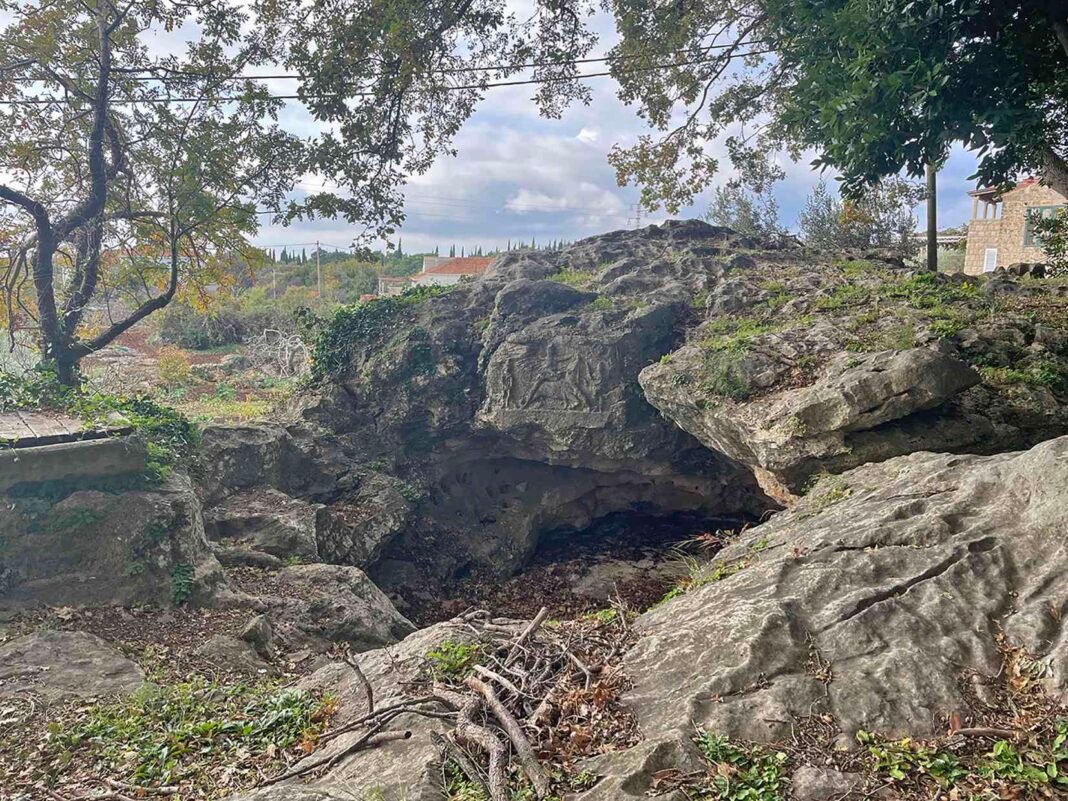
The Močići sanctuary sits in the hills above the ancient Roman town of Epidaurum, near present-day Cavtat on Croatia’s Adriatic coast. At the center of the site is a natural limestone grotto containing a spring and a carved relief of Mithras slaying a bull.
Using photogrammetry and digital modeling, the researchers created the first detailed reconstruction of the sanctuary. Their analysis revealed that the site differs significantly from typical Mithraic temples.
The cave itself is small and could not comfortably hold large groups of worshippers. Researchers found that it lacked enough space for one of the cult’s most common activities: communal dining. Instead, evidence suggests that gatherings likely took place in an open clearing outside the cave.
That finding is unusual because most known Mithraic sanctuaries were enclosed structures. The Močići site may represent one of the few open-air worship spaces associated with Mithras.
Nature played a central role
The researchers argue that worshippers deliberately chose the location because of its natural features rather than trying to transform it into a symbolic model of the universe.
The cave, spring and rocky landscape all matched themes commonly associated with Mithras. Ancient traditions often linked the god with caves, rocks and flowing water. At many other sites, worshippers recreated these elements through architecture and decoration. At Močići, they were already present in the landscape itself.
The study suggests that local worshippers embraced these natural features instead of replacing them with artificial structures. This created a form of worship that was closely tied to the surrounding environment.
Researchers say the site shows how religious meaning emerged through interaction with real places rather than through the replication of a fixed religious blueprint.
Local traditions influenced worship

The sanctuary also contained evidence of another deity, Silvanus, a god associated with rural life, forests and pastoral activities. A damaged relief likely depicting Silvanus stood near the cave.
According to the researchers, this combination reflects local traditions in the region. Silvanus was especially popular in rural parts of Dalmatia and was often linked to caves and springs. His presence at Močići suggests that Mithras worship merged with local beliefs instead of replacing them.
The surrounding landscape was historically used for animal husbandry, particularly sheep and goat herding. Researchers believe these pastoral traditions may have influenced how worshippers understood both Mithras and Silvanus.
Rethinking Mithraism as a religious system
The study concludes that there was no single, uniform form of Mithraic worship across the Roman Empire. Instead, communities selected and adapted shared symbols, myths and rituals to fit their own environments and experiences.
Rather than viewing mithraism as a rigid religious system, the researchers describe it as a flexible collection of ideas and practices that changed from place to place.
The findings highlight how ancient religions were shaped not only by beliefs and rituals but also by the landscapes in which people lived. At Močići, a cave, a spring and a rocky hillside became central elements of worship, creating a distinctly local expression of a cult that stretched across the Roman world.


