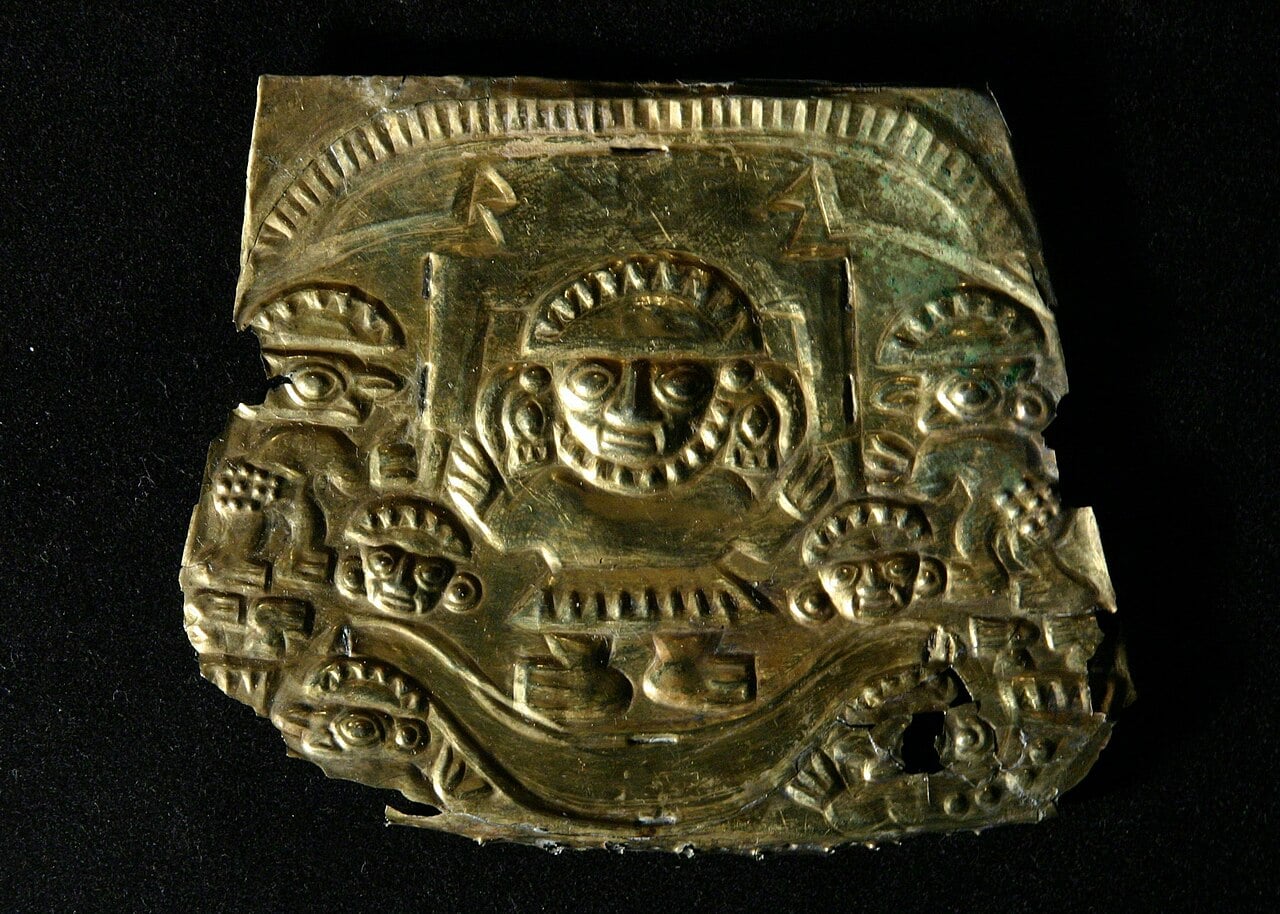
Archaeologists in northern Peru have documented what they describe as an ancient sacred road that linked ritual, agriculture, and political authority across the landscape. The discovery, made in the Chicama Valley, centers on a straight stone-built geoglyph stretching for at least two kilometers, cutting across ravines and open terrain with unusual precision.
Researchers say the feature functioned as a ceremonial route rather than a road meant for transport. Its scale and alignment suggest it played a central role in how the Chimú people organized movement between key spaces tied to belief and production.
A ritual route shaped into the landscape
The stone line connects a fortified settlement with extensive cultivation areas and a ceremonial complex. The arrangement points to careful planning rather than accidental placement.
The route ignores natural contours and runs straight across old ravines, a design choice that required coordinated labor and long-term maintenance. Archaeologists say this effort signals symbolic meaning. The path likely guided ritual movement through the landscape, reinforcing shared beliefs and social order.
Drone mapping reveals the full scale of the site
International coverage has emphasized the role of drone mapping in documenting the sacred road. Aerial surveys allowed researchers to record the area at a level of detail not previously possible. Although parts of the sector had been known for decades, the new imagery revealed the full length of the geoglyph and the scale of the surrounding fields.
Modern farming, road construction, and infrastructure projects are cutting into the ancient landscape, damaging features before they can be fully studied.
A Chimú corridor linking settlement, fields, and ceremony
Archaeologist Henry Tantaleán, co-director of the Chicama Archaeological Program, said the sacred road functioned as a camino ritual, or ceremonial corridor. The route links Cerro Lescano with cultivation zones and continues toward Cerro Tres Cruces.
Archaeologists in northern Peru have documented an ancient sacred road linking Chimú settlements, ritual spaces, and vast agricultural fields. The discovery in the Chicama Valley shows how belief and farming were shaped together in the landscape. pic.twitter.com/9cNG1vSuvK
— Tom Marvolo Riddle (@tom_riddle2025) February 26, 2026
Tantaleán described the feature as the clearest known example of a Chimú settlement being physically connected to farmland and ritual spaces through a planned ceremonial path. Its geometry invites comparison with Peru’s broader geoglyph traditions, including the Nazca Lines, which have long sparked debate over whether such features guided movement, marked gathering spaces, or structured sacred processions.
Vast agricultural system tied to the sacred road
The sacred road runs alongside an extensive agricultural landscape. In the Pampas de Lescano sector alone, archaeologists documented more than 100 hectares of fields marked by serpentine furrows and distinctive “comb-like” patterns. Researchers say these layouts reflect deliberate planning rather than informal cultivation.
The fields were supplied by secondary canals branching from the Gran Canal de la Cumbre, one of the region’s major irrigation works. The system allowed water to be distributed efficiently across a wide area, supporting intensive farming.
To identify what was grown, the research team collected soil samples for phytolith and pollen analysis. While results are still pending, earlier studies in the Chicama Valley suggest crops such as maize, squash, and beans were common. Stone tools, including hoes found scattered across the fields, support evidence of sustained and organized labor.
Ceremonial platform and plaza suggest collective gatherings
Near the sacred road, researchers also documented a quadrangular stone platform measuring about 40 by 50 meters and standing two to three meters high. The structure faces north, an orientation archaeologists describe as typical of Chimú architecture.
In front of the platform lies a large rectangular plaza measuring roughly 100 by 80 meters. Tantaleán said the open space may have hosted large gatherings linked to agricultural cycles and elite oversight of production. Such events likely reinforced authority while encouraging participation through ritual rather than force.
A landscape where belief and power converged
Researchers argue the discovery shows how religion, economy, production, and politics were woven together in the Chimú world. The sacred road, fields, canals, platform, and plaza form a single integrated complex in which ritual helped mobilize labor and organize society.
Archaeologists warn that the site faces growing threats. High-tension power towers, service roads, and private land use are steadily degrading the ancient remains. Without rapid documentation, they say, crucial evidence about how the Chimú shaped belief and power into the land itself could be lost.