After more than 1,300 years, water is flowing again beneath the Asopos Bridge at the ancient Greek city of Laodicea (Greek: Λαοδίκεια), bringing movement back to one of Anatolia’s most important Roman-era monuments.
Archaeologists say the return of water marks a decisive moment in the restoration of the ancient city. It shows that the bridge is no longer just standing. It is functioning again, interacting with the landscape it was built to serve.
Water flows again through ancient Laodicea
Excavation director Prof. Dr. Celal Şimşek announced that water has been released beneath the bridge’s main arch for the first time since late antiquity. For centuries, sediment buildup and natural changes in the riverbed blocked the original channel.
Researchers describe the event as both technical and symbolic. The controlled flow confirms that the bridge can still manage water safely, just as it did nearly 2,000 years ago.
A Roman bridge in a Greek-founded city
The Asopos Bridge was built in the 1st century AD, when Laodikeia was one of the wealthiest cities of Roman Asia Minor. The city prospered through textile production, medical education, and trade. Its location along major routes linking inland Anatolia to the Aegean coast made durable infrastructure essential.
Yet Laodikeia’s story began earlier. The city was founded in the 3rd century BC during the Hellenistic period and named after Queen Laodice, the wife of Seleucid ruler Antiochus II Theos. Greek urban traditions shaped its early layout, civic spaces, and identity.
Laodikeia Asopos köprüsü MS 1. yyda inşa edilmiş 171 m uzunluğunda, 7 m genişliğinde 5 kemer gözlü Anadolunun önemli köprüsü. Restorasyon çalışmalarında 2/3 aşamasına gelindi ve 1300 yıl sonra ana kemer altından su akıtıldı @TCKulturTurizm @kvmgm @yazgi_gokhan @birolincecikoz pic.twitter.com/sVmzjFU1pl
— Celal Şimşek (@celal1964) February 22, 2026
Even under Roman rule, Greek remained the dominant language of daily life, commerce, and religion. Researchers say the bridge reflects this layered past, where Roman engineering rose within a city that remained culturally Greek for centuries.
Built for movement, trade, and time
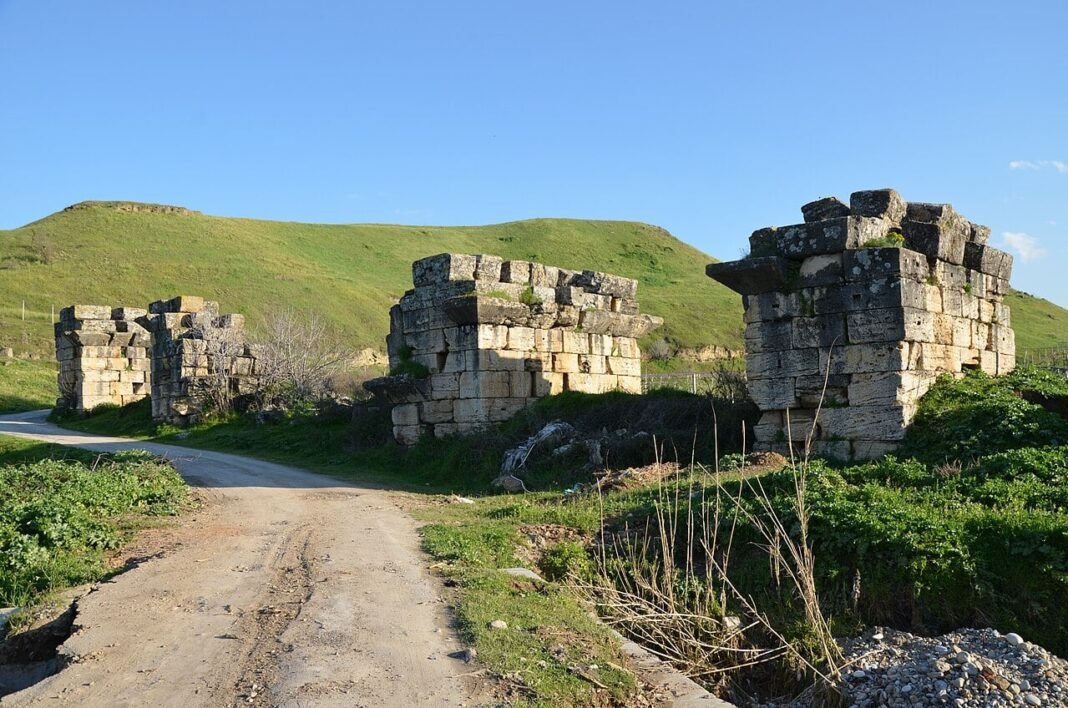
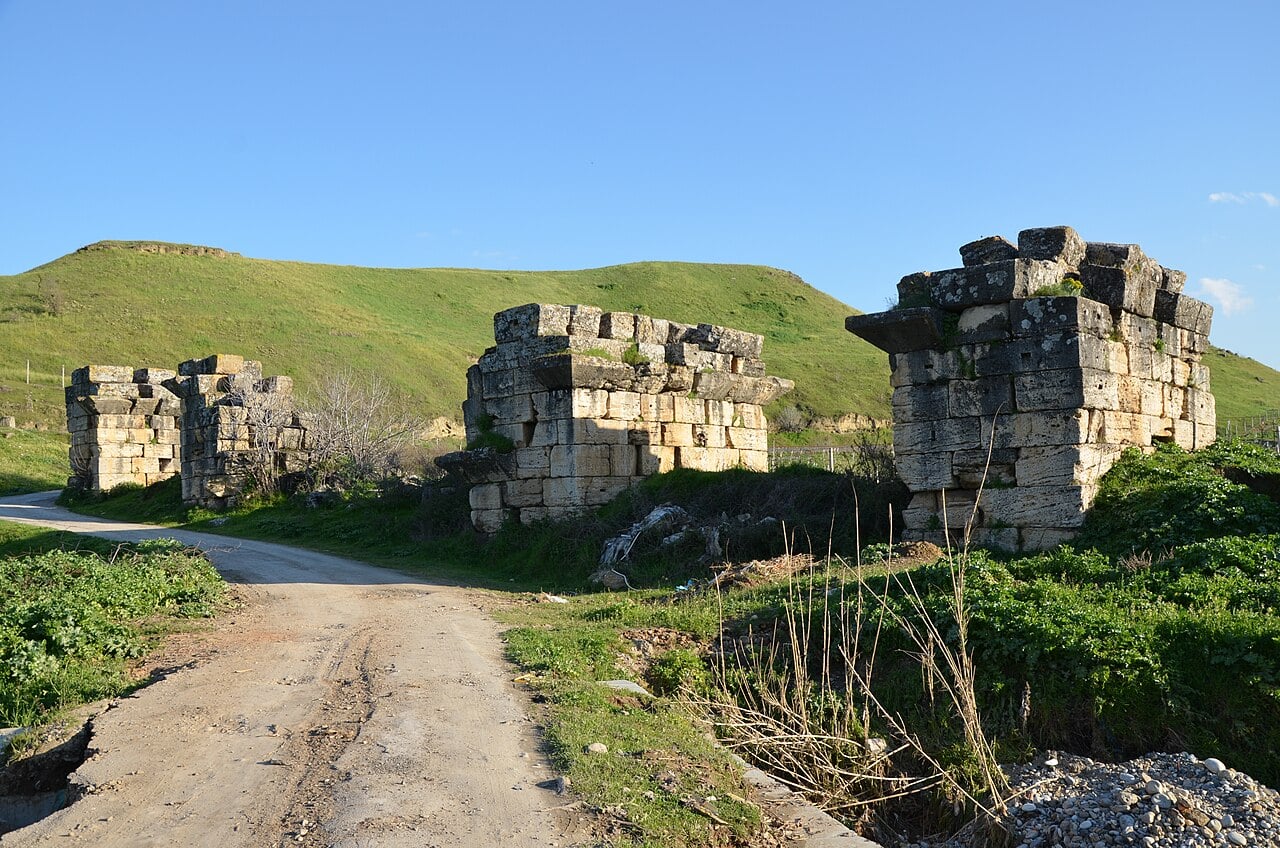
The bridge stretches about 171 meters (561 feet) and measures nearly 7 meters (23 feet) wide. Five large stone arches support its span. In antiquity, it crossed the Asopos River and linked the city to surrounding farmland and regional roads. Merchants, animals, soldiers, and travelers relied on the crossing each day.
Roman engineers designed the bridge with water in mind. The arches rise above normal river levels, reducing pressure during seasonal floods. This approach protected the structure from strong currents and shifting sediments. Archaeologists say the renewed water flow shows that those hydraulic calculations still work.
Restoration reaches a critical stage
Restoration work on the bridge has reached about 66 percent completion, according to Şimşek. Teams are reinforcing the structure, stabilizing stone blocks, and reconstructing collapsed sections. Original materials are reused whenever possible.
Conservation specialists limit modern additions and ensure that new work remains reversible and clearly distinguishable from ancient masonry. This method protects the bridge’s authenticity while allowing it to function safely.
The controlled return of water beneath the central arch tested these efforts. Researchers say the structure responded as expected, with water following its original course beneath the bridge.
Part of a wider ancient city
The Asopos Bridge is only one element of Laodikeia’s extensive urban fabric. Excavations have revealed a massive stadium, two theaters, long colonnaded streets, bath complexes, and early Christian churches. The city also appears in the Book of Revelation as one of the Seven Churches of Asia, underscoring its religious importance in late antiquity.
Decades of excavations led by Şimşek have revealed a carefully planned city shaped by engineering and design. Restoration projects aim not only to preserve ruins but to restore context and experience.
From ruin to living monument
Roman bridges across Anatolia often remained in use for centuries, adapted by later Byzantine, Seljuk, and Ottoman builders. The Asopos Bridge stands out for its size and its setting within a major ancient city.
As restoration continues, archaeologists expect the bridge to become a focal point of Laodikeia’s archaeological landscape. Water flowing beneath its arches does more than enhance appearance. It reconnects stone with the environment, turning a silent ruin into a living monument once again shaped by movement and time.