A new study of ancient human remains from a burial site near Paris has found that a dramatic population replacement in France unfolded around 5,000 years ago. A new group from the Iberian Peninsula moved northward and largely displaced the region’s existing Neolithic communities.
The findings, published in Nature Ecology and Evolution, offer a detailed look at one of European prehistory’s least understood turning points.
Researchers led by Frederik V. Seersholm of the University of Copenhagen analyzed 132 ancient genomes from a megalithic burial site called Bury, located about 50 kilometers (31 miles) north of Paris.
The site contains two distinct burial phases separated by a gap in activity. This made it a rare window into how the local population changed over centuries.
Population replacement began in France before Bell Beakers
The first burial phase ended around 3000 BC and belonged to a genetically diverse group with mixed ancestry. Some individuals even carried traces of hunter-gatherer DNA. The second phase, running through much of the third millennium BC, told a completely different story.
More than 80 percent of the ancestry in Phase 2 individuals traced back to Neolithic Iberia. This pushed back the timeline of major genetic replacement in France by several centuries, predating the well-known Bell Beaker cultural expansion.
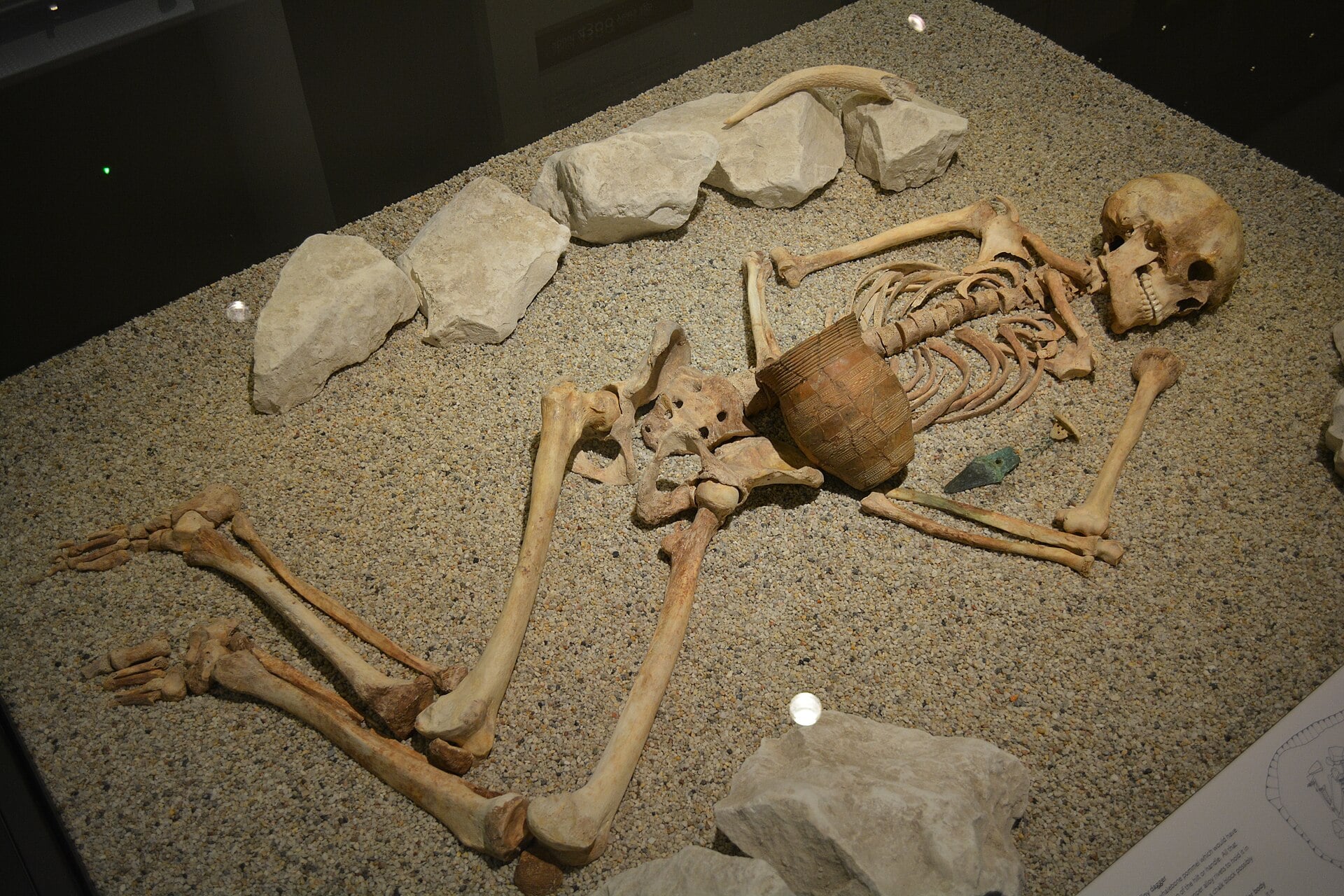
The two groups also organized themselves very differently. Phase 1 burials reflected large, extended family networks spanning up to five generations.
One striking example involved three brothers, one of whom was found seated in a corner of the grave with three axe wounds to the skull. He was surrounded by children in what researchers believe may have been the founding deposit of the monument.
Phase 2, by contrast, featured smaller patrilineal family lines and a much higher proportion of unrelated individuals.
Axe wounds and pedigrees reveal a stark social divide between phases
Both phases showed a notable male bias, with roughly 71 to 73 percent of individuals being male. Researchers concluded that women were largely buried elsewhere, pointing to a practice of female exogamy in these communities.
Researchers also found evidence of infectious disease in the remains. The plague bacterium, Yersinia pestis, appeared in four individuals across both phases.
They also detected Borrelia recurrentis, which causes louse-borne relapsing fever with an untreated death rate between 15 and 40 percent. Strontium isotope data further indicated that the Phase 2 population lived a more settled lifestyle than earlier groups in the area.
Plague and pollen records paint a picture of civilizational collapse
Pollen records from the Paris Basin, along with similar data from Scandinavia, Denmark, and Germany, showed clear forest regrowth between the two phases. This signaled a widespread abandonment of fields and settlements across the region.
Researchers concluded that disease, environmental strain, and demographic pressure combined to collapse the original farming communities, ultimately creating conditions for a new population to move in and reshape the region entirely.