
Scientists have mapped out family relationships in one of China’s earliest urban societies using ancient DNA, uncovering kinship networks that shaped social structure in Shimao City over 4,000 years ago. The research points to a genetically diverse population built around patrilineal family clans, where high-status men formed the core of power.
The findings, published Thursday in Nature, come from a large-scale DNA study of 144 individuals excavated from Shimao and nearby settlements.
Led by Fu Qiaomei of the Institute of Vertebrate Paleontology and Paleoanthropology under the Chinese Academy of Sciences, the team reconstructed family trees spanning up to four generations, revealing how social ties were passed down through male lineage.
Elite lineages and the role of women in Shimao Society
DNA samples from elite burial grounds showed that male leaders were closely related within their tomb groups, while women buried beside them came from different family lines. This pattern suggests that women married into these clans, reinforcing male dominance in family and political roles.
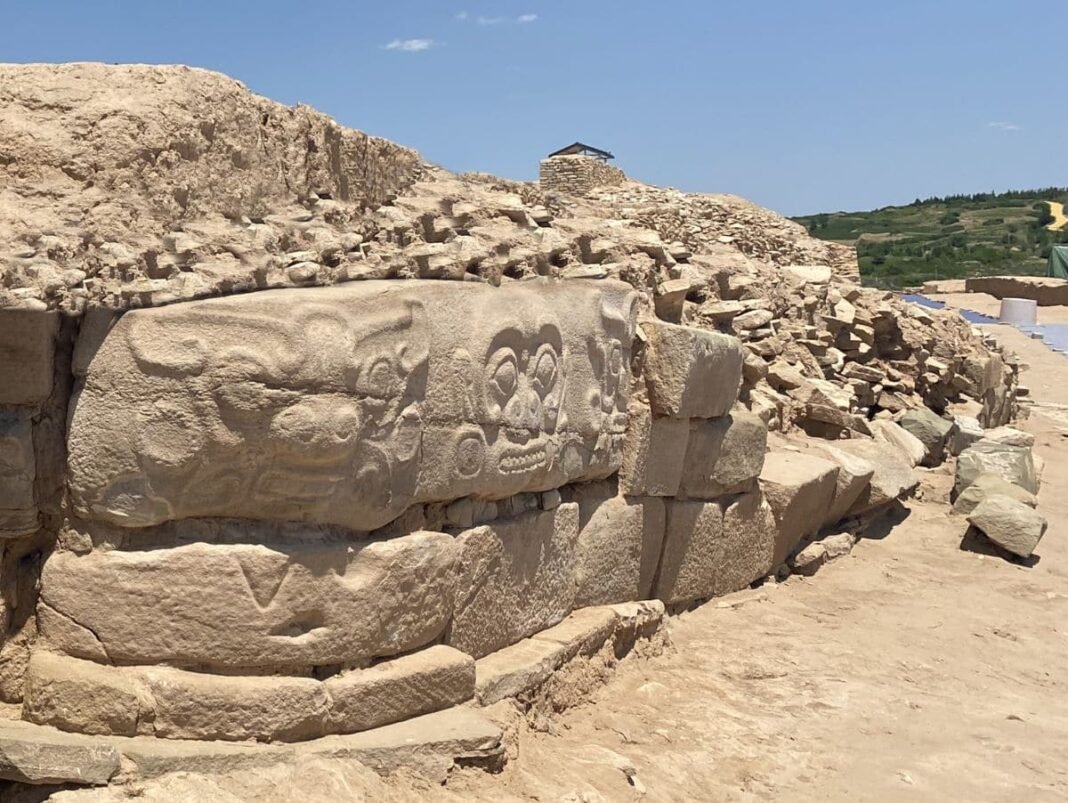
Shimao City, which covered around 4 million square meters (43 million square feet) in northern China’s Loess Plateau, was the largest known prehistoric settlement in the region.
Ancient DNA reveals complex kinship networks in China’s prehistoric Shimao City. Researchers uncover patrilineal clans, ritual sacrifices, and wide genetic ties dating back 4,000+ years. 🧬🏯 #AncientDNA #ShimaoCity #Archaeology #China #History pic.twitter.com/a25Ar3BIH9
— Tom Marvolo Riddle (@tom_riddle2025) November 27, 2025
Its massive stone walls, terraced platforms, palaces and finely crafted jades point to a society with organized leadership and strict hierarchy. Despite this complexity, the population’s origins remained unclear until now.
Genetic data now confirms that most of Shimao’s residents descended from Yangshao culture farmers who lived in the region more than a thousand years earlier.
Researchers also identified links to groups from the northern steppes and southern rice-farming communities, showing that the city was not isolated. These findings support the idea of early connections among different regions in ancient China.
Kinship networks and genetic origins of Shimao City
In addition to kinship structures, the study offers insight into the city’s use of ritual human sacrifice. Remains found in skull pits and elite tombs followed clear patterns: males dominated the mass sacrifice pits, while women were often buried as attendants to high-status individuals.
None of the sacrificial victims were closely related to the elites, though some of the women were biologically related to each other. Researchers believe this indicates that specific communities may have been targeted for ritual purposes.
Fu’s team also found no strong evidence of close-kin marriage among elite families, suggesting deliberate avoidance of inbreeding.
The researchers say their findings provide one of the most detailed genetic portraits of an early state-level society in East Asia, helping explain how power, family, and ritual combined to shape life in Shimao City.