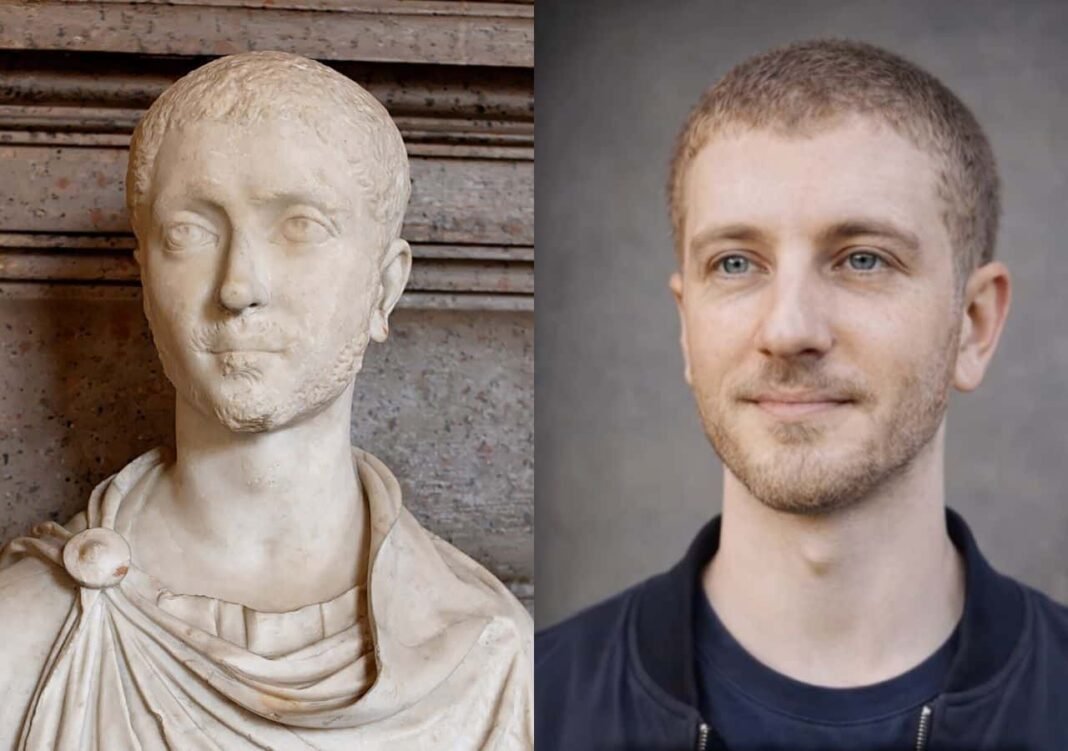
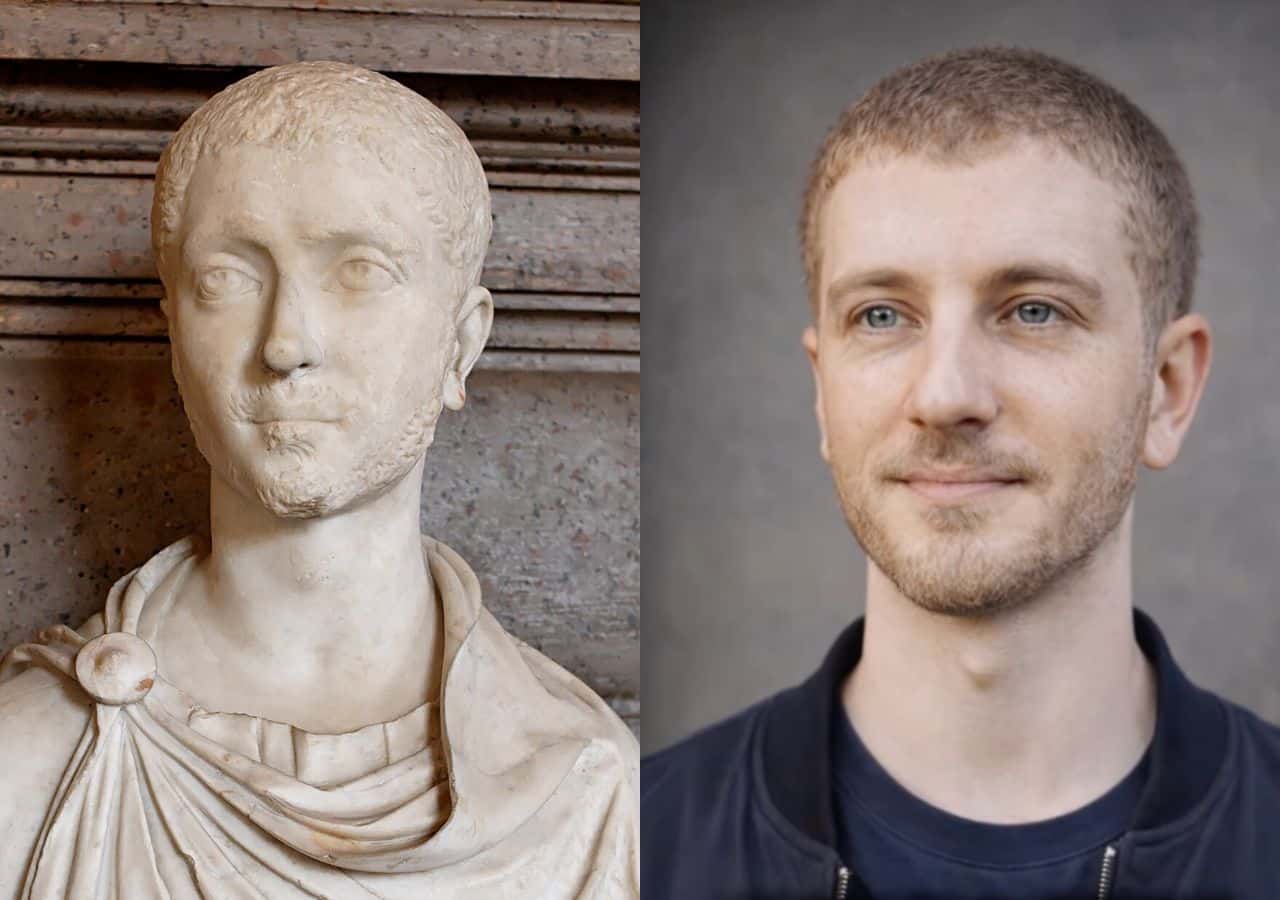
Ancient Roman history is taking on a modern face in a video that reimagines some of the empire’s most famous figures as people living today. Using AI-assisted visuals and digital reconstruction, the video presents 50 well-known historical Roman figures with contemporary appearances, offering a fresh way to connect with the ancient world.
Instead of relying on traditional statues or painted portraits, the video transforms emperors, political leaders, military commanders, and philosophers into contemporary-looking individuals. Modern clothing, realistic facial features, and present-day expressions help bridge the gap between ancient history and today’s society.
Controversial emperors and power in a modern context
Several major Roman leaders feature prominently. Figures such as Julius Caesar, Trajan, Hadrian, and Marcus Aurelius appear reimagined with a modern presence that reflects their authority and public stature. Their portrayals highlight leadership styles that once shaped an empire stretching across Europe, Africa, and the Middle East.
The video also revisits some of Rome’s most infamous rulers. Caligula, Nero, Commodus, and Elagabalus are shown through a modern lens that subtly reflects their reputations for excess, controversy, and unchecked power. These depictions encourage viewers to think about how similar personalities might be perceived in today’s political and social climate.
Beyond emperors, the video includes key figures from the Roman Republic. Leaders such as Lucius Quinctius Cincinnatus, Pompey Magnus, Gaius Marius, Lucius Cornelius Sulla, and Marcus Licinius Crassus represent an era defined by political rivalry and civil conflict. Their modern portrayals emphasize themes of ambition, loyalty, and the struggle for control.
Roman thinkers, writers, and an empire in transition
Roman thinkers and writers also receive attention. Cicero, Seneca the Younger, Tacitus, Virgil, Horace, Pliny the Elder, and Pliny the Younger appear as intellectual figures whose ideas still resonate. Their inclusion highlights Rome’s lasting influence on law, philosophy, literature, and governance.
Later emperors such as Constantine the Great, Theodosius I, Valentinian I, Honorius, and Romulus Augustulus reflect a period of transition and decline. Their modern reinterpretations offer visual insight into leadership during times of change and uncertainty.
By using AI technology to reimagine these historical figures, the video makes Roman history feel more immediate and relatable. It shifts the focus from monuments and timelines to human character.