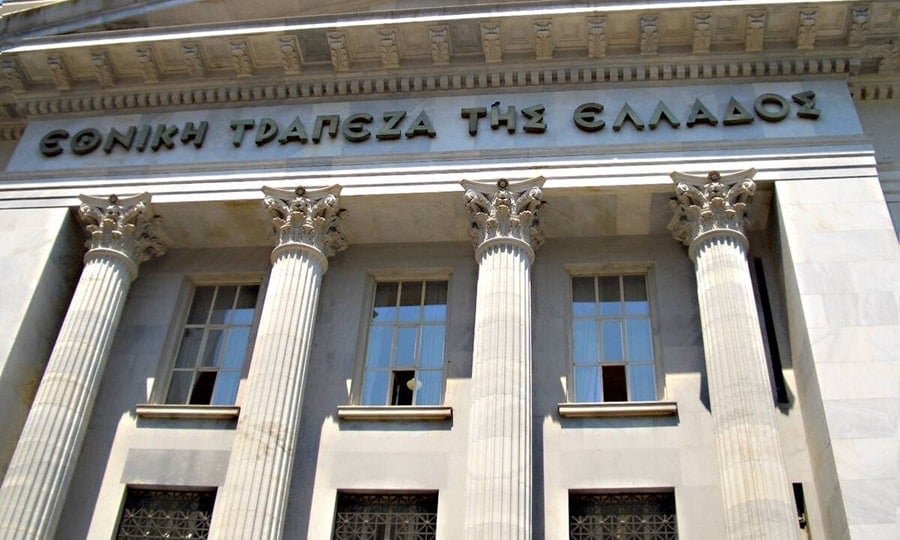
While Greece’s systemic banks record billions in profits, the average Greek worker remains tethered to one of the lowest wage tiers in the European Union. This juxtaposition—of soaring financial sector returns against stagnant household income—is not merely an economic quirk; it is a source of deepening social friction.
The earnings of the average Greek worker have seen modest nominal increases recently, though they remain among the lowest in the European Union. According to 2025 data from the “Ergani” system, the average gross monthly salary for private-sector employees was approximately €1,363, with full-time workers averaging slightly higher, at roughly €1,516. Despite these averages, the distribution of income remains heavily skewed toward the lower end of the spectrum; data indicate that approximately 60% of private-sector employees earn €1,200 gross or less per month.
The statutory minimum wage continues to serve as a critical benchmark for the Greek labor market. As of April 1, 2026, the government increased the gross monthly minimum wage to €920 (based on a 14-month payment structure, this equates to roughly €1,073 on a 12-month basis). While these incremental adjustments are intended to mitigate the impact of inflation and improve living standards, a significant portion of the workforce remains concentrated in the lower-earning brackets.
Greek banks see profits surpassing €4.6 billion
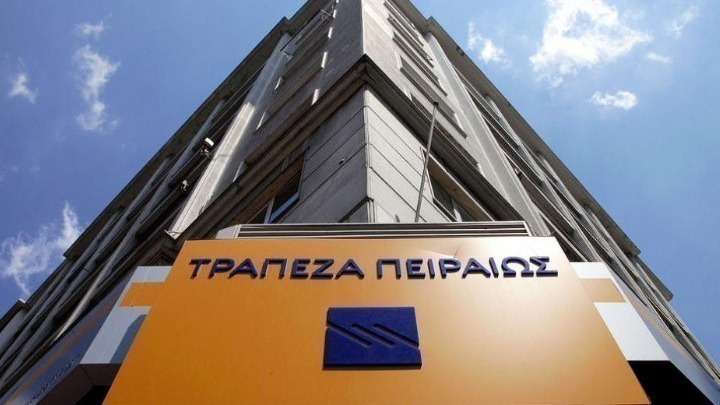
The 2025 fiscal year was exceptionally profitable for Greece’s systemic banks, with combined net earnings surpassing €4.6 billion. Eurobank led the sector with €1.4 billion in net profit, followed closely by the National Bank of Greece with €1.259 billion. Piraeus Bank recorded net earnings of €1.07 billion, while Alpha Bank concluded the year with a net profit of €943.3 million.
What captured the market’s attention most was the collective decision by all four systemic banks to significantly increase the portion of profits returned to shareholders. Piraeus Bank, Eurobank, and Alpha Bank raised their payout ratios to 55%—surpassing their initial guidance of 50%—while the National Bank of Greece exceeded expectations with an aggressive total payout of 86%, bolstered by a substantial share buyback program
This performance is widely celebrated in financial circles as a testament to the success of the “Hercules” asset protection schemes, which allowed banks to offload non-performing loans (NPLs) and repair their balance sheets.
Greek banks exploit a high “interest rate spread”
However, beneath the surface of these record profits lies a controversial business model. The primary driver of this income has not been an explosion in productive lending to small and medium-sized enterprises, but rather a persistent and high “interest rate spread.”
Banks have been quick to hike loan interest rates while keeping deposit interest rates at near-zero levels. This creates a lucrative margin that effectively transfers wealth from ordinary savers and borrowers to the banks.
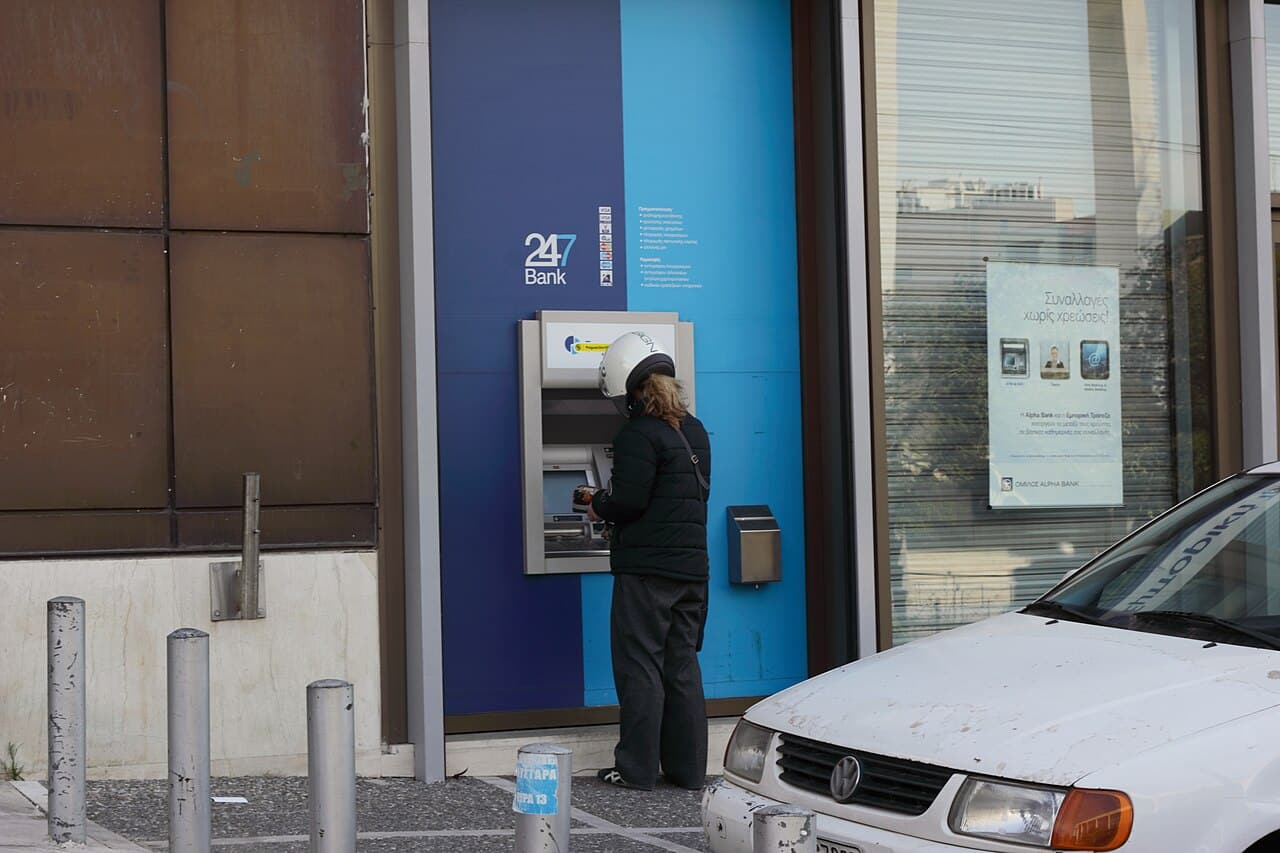
Furthermore, as net interest income begins to moderate amid changes in European Central Bank policy, banks have aggressively increased commission fees—charging for basic digital transactions, account management, and ATM services—to maintain their upward earnings trajectory.
For example, the era of the “free” bank account is officially ending in Greece, as the National Bank, Alpha Bank, and Eurobank have begun implementing monthly maintenance fees, ranging from €0.60 to €0.80 (less than a dollar). While these amounts appear trivial to the individual depositor, they represent another revenue stream for the banks.
The end of the pay cap for executives in the banking sector

For years, the Greek banking sector operated under strict legislative constraints. Under the conditions of the 2010s state bailouts, Law 3864/2010 effectively imposed a rigid cap on executive remuneration, preventing bonuses and limiting salary growth to ensure fiscal discipline. These restrictions remained in place as long as the Hellenic Financial Stability Fund (HFSF) held significant stakes in these institutions.
By 2023, following the successful divestment of the state’s shares and the return of the banks to full private ownership, these emergency restrictions were lifted. With the shackles removed, the banks transitioned back to the framework of Law 4548/2018, which governs corporate transparency and pay.
Consequently, 2025 marked a pivotal year where shareholders, eager to attract and retain “top-tier” international talent in a competitive market, approved significant shifts in compensation structures—including increasing the maximum variable-to-fixed remuneration ratio to as high as 150%.
Executive compensation in the post-cap era
The removal of these caps has resulted in a marked surge in executive pay. Based on the most recent 2025 remuneration disclosures, the total annual compensation packages for the CEOs of the four systemic banks currently sit in the high-seven-figure range:
Fokion Karavias (Eurobank): Approximately €1.94 million in total annual compensation.
Paul Mylonas (National Bank of Greece): Approximately €1.78 million in total annual compensation.
Vassilios Psaltis (Alpha Bank): Approximately €1.58 million in total annual compensation.
Christos Megalou (Piraeus Bank): Approximately €1.37 million in total annual compensation.
These figures, which often include base salaries supplemented by performance bonuses and share-based awards, contrast sharply with the realities of the broader workforce. While the typical hotel front-desk clerk or retail employee in Greece survives on a gross monthly salary of approximately €1,100 to €1,200, these banking leaders command compensation that places them in an entirely distinct economic class.
The social cost
The practice of selling billions in red loans to foreign credit servicing firms—the so-called “funds”—has been the primary tool for cleaning balance sheets. Today, these funds manage roughly €90 billion in Greek private debt.
For the average family, the “banking recovery” has not meant easier access to credit; it has meant facing sophisticated debt-collection machinery focused on maximizing returns. This creates a scenario where the systemic banks are perceived to have offloaded their risk onto the shoulders of the most vulnerable, while simultaneously rewarding their executives with salaries that are triple or quadruple the national average.
Is this behavior parasitic? The term is harsh, but it gains traction when one considers the structure of the Greek market. With the four systemic banks holding over 96% of total assets, the sector operates as a high-concentration oligopoly. As the economy moves forward, the resilience of the banking sector is undeniable, yet the social cost of this resilience is mounting. True economic health will require more than just healthy balance sheets; it will require ensuring that the recovery is reflected in the disposable income of the average household, rather than just the profit margins and executive bonuses of the financial elite.
Political fallout on bankers’ profits

The Greek government defends the record profitability of systemic banks as a vital success story of the post-crisis era. The Mitsotakis administration argues that the banking sector’s health is the bedrock of Greece’s investment-grade status, essential for attracting foreign capital and ensuring economic stability.
Rather than imposing punitive measures like windfall taxes, which they warn would damage investor confidence and hinder credit expansion, the government prefers a regulatory approach—pressuring banks to lower specific consumer fees and urging them to increase lending to small and medium-sized enterprises (SMEs) to stimulate the “real economy.”
In sharp contrast, the opposition—led by PASOK and supported by other political forces—frames the banks’ multi-billion-euro profits as a market distortion that comes at the direct expense of households and businesses. PASOK leader Nikos Androulakis stated recently: “Now that the banks have entered a phase of strong profitability, the time has come for a portion of these benefits for the banking system to also go to the Greek taxpayer.”
The opposition argues that these earnings are not merely the result of efficiency, but rather the byproduct of an oligopolistic interest-rate spread and a lack of real competition.
SYRIZA leader Sokratis Famellos said that the state should intervene: “It is irrational—and this is what we stated today—for bank profits to be 4.5 billion euros per year, while this money is missing from households and businesses…A strong state is needed, one that can intervene to support the real economy, the country’s growth, and the prosperity of its citizens.”
By pointing to EU precedents in Spain and Italy, the opposition contends that the state has a moral and fiscal duty to implement an extraordinary levy on bank profits, reclaiming a portion of the wealth generated by a sector that was historically saved by taxpayer-funded bailouts.
Related: S&P Upgrades the Rating of Four Greek Banks