Rep. Gus Bilirakis is leaving open the possibility of becoming the next US ambassador to Greece, saying he is willing to serve while weighing how much he can still accomplish in Congress.
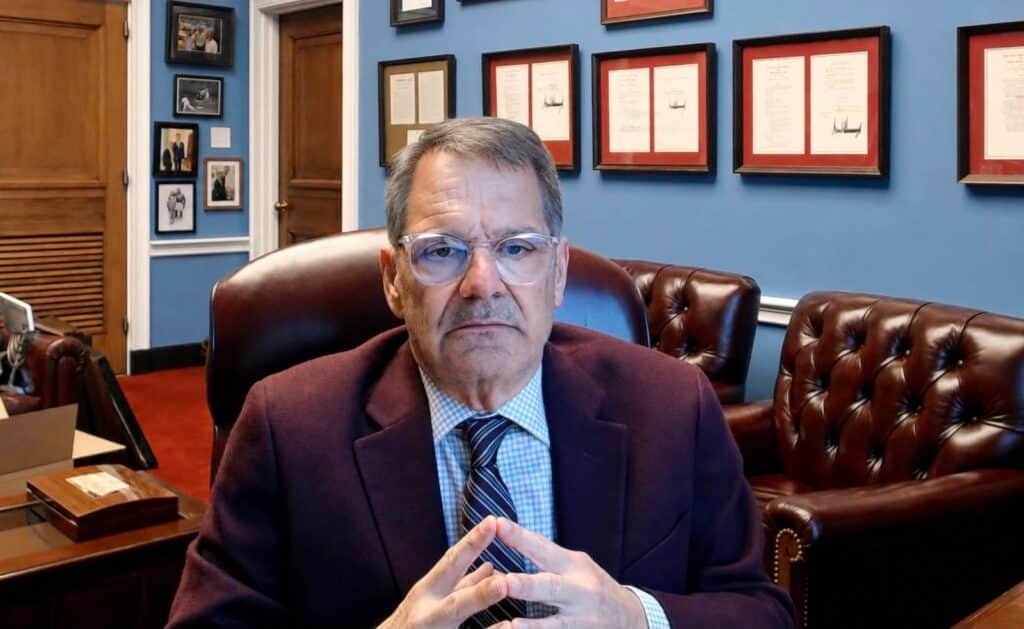
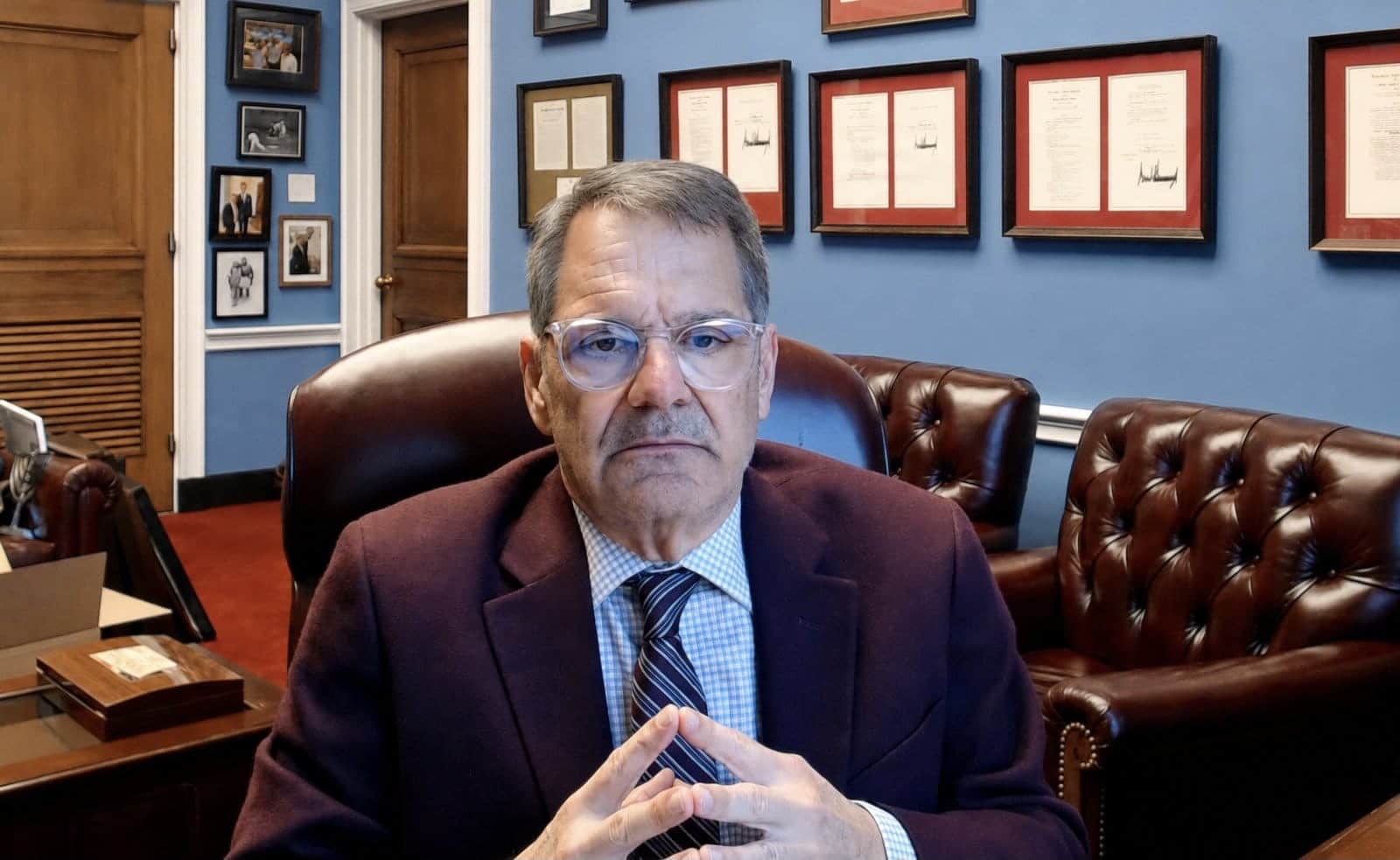
Greek-American Republican Congressman Gus Bilirakis in his congressional office. Asked by Greek Reporter about media suggestions naming him as a possible US ambassador to Greece, he discussed his commitment to Congress and willingness to serve. He also spoke about his family’s political legacy and the friendships uniting Greek-American lawmakers across party lines. Credit: Greek Reporter.
“I know the name has come up,” the Florida Republican told Greek Reporter when asked about the Athens post. “I do a lot of good work here in Washington as well.”
Bilirakis, who won an 11th term in Congress this month, spoke about his political future in an exclusive interview that also covered Republican election losses, his relationship with Secretary of State Marco Rubio, AI and protecting children online and the Greek identity that has shaped his family’s public service.
“I’m always willing to serve in any capacity,” he said.
His name has appeared in reporting about potential candidates for the ambassadorship. Asked whether his relationships with Democrats could help him win confirmation, Bilirakis acknowledged that personal goodwill might not overcome larger political obstacles.
Ambassadors require Senate confirmation, and Democrats will take control of the chamber in January following their midterm victory.
“I get along with Democrats,” he said, but senators would also have to consider political factors beyond their control.
“I am close to the president and I’m close to Marco,” he added. “I’m always willing to serve, but I also know that I can be very beneficial remaining in Congress for another few years.”
“I will get elected because of my Greek name”
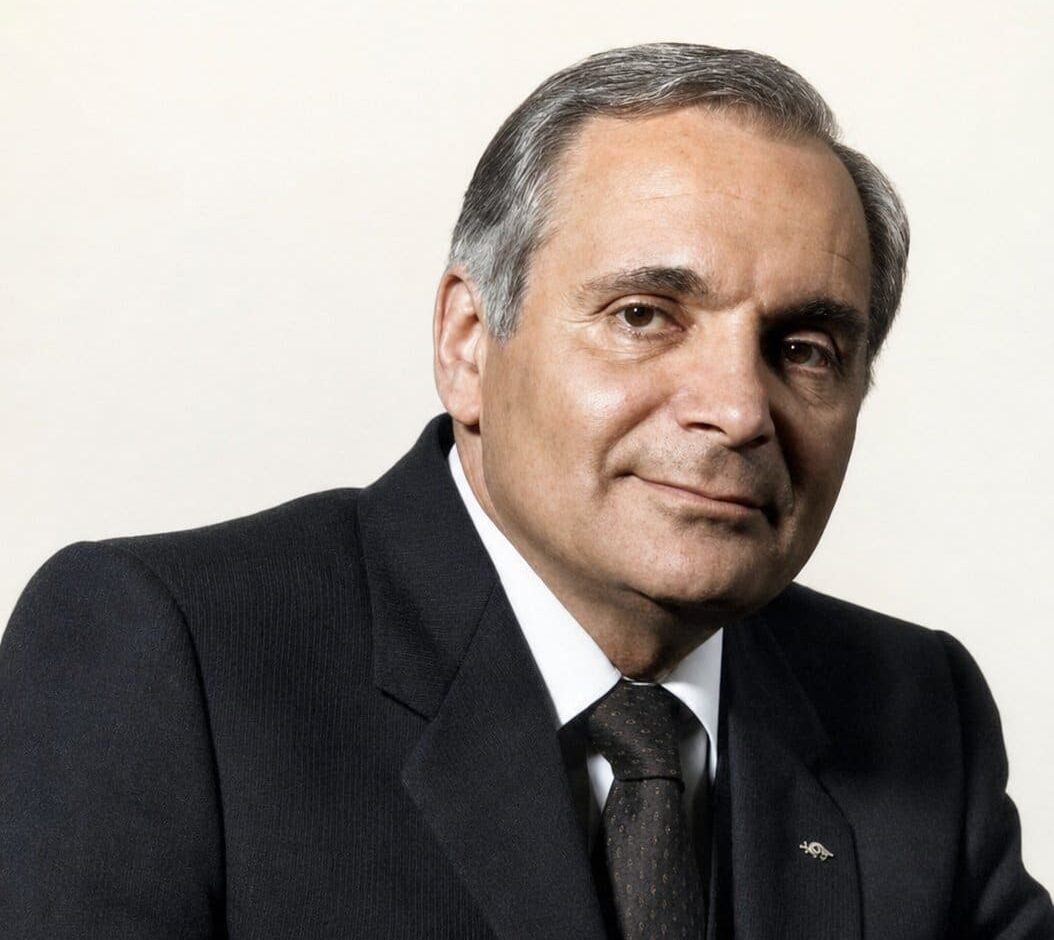
For Bilirakis, the relationship between Greek identity and American political life begins with his father, Mike, who won election to Congress in 1982 and served for 24 years. Gus succeeded him in January 2007.
He recalled a local newspaper asking his father how he expected to win with a Greek name.
“My dad responded, ‘I will get elected because of my Greek name.’”
Bilirakis credited earlier generations of Greek immigrants with establishing a reputation that helped those who followed them.
“We stand on the shoulders of our grandparents and our parents,” he said.
That gratitude extends to voters beyond the Greek-American community. He thanked philhellenes and other Americans for accepting his family and supporting its leadership over the decades.
His account of public service was practical: work hard, care about constituents and take their concerns seriously.
He also spoke of helping Greece and Cyprus and supporting the Orthodox faith and the Ecumenical Patriarchate. He sees those commitments as compatible with his responsibilities to American voters.
“Greece is a great ally to the United States,” he said. “It comes very natural for me.”
Affordability, Iran and the Republican defeat
Bilirakis retained his seat in a redrawn district that he described as more challenging and politically mixed. Nationally, however, his party’s losses were larger than he had anticipated.
“Did I expect us to lose this many seats? No, absolutely not.”
He pointed to household costs and his party’s failure to communicate effectively with voters.
“Overall, I don’t really think my party did a good job messaging,” he said. “But economically, people are having a very difficult time, particularly with the gas prices and the grocery prices.”
“So they took it out on my party.”
He also acknowledged the electoral damage from the prolonged war with Iran, while continuing to defend Trump’s approach to countries he regards as long-term security threats.
“It’s been lingering for quite a while,” he said of the war. “And that hurt us as well.”
Bilirakis argued that policy toward Iran, Cuba and Venezuela should be judged by its consequences for future generations. He supported Trump’s willingness to confront those governments while also welcoming diplomatic engagement with China and Russia.
“In my opinion, I don’t govern short term. I think of my children and my grandchildren.”
Looking toward a Congress controlled by Democrats, he said he expected his working relationships to help him advance legislation on healthcare, veterans and foreign policy.
“Politics is all about relationships,” he said.
Although he had wanted Republicans to retain both chambers, he maintained that he could remain effective in the minority.
He called for “give and take on both sides,” adding: “That’s the way you govern.”
Bilirakis defended Speaker Mike Johnson’s efforts to manage a narrow majority, while acknowledging divisions within the Republican Party. He also criticized the influence of democratic socialists among Democrats.
“We can disagree on the issues,” he said, “but it doesn’t do any good to shame people and embarrass them in public.”
Rubio, Greece and the Eastern Mediterranean
Bilirakis also described his relationship with Rubio built over years of conversations about Greece, Cyprus and regional affairs.
“I appreciate the fact that we’ve kept so close over the years, and it’s been beneficial to all countries,” he said.
He described Rubio as a philhellene and suggested that their shared experience of immigrant communities –Rubio is of Cuban descent– had helped them connect.
Bilirakis emphasized that cooperation among the United States, Greece, Cyprus and Israel, alongside ties with Egypt and other partners, serves American strategic interests.
“We’ve worked so very hard in the Eastern Mediterranean over the years,” he said.
His latest work includes a bipartisan effort with Democratic Rep. Brad Schneider urging Rubio to respond to the Turkey-Libya maritime agreement. Greece objects to the agreement because it disregards the maritime rights of Greek islands.
Discussing Libya and regional sovereignty during the interview, Bilirakis condemned what he described as encroachments on Greece and Cyprus.
“It’s not in the best interest of the region,” he said.
He also pointed to energy cooperation as a practical result of the regional partnerships he has promoted, saying he had secured $4 million for the Eastern Mediterranean Energy Center.
The center launched at Rice University’s Baker Institute in Houston in June, bringing together the United States, Greece, Cyprus and Israel. Its work includes energy infrastructure, electricity networks, research and technical exchanges.
“Greece is very well-liked and very well thought of throughout the region, including the Middle East as well,” Bilirakis said. “It’s a great partnership.”
Taking on technology companies
The conversation also turned to the power of technology companies, artificial intelligence and the risks facing children online.
Bilirakis pointed to his work on the Kids Online Safety Act. Provisions from that proposal were included in the broader KIDS Act, which passed the House in June. The package addresses online safeguards, parental controls and children’s privacy.
“We need to hold these big tech companies accountable,” he said.
As chairman of the House Energy and Commerce Committee’s Commerce, Manufacturing and Trade Subcommittee, he has worked on policy affecting technology and consumer protection. Whatever his next committee assignment, he said, AI would remain part of the work.
He cited telecommunications and healthcare as areas in which he could continue that work. “Either way, we have AI everywhere,” he said.
“We need to make cybersecurity a priority,” he said. Lawmakers also needed to rein in AI and technology companies, he argued, saying “they seem to be taking over.”
Cybersecurity a National Security Concern
For Bilirakis cybersecurity is a national security concern that Congress had failed to address adequately for years.
Doing so, he noted, would take “a lot of guts” and a willingness to hold special interests accountable.
Bilirakis said he was prepared to work with Democrats on those issues and wanted congressional leaders to make them a priority.
“I pledge to you that I will address it and do my best,” he said.
“We’ve got to go further,” he said. “There’s so much to do.”
“We’ve got to stand up to the special interests and do what’s right by the American people.”
The Greek-American congressman emphasized the effect of today’s decisions on younger generations.
“We want to leave a better world for them,” he said. “And I still have hope.”
Greek-American Republicans and Democrats: “We don’t snipe at each other”
Among Greek-American lawmakers, Bilirakis described an effort to preserve friendships and cooperate on shared priorities despite disagreements over domestic politics.
“We have very good relationships, and we try to keep it that way,” he said. “We’re very good friends.”
“I’m a conservative Republican,” he said, contrasting his outlook with colleagues he described as “more moderate to liberal.”
“We agree to disagree on those issues and move forward,” he said, identifying American interests, Greece, Cyprus and the Ecumenical Patriarchate as areas of common concern.
“We don’t snipe at each other,” he added. He said he wanted that cooperation to set an example for other Greeks.
Bilirakis said he expected to lead the Congressional Hellenic Caucus alongside Democratic Rep. Dina Titus. He also recalled approaching Chris Pappas recently to offer assistance and advice.
“Chris, whatever you need from me, you need any advice,” he recalled telling him. “I’ve been doing this a long time, I’m here for you.”
He described fellow Florida Republicans Jimmy Patronis and Mike Haridopolos as “like brothers to me.” The lawmakers have worked together on concerns over US military sales to Turkey.
“We need more Greeks”
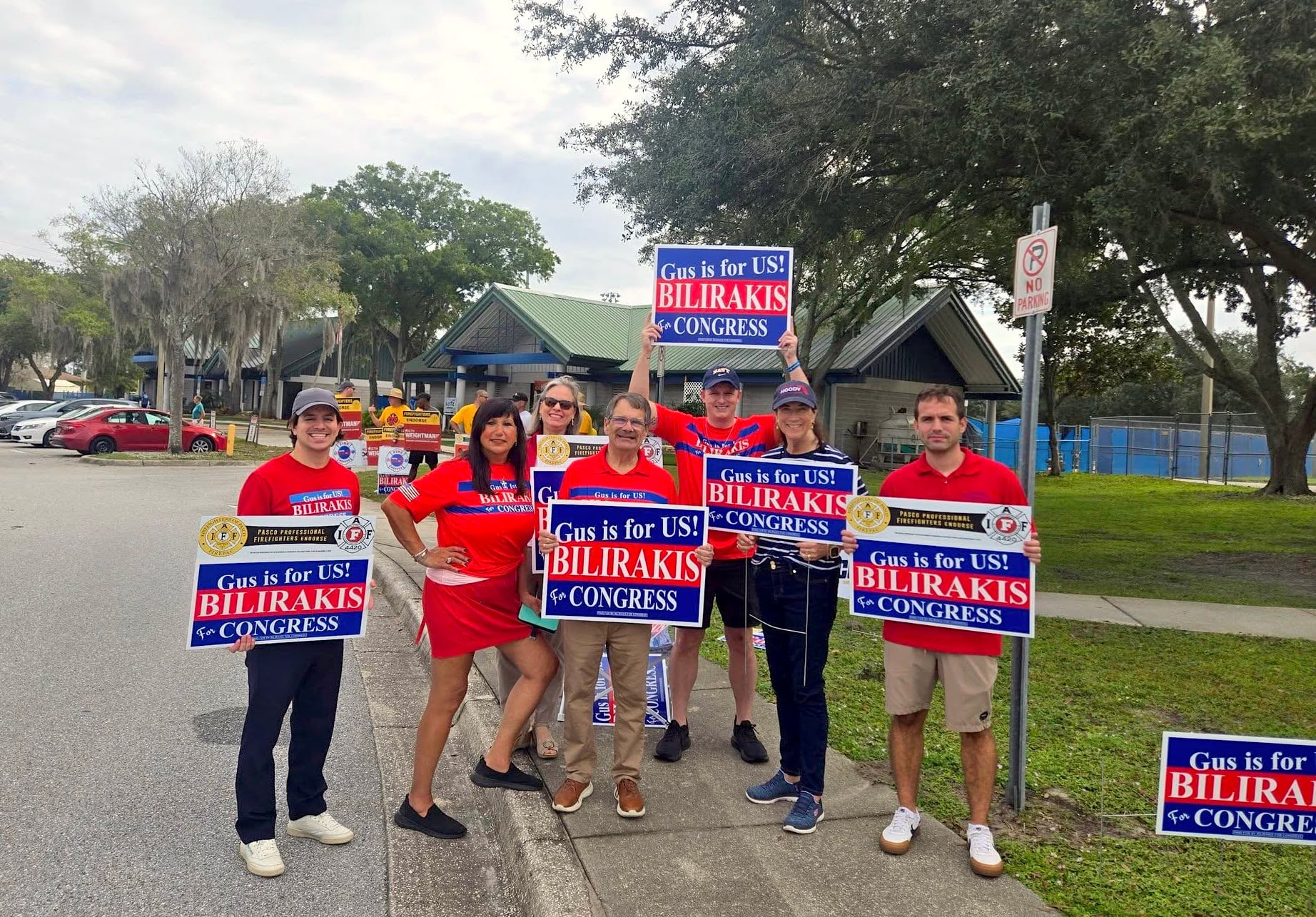
Support for Greek causes also extends beyond lawmakers of Greek ancestry.
“We have quite a few philhellenes on both sides of the aisle,” he said, referring to supporters of Greece and Greek culture. “We’re making a lot of progress. Things have gotten much better over the years.”
For Bilirakis, maintaining cooperation also means encouraging new candidates, despite the sacrifices involved in public office.
“But we need more Greeks. We need more Hellenes.”
“We need Greek Americans, Cypriot Americans, and philhellenes to run for office,” he said.
He argued that the quality of the people willing to enter politics affects the quality of Congress itself.
“Somebody’s got to do it. We need patriots,” he said. “I want to set a good example.”
A sponge boat from Kalymnos
One of the objects Bilirakis treasures most in his office came from a congressional visit to Greece.
He recalled traveling in July with a delegation of 10 members of Congress, taking colleagues to Athens, Thessaloniki, Kalymnos, Kos and Crete, including Souda Bay. On Kos, he wanted them to encounter the island’s connection to Hippocrates.
The itinerary reflected his desire for lawmakers to see more of Greece than the stops usually associated with official visits. He was particularly pleased to introduce colleagues to northern Greece and the islands.
“They can’t stop talking about it,” he said.
His colleagues and staff gave him a sponge boat from Kalymnos, his family’s ancestral island, which is closely associated with Greece’s sponge-diving tradition.
“That’s the centerpiece of my office,” he said. “That’s my prize possession.”
It was a return to “our ancestral country,” shared with Americans whose decisions could shape its relationship with the United States.
For now, Bilirakis said he wants to continue that work from Congress.
“As long as I’m in Congress, I will fight for our cause.”
Asked about the possibility of an ambassadorial role, he also answered in Greek: “Ό,τι θέλει ο Θεός” – “Whatever God wills”.