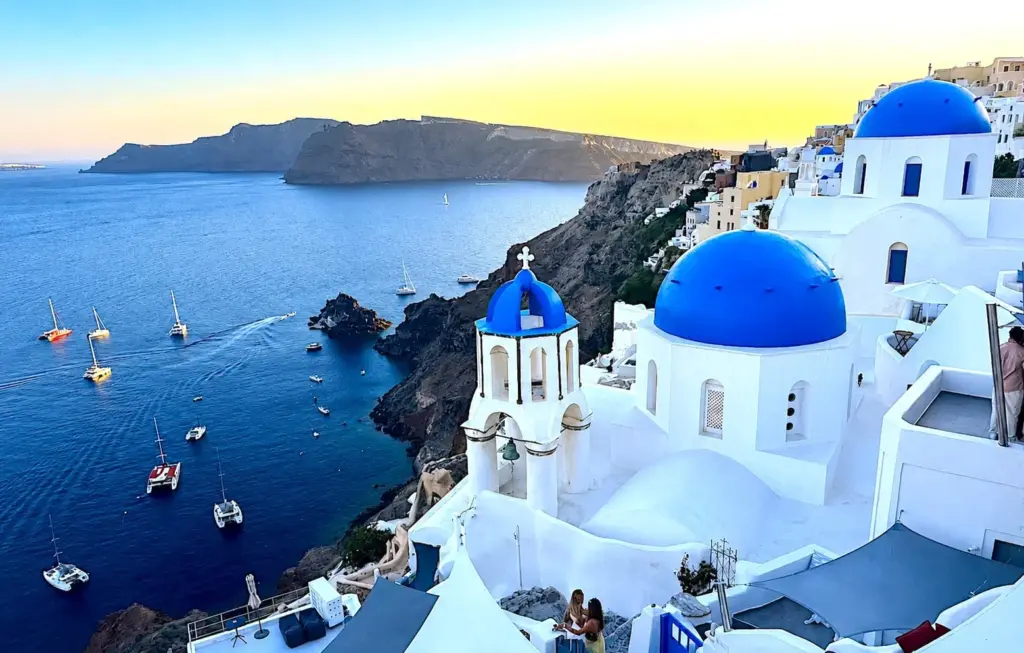
Greece will set tougher conditions for new tourism development on Mykonos and Santorini, Prime Minister Kyriakos Mitsotakis said, arguing that protecting the islands’ character should take priority over adding more hotels. His comments have drawn objections from hoteliers who say construction limits cannot substitute for better infrastructure.
Speaking at the Reimagine Tourism 2026 conference in Athens on Thursday, Nov. 19, Mitsotakis said forthcoming spatial planning proposals would distinguish heavily developed islands from destinations where the government wants to encourage investment. The event was organized by Kathimerini at the Stavros Niarchos Foundation Cultural Centre.
In the published conversation with Condé Nast Traveller editorial director Divia Thani, he said he doubted Mykonos and Santorini would see significant new development over the next 20 years. That was his outlook for the islands, rather than an announcement of a blanket 20-year construction ban.
Tourism development faces island limits
Mitsotakis linked the proposed restrictions to the strain on local infrastructure when large numbers of visitors arrive in July and August. He said island planning required greater care than development on the mainland, where there was more room to accommodate growth.
For Santorini, he put the protection of vineyards ahead of building another hotel. The landscape and wine were part of the experience visitors were paying for, he argued, and further intensive development could undermine that appeal.
He also pointed to measures managing the sequence of cruise ship arrivals. Greek Reporter’s earlier reporting on cruise tourism on Santorini and Mykonos documented the competing concerns of local ports, businesses and residents as fees and changing itineraries reshaped the season.
The prime minister drew a different picture for Chios, Lesvos and Limnos. He described those northern Aegean islands as places where tourism infrastructure could grow, while maintaining environmental standards. He also promoted mountain destinations and travel beyond the peak summer months.
Hoteliers challenge a focus on construction limits
Giannis Hatzis, president of the Hellenic Hoteliers Federation, told Euro2day that residents’ living conditions could deteriorate even if no new buildings were constructed. He called for development rules tied to actual local capacity and better coordination among municipalities, regions and central government.
The Santorini Hoteliers Association president Antonis Pagonis blamed longstanding gaps in state planning and infrastructure. His argument was that attracting higher-spending travelers required improvements benefiting residents as well as visitors.
The dispute follows an earlier debate over Greece’s tourism spatial framework. In interviews published by Greek Reporter in June, island mayors questioned how the draft measured tourism pressure and whether its broad categories reflected local conditions.
Success measured beyond visitor numbers
Mitsotakis said tourism policy should focus on spending per visitor and a longer season, rather than arrivals alone. He argued that Crete and Rhodes could offer more year-round activity and that smaller businesses could compete through distinctive local experiences.
Those priorities sit alongside previously announced airline plans to add capacity to Greece in 2027 and efforts to promote local food and regional traditions as reasons to visit.