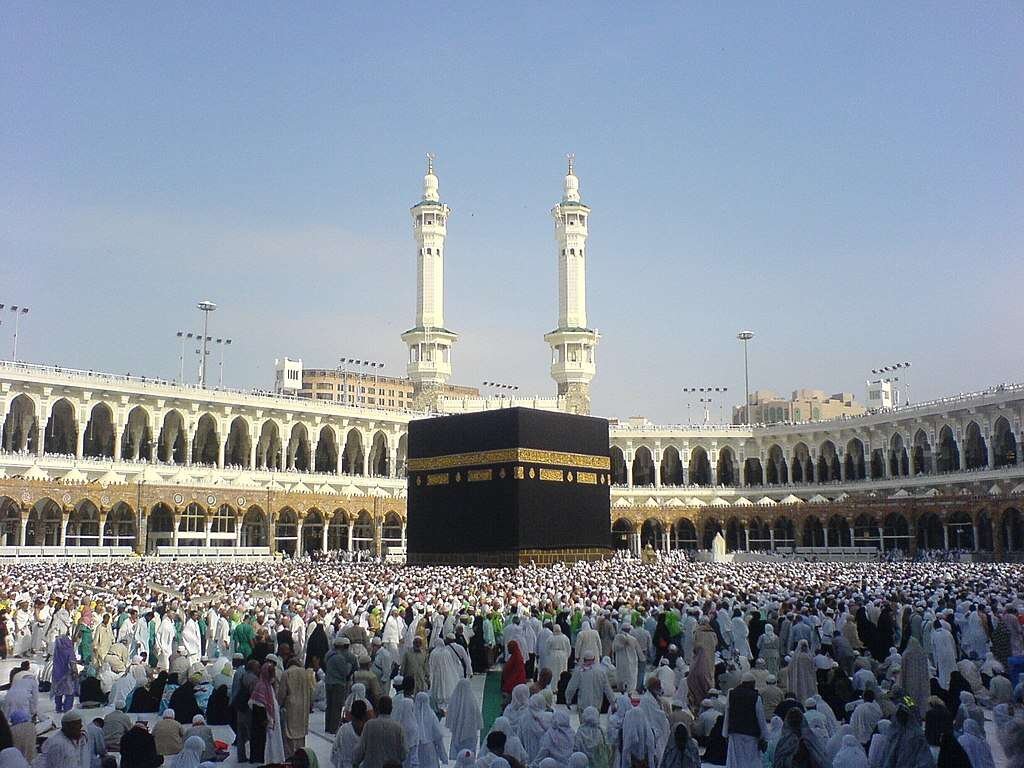

The world’s religions are projected to undergo major changes by 2070, with Muslims overtaking Christians globally, according to a new Pew Research Center report. Greece is expected to remain predominantly Christian despite a sharp decline in the faith’s share of its population.
In Greece, Christians are projected to account for 74.9% of residents in 2070, down from almost 90% in 2020. Over the same period, the Muslim share is expected to rise from 5.1% to 11.5%, while the proportion of people with no religious affiliation increases from 4.7% to 11.7%.
That would leave people without a religion and Muslims at nearly equal shares of the population, although Christianity would remain by far the largest faith. Greece’s overall population is projected to fall from 10.7 million to 7.6 million, meaning the change in religious shares will take place as the country shrinks. Other religions collectively are projected to rise from 0.5% to 1.5% of Greece’s population.
Greece mirrors wider changes in the world’s religions
Worldwide, Muslims are expected to outnumber Christians by 2035. By 2070, researchers project more than 3.6 billion Muslims, representing about 36% of the world’s population, compared with nearly 3 billion Christians, or 29%.

Across Europe, Christians are projected to decline from 67.1% of the population in 2020 to 51.6% in 2070. Muslims are expected to rise from 6% to 12.7%, while the religiously unaffiliated increase from 25.3% to 32.6%.
The continent’s Christian population is forecast to fall from 505 million to 324 million. Researchers point to low birthrates, an aging population, and people leaving the religion. Migration is expected to boost Europe’s Muslim share, which would reach only about 9% by 2070 without it.
Islam will pass Christianity as the world’s largest religion by 2035 (Pew)
By 2070:
Muslims – 3.64B (↑80%)⁰Christians – 2.96B (↑30%)⁰No religion – 1.72B (↓10%)⁰Hindus – 1.38B (↑17%)⁰Buddhists – 250M (↓22%) pic.twitter.com/Qp2JZNi3xC— Shashank Mattoo (@MattooShashank) November 18, 2026
Greece is among 30 European countries where the Christian share is projected to fall by at least 5 percentage points. Its decline of 14.6 points stands alongside rising shares of Muslims and people with no religion.
Population growth and religious switching drive the forecast
Globally, religious affiliation is shifting in different directions. People with no religious affiliation are projected to drop from 24.2% of the world’s population to 17%, even as their share rises across much of Europe. Hindu numbers are expected to grow, while Buddhists are projected to decline in number.

Sub-Saharan Africa is expected to account for more than half the world’s Christians by 2070. The region’s rapid population growth also contributes to the expansion of Islam, while Muslims have a younger age profile and higher birthrates globally than other major religious groups.
The projections, covering 201 countries and territories, draw on census and survey data and estimates of births, deaths, migration, and religious switching. They assume demographic patterns observed in recent years continue through 2070.