
Three Arab nations, Egypt, Bahrain and the United Arab Emirates, joined Greece in the Turkey-Libya maritime dispute on Monday, opposing a contested sea boundary agreement after Libya’s eastern parliament approved it.
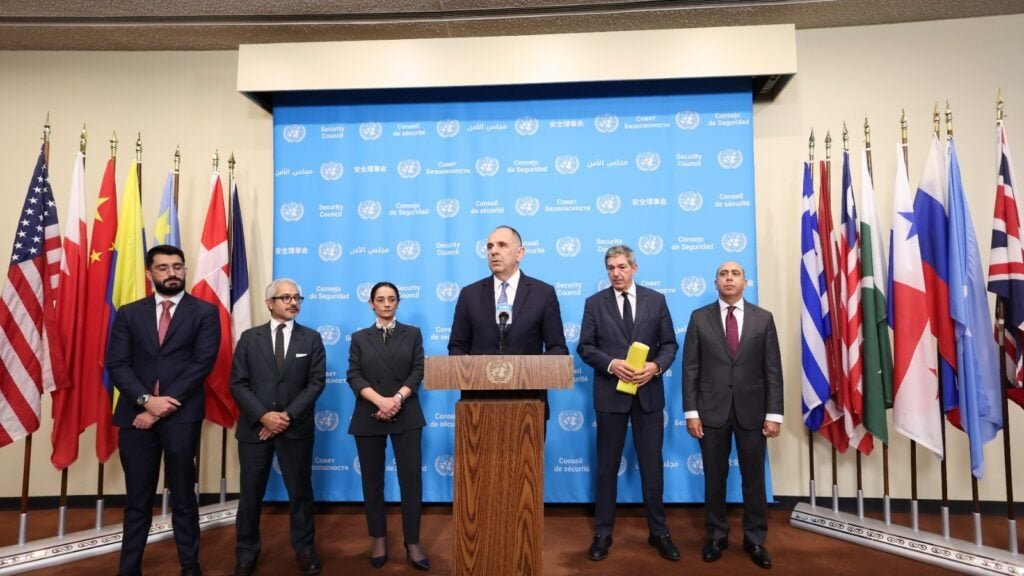
Greek Foreign Minister George Gerapetritis delivered the joint declaration at the United Nations in New York on behalf of Greece, Cyprus, Egypt, Bahrain, the United Arab Emirates and the European Union. The statement warned that the agreement raised “serious concerns for regional security and stability” and could undermine the maritime rights of other states.
The six parties said the 2019 accord remains “null and void” under international law. They argued that it ignores the rights of Greek islands and cannot determine maritime boundaries for countries that did not sign it.
The agreement was signed in November 2019 by Turkey and Libya’s then internationally recognized government in Tripoli. On Oct. 20, Libya’s eastern-based House of Representatives unanimously approved it, reversing its earlier rejection and repealing a 2020 decision to cut political ties with Ankara.
Arab Nations back Greece over the Turkey-Libya maritime dispute
Turkey welcomed the parliamentary vote. President Recep Tayyip Erdogan rejected criticism from the European Union and other governments Monday, saying their objections had “no legitimate basis.” Ankara says the agreement protects its maritime interests and those of Libya.
Egypt, Bahrain, UAE join Greece in opposing Turkiye-Libya maritime deal
——
Egypt, Bahrain and the United Arab Emirates have joined Greece in opposing a maritime agreement between Turkiye and Libya, arguing that it threatens regional security and the international legal framework… pic.twitter.com/CaZX0fzs9a— The Cradle (@TheCradleMedia) October 27, 2026
The vote also reflects changing relationships inside Libya. Turkey backed the Tripoli government against forces led by eastern commander Khalifa Haftar during the country’s civil war. In recent years, Ankara has expanded contacts with Haftar’s camp, even as Libya remains divided between rival eastern and western authorities.
At the center of the dispute are competing claims to waters that could contain oil and natural gas. Greece and Cyprus say the Turkey-Libya boundary overlooks the maritime zones generated by Greek islands, including Crete. Turkey disputes that interpretation and argues its deal with Libya follows principles of equitable delimitation.
Egypt’s maritime agreement and offshore energy exploration raise stakes
Egypt has its own maritime interests in the area. It signed a separate boundary agreement with Greece in 2020, and the two countries are now discussing extending that arrangement farther east toward Cyprus. Egypt has also raised its objections directly with Turkish officials.
Offshore exploration adds to the stakes. Greece has moved ahead with energy leases south of Crete, including agreements involving Chevron and HELLENiQ ENERGY. Turkey has objected to Greek exploration plans in areas it says fall under Libya’s maritime jurisdiction.
The joint declaration called for peaceful talks and support for Libya’s political unity. Greece said it remained willing to negotiate a maritime boundary with Libya.