Dedicated to fostering hope and unity, a Greece-based refugee organization is transforming lives through the power of sport. By breaking down ethnic and religious barriers, they create safe, inclusive spaces where diverse cultures can connect, cooperate, and build a supportive community that feels like family.
By Evan Bourtis
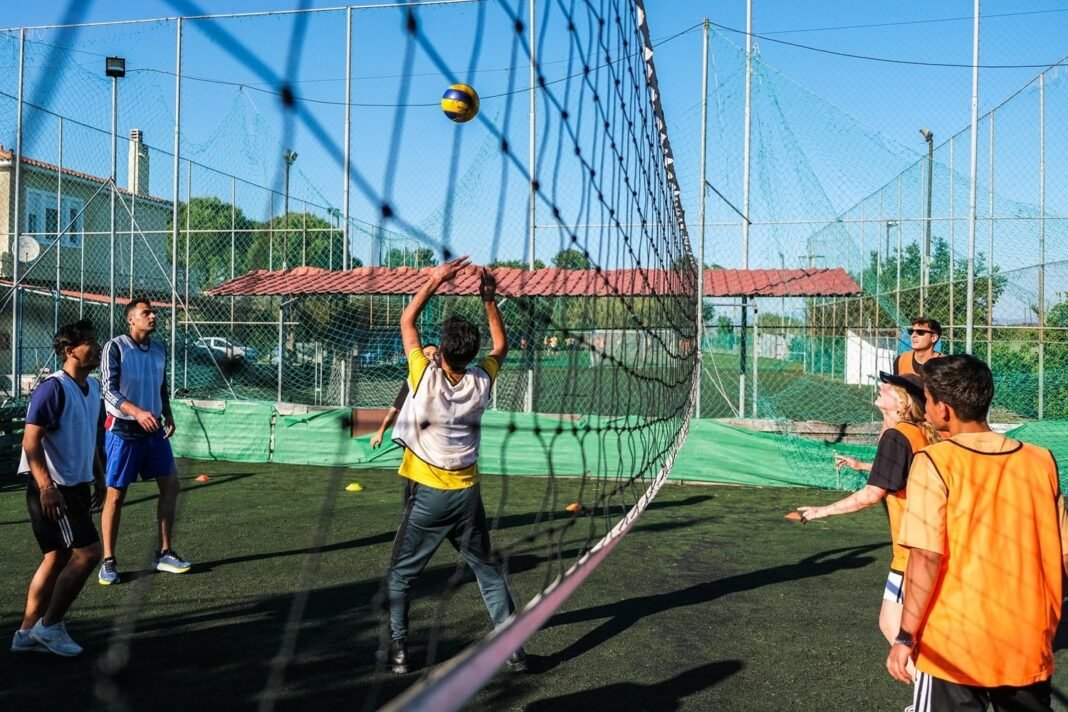
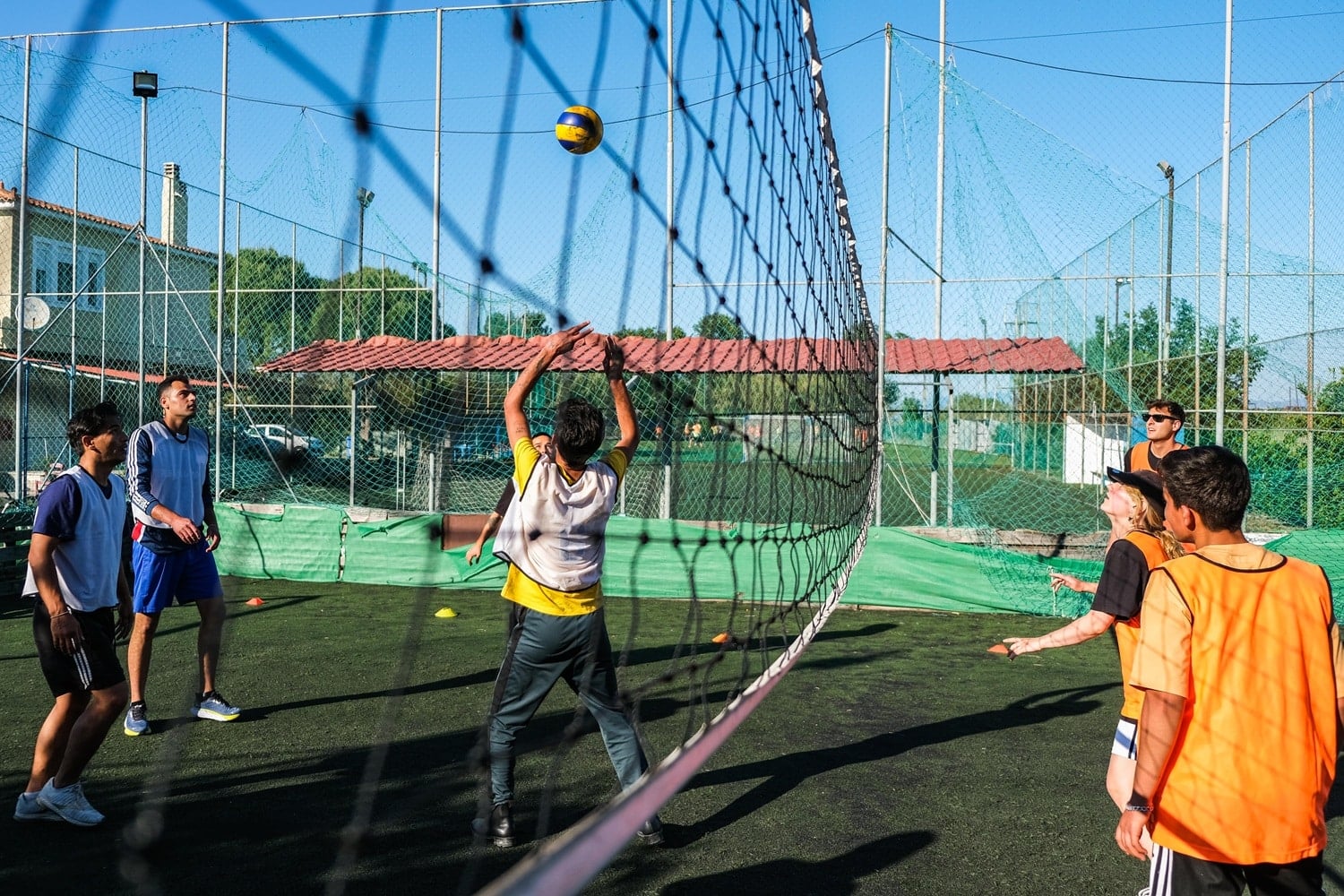
Inside a gym on the island of Lesvos, refugees guide participants as they lift weights, scale a rock wall, and repeat martial arts maneuvers on a mat. Outside the gym, refugees and Greek natives gather to pass a football on a pitch or serve a volleyball over a net, speaking multiple languages.
At the Yoga and Sport With Refugees’ gym, about 5 kilometers outside the island’s capital of Mytilene, most of the coaches originally came to Greece to seek asylum. The nonprofit started in 2017 to offer refugees a place to exercise, as Lesvos’ camps were overwhelmed with thousands of people who fled wars in Syria and Afghanistan.
Since then, YSR has opened its free programs to all people and expanded into Athens and Paris. It’s one of several organizations in Greece that use sports to help refugees overcome challenges and connect with support services.
“We’ve noticed a big difference in people as they’ve progressed through their time at the gym,” said Donal Cotter, YSR’s communications manager. “A lot of the time, you see people closed off when they first come. Over time, they get more comfortable.”
Changing needs for refugees in Greece

Greece hosts over 126,000 refugees and another 30,000 asylum seekers, according to this year’s data from the United Nations. Ukrainians who came amid Russia’s invasion make up the largest group of refugees at over 36,000. The next-largest group is Afghans, followed by Syrians – two nationalities that arrived in droves in 2015.
That year, over 15,000 people crossed from Turkey into Lesvos in a matter of months, part of the largest wave of asylum seekers that Europe has seen this century. The founder of the gym on Lesvos wanted to create a place where people across different ethnic and religious groups could come together and bond through sports.
Many of those who arrived on Lesvos have now settled in large European cities, such as Athens, in search of better opportunities. However, they continue to face challenges, Cotter said. Many refugees went from struggling to secure asylum status to struggling to secure tax identification numbers for employment.
“The Athens community and the Lesvos community are very different, and we try to serve them in different ways,” Cotter said.
In addition, refugees in Greece often face challenges opening bank accounts, finding advanced-level Greek language courses, and accessing healthcare, according to a U.N report. YSR aims to build a community where refugees can collaborate to overcome issues like these and connect refugees with other nonprofits that can help.
Next to the gym in Lesvos, the Paréa Lesvos community center offers legal aid, language and computer classes, and some medical services. The building also has a play space for children, a barber shop, and a free laundry station.
In Athens, YSR holds some classes in partnership with the Victoria Community Centre near Victoria Square – which offers refugees one-on-one job counseling and legal support sessions. The center also has in-house general medical practitioners and offers pediatric care through its partnership with medical humanitarian groups.
Some refugees have only learned about these services after taking part in sports programs, Cotter said. Last month, YSR collaborated with the group that runs Victoria Community Centre to host a football tournament, where over 50 people across six teams played in short round-robin games.
Refugees as leaders

In Athens, YSR is working to move into a new gym after securing funding for rent and renovations from a donor. The nonprofit’s former gym closed down in November, but the new gym is expected to open sometime in mid-July.
In the meantime, YSR has been holding classes at Pedion Tou Areos Park and other public spaces. In April alone, YSR’s volleyball program in Athens had nearly 300 visits, Taekwondo had 75 visits, and football had 40 visits. As with almost all YSR programs, refugees lead the sessions.
One coach, Abassi, who’s originally from Afghanistan, teaches weekly outdoor Taekwondo and parkour classes to children in Athens. He came to Greece 15 years ago and has been involved in YSR since 2020. In an Instagram video, Abassi said he wants to use his coaching to help children find balance in their lives.
“I like the sport because, for the life, for the work, for the good mind, we need a healthy body,” he said in the video.
Those classes are part of a collaboration between YSR and another nonprofit, Free Movement Skateboarding. In response to rising xenophobia in Athens, the organizations created a program to bring diverse groups of youth together – holding skateboarding, parkour, and martial arts classes in public spaces.
That collaboration has caught the eye of the Olympic Refuge Foundation. It was one of four programs across Europe and the Middle East to get a $50,000 grant (€43,390) as part of the foundation’s “Sport Against Hate” initiative.
Sport as a universal language

From observing classes in Lesvos, Cotter has seen how sports can become a universal language. As an experienced rock climber, he occasionally helps the main rock-climbing coach with sessions. At the gym, he’s interacted with people from Sudan, Eritrea, Yemen, and other Asian and African countries.
Last year, around 30,100 asylum seekers arrived in Greece by sea, 9% of whom came to Lesvos, according to the U.N. After arriving on Lesvos, people who speak the same language tend to form communities, Cotter said. The gym helps to break those language barriers.
At the gym, the instructors often rely on body language to teach skills, allowing them to host classes that everyone can understand.
“It’s really nice that everyone can exercise together and can communicate in this way through sport. It is kind of a universal language,” he said.
Last month, YSR kicked off its annual Swim for Good campaign, encouraging teams around the world to swim 12 kilometers to raise awareness for the journey from Turkey to Lesvos that many refugees have made. You can learn more here.