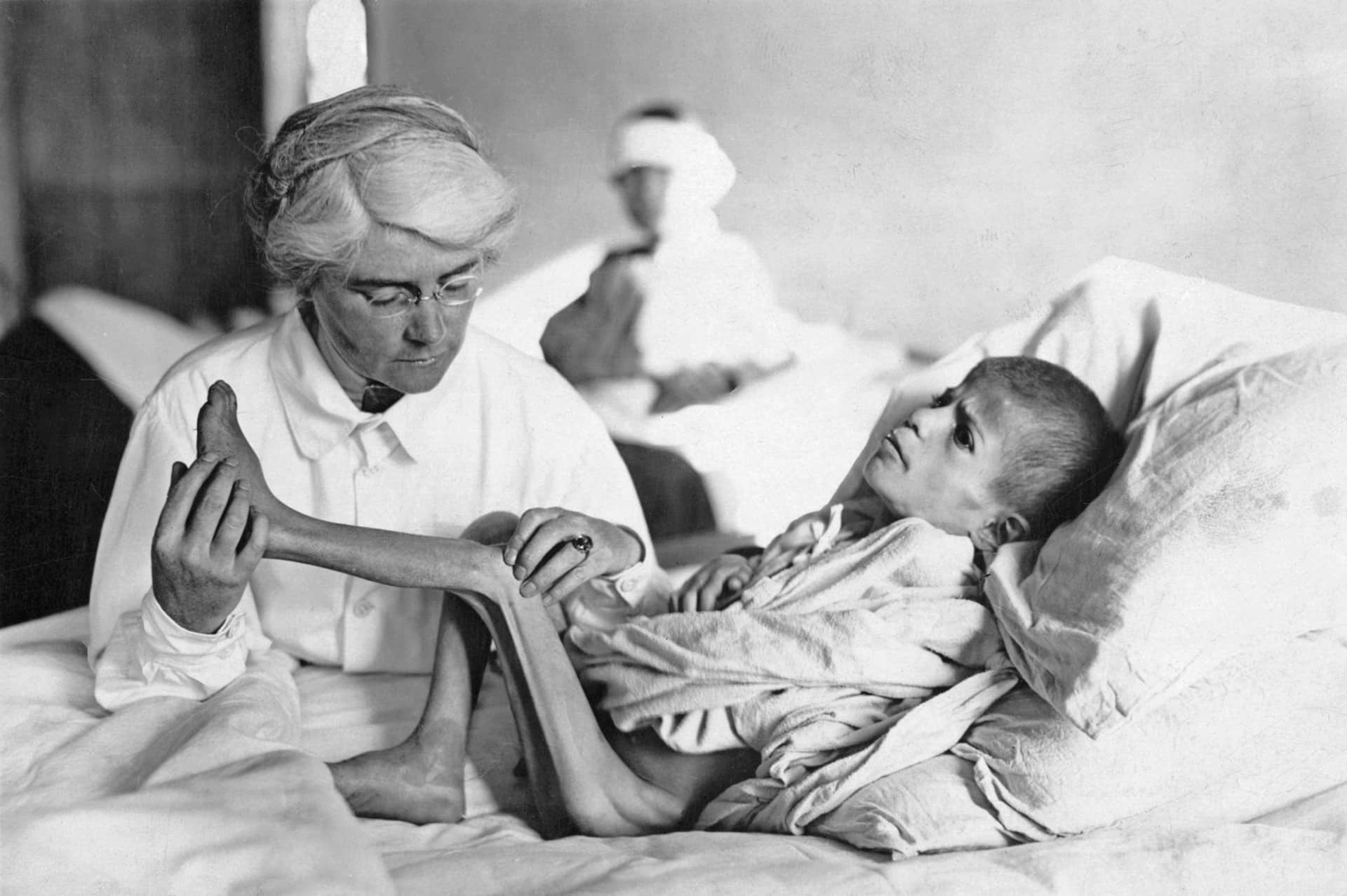
Florida doctor Mabel E. Elliott embarked on a remarkable humanitarian odyssey across war-torn Greece, Turkey and Armenia starting in 1919. She established hospitals for Armenian orphans, treated wounded soldiers during the Greco-Turkish War, and spearheaded a vital quarantine station on the Greek island of Makronisos that prevented catastrophic disease epidemics. Her heroic efforts earned her the distinction of becoming the first woman to receive the Greek War Cross.
Historian Ginger L. Pedersen conducted extensive archival research to write Unbreakable Healer, a biography of the West Palm Beach physician.
By Ginger L. Pedersen
In 2018, I read a post on social media about the heroic actions of a Florida doctor, Dr. Mabel E. Elliott, who had lived in my hometown of West Palm Beach, Florida. I was puzzled because I had never heard of her, and her work wasn’t mentioned in the area’s history.
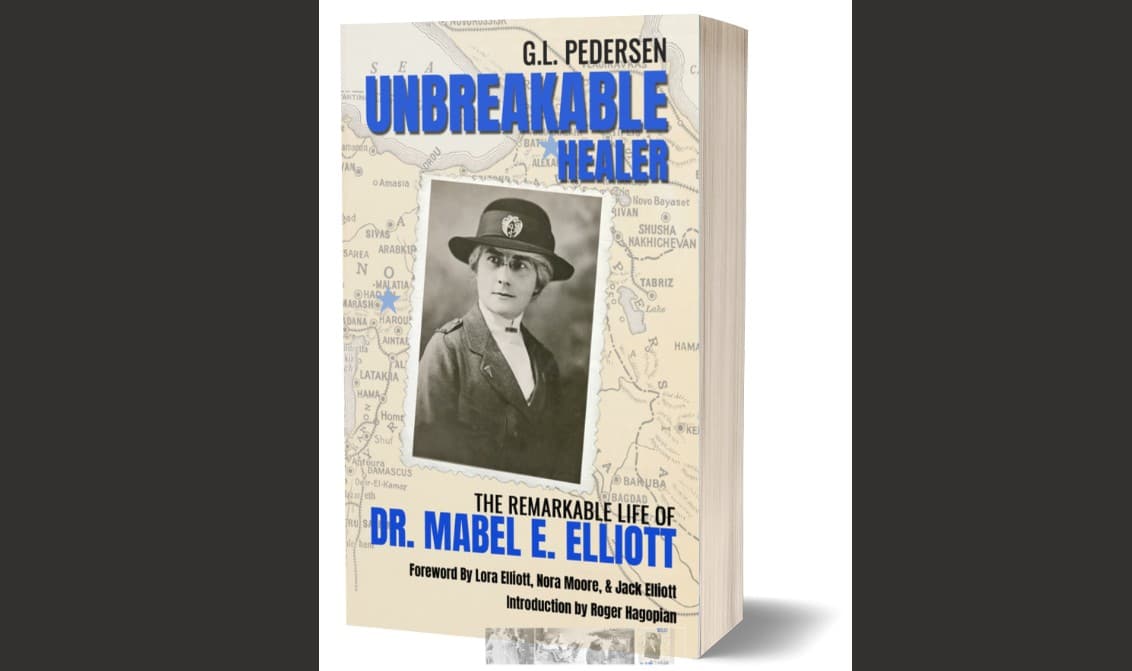
Curious, I began reviewing newspaper articles and books about her work. My research journey that took me across the United States, reviewing archives from Drexel University and even meeting with Dr. Elliott’s great-niece to see the more than century-old letters Dr. Elliott had sent home. The culmination of my research was the 2025 biography book, Unbreakable Healer: The Remarkable Life of Dr. Mabel E. Elliott (Palmango Press).
Elliot begins humanitarian odyssey to the Near East
In 1919, Dr. Elliott’s journey to the Near East began as she boarded the Leviathan ship in Hoboken, New Jersey. She was one of the 250 men and women who volunteered for service through Near East Relief, the humanitarian organization that spearheaded relief efforts in Turkey, Armenia, and Greece. In 1904, she had graduated medical school with her older sister, so two of the fourteen Elliott children became MDs.
Her first duty station took her to the mountains of Marash (today Kahramanmaraş), where she set up hospitals for Armenian orphans and refugees. In 1920, fighting broke out as the Turks set out to retake the ancient city. Fearing for her staff, Dr. Elliott led them to safety across the Taurus Mountains, through a blizzard, with thousands of Armenians trailing along. Many of the refugees froze in the harrowing conditions.
After a brief return to the United States, Dr. Elliott was back on a ship headed for Constantinople (Istanbul) by fall 1920. She set up a hospital for refugees in Izmir on the Sea of Marmara. The Greco-Turkish War was raging, creeping ever closer. Turkish soldiers overran Izmir, and Dr. Elliott treated wounded Greek and Turkish soldiers. She was the only doctor left after most of the city’s population had fled on ships.
After resecuring the hospital, Dr. Elliott headed to Armenia to lead medical efforts for the 20,000 Armenian orphans that Near East Relief cared for in former Russian barracks in Gyumri, Armenia. There, doctors and nurses treated the dreaded eye disease trachoma, which spread rapidly among the malnourished and sick children.
American doctor deals with humanitarian crisis after the burning of Smyrna
In 1922, Dr. Elliott was invited to speak at a medical conference in Switzerland and then planned to spend a few weeks in Italy before returning to Armenia. But the newspaper headlines blared that Smyrna (today Izmit) was in flames. She left Italy and within a few days was in Athens to lead the medical response to the crisis. Dr. Elliott assessed the tragic scene of thousands of Greek refugees crowding the quay at Smyrna, with thousands more coming from inland settlements to escape the Turks. She sailed from isle to isle, setting up clinics, hospitals, milk stations, and shelters for the refugees.
The Greek government was concerned that the refugees would bring diseases like smallpox and typhoid, unleashing epidemics among the Greek people. To ward off this potential crisis, Dr. Elliott set up a quarantine station on Makronisos, a rocky islet in the Aegean Sea. Once people were screened for illness, they were transported to other refugee facilities. Dr. Elliott’s work saved thousands of lives and prevented epidemics.
First woman to receive the Greek War Cross
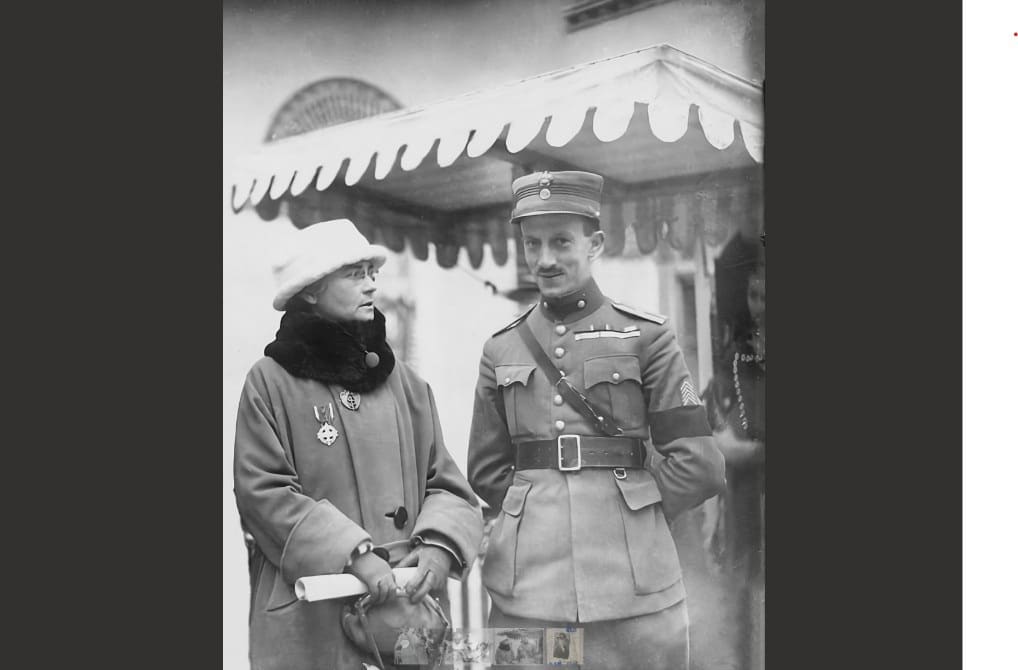
In appreciation for her efforts, the Greek government awarded Dr. Elliott the Greek War Cross, the first woman ever so decorated. She was also awarded the Gold and Silver Cross of St. George for her work in setting up hospitals in Greece and treating wounded Greek soldiers.
In 1923, she began writing a memoir about her work in the Near East. During my research, I uncovered that Dr. Elliott had collaborated with Rose Wilder Lane (daughter of Laura Ingalls Wilder of Little House on the Prairie fame) on her memoir. Two of Dr. Elliott’s primary sources have been republished: her memoir, Children of Ararat, and her wartime journal, Siege Diary of the Battle of Marash.
Dr. Elliott returned to America and toured the United States, speaking of her experiences in the Near East. In 1925, she continued her service overseas, this time in Japan, where she helped with relief efforts and rebuilding following the Great Kanto earthquake in Tokyo. She was chief of pediatrics at St. Lukes International Medical Center until 1941, when war clouds gathered. She arrived back in West Palm Beach, Florida, mere weeks before Pearl Harbor.
Dr. Elliott spent her remaining years in semi-retirement, still practicing medicine during the summer in a retirement community in northern Florida. She passed away at the age of 87 at the Good Samaritan Hospital in West Palm Beach. She was Florida’s Good Samaritan in her service to humanity across the Near and Far East.
About the Author: Ginger L. Pedersen is a writer and historian based in West Palm Beach, Florida, and the author of Unbreakable Healer: The Remarkable Life of Dr. Mabel E. Elliott.