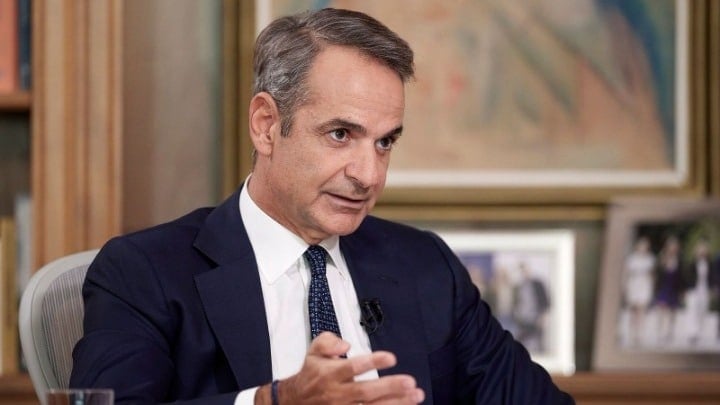
Facing a challenging political landscape marked by recent cabinet resignations and ongoing public scrutiny over the farm subsidies and wiretapping scandals, Greece’s Prime Minister Kyriakos Mitsotakis on Wednesday announced a €500 million ($587.2 million) emergency relief package. The move appears designed to restore public confidence and alleviate the domestic cost-of-living burden that has fueled widespread discontent.
“The National Statistical Authority’s final fiscal data for 2025 are encouraging, but I am fully aware that difficult international conditions continue to strain Greek households,” the Prime Minister stated. “This package serves as a ‘dividend of progress,’ returning the fruits of our fiscal policy to the citizens who need it most.”
Relief package: A strategy of stabilization
The administration, which recently underwent a cabinet reshuffle following a scandal involving EU farm subsidies, is aiming to pivot the public agenda back to economic stability. The Prime Minister underscored that this surplus—larger than initially forecast—was achieved through prudent fiscal management, including stricter control of public expenditure and enhanced efforts to combat tax evasion.
The targeted interventions are intended to act as a financial “buffer” for families, pensioners, farmers, and businesses. However, political analysts note that the timing of these measures is crucial, as the opposition continues to call for snap elections, leveraging concerns over the ongoing wiretapping investigation and the agricultural sector’s turmoil.
The announced relief measures
The government’s economic team outlined the following specific interventions:
- Fuel Subsidy: A €0.20 per liter subsidy on diesel at the point of purchase is extended through May to provide relief for both businesses and consumers.
- Agricultural Support: Fertilizer subsidies will continue through August, covering 15% of purchase invoices, a move aimed at pacifying the primary sector following months of intense protests.
- Family & Social Allowances: An emergency one-time allowance of €150 per child will be disbursed automatically at the end of June to nearly 1 million households. Additionally, support allowances for low-income pensioners, the uninsured elderly, and persons with disabilities will see a permanent increase to €300, paid annually each November.
- Rental Relief: Income thresholds are being expanded to allow more beneficiaries to claim the reimbursement of one month’s rent per year, targeting an additional 70,000 households.
In a bold move to also tackle private debt, the government has introduced three major adjustments, consisting of:
- Account Seizure: Seizures will be lifted if 25% of the debt is repaid and remaining obligations are restructured.
- Out-of-Court Settlement: Debts between €5,000 and €10,000 are now eligible for the out-of-court settlement mechanism.
- Restructuring: Overdue debts incurred up to December 2023 can be restructured into up to 72 installments, provided new arrears are managed.
Political context
These measures arrive as the government grapples with the fallout of an EU investigation into fraudulent agricultural subsidy claims, which have severely damaged the ruling party’s standing in rural areas. Simultaneously, judicial authorities are advancing the “Predatorgate” surveillance scandal, with appeal trials and broader espionage investigations scheduled to continue through late 2026.
By directing these funds toward families, tenants, and small debtors, the Prime Minister is seeking to shore up his government’s base and shift the national focus away from the scandals currently dominating the opposition’s narrative.
Related: PM Mitsotakis Faces Resignation Calls Over Farm Subsidy and Spyware Scandals